Managing Vegetation Around Beehives the Shaker Way 

HP Lovelace, Farm Manager

It’s been an amazing year for growing grass. Looking out at the lush green pastures and lawns, I’m surprised it’s late September and not late June. And of course, I’m grateful for this bounty as are the fattened livestock and the myriad of creatures that call this grass home. There are, of course, places where I sometimes wish the grass might take a break such as along stone or wooden fencerows and particularly beneath the bee hives.

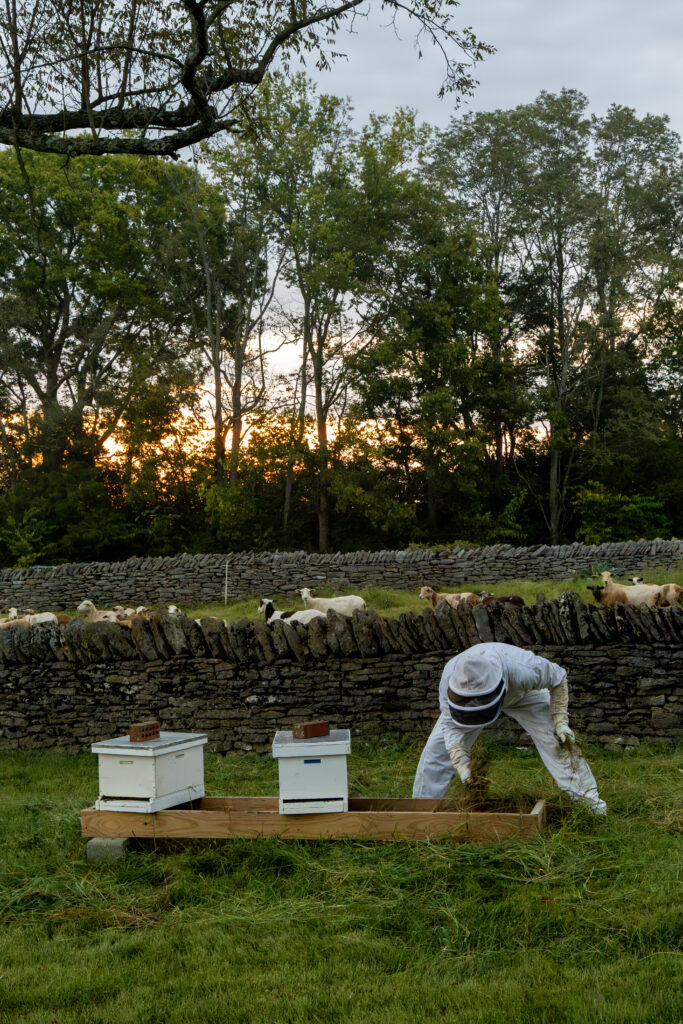
Farm Manager HP Lovelace tends to the hives.

Beyond any aesthetics, tall grass compromises the health of the bees. Tall vegetation increases moisture, reduces ventilation and creates an ideal habitat for the dreaded hive beetles which can and are devastating colonies in the southeast United States. For that reason, all but three of our 39 hives are elevated above concrete. For the remaining hives, the grass must be cut.

Unfortunately, bees are not privy to these noble intentions and have been known to retaliate with fierce attacks. Bees are sensitive to noise, vibration, and changes in air quality. So, herbicides that broadcast toxins, along with mowers and weed eaters that shake the ground and release CO2 are probably the wrong tools for the job.

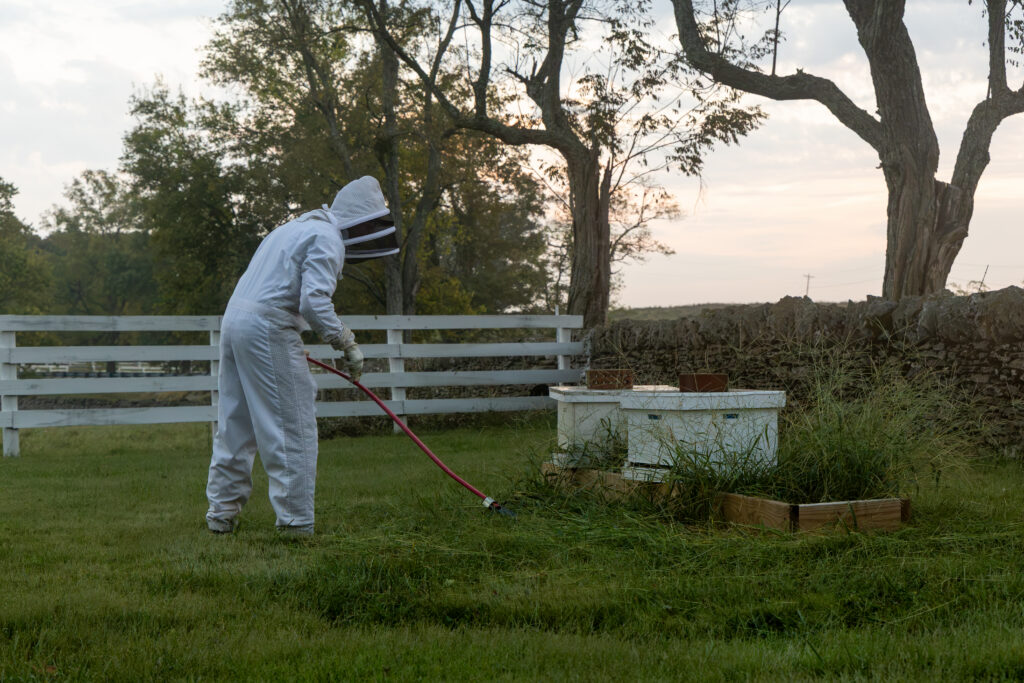
At Shaker Village, we elect to use a scythe, as the Shakers probably did. The scythe is nearly silent, and it’s possible to complete the task without alerting the bees to our work. We still wear protective equipment, arrive before the sun tells the bees it’s time to fly, try to hold our breath or at least refrain from talking, and consciously avoid any accidental contact with the bee boxes. And we are always prepared, if necessary, to run!

A scythe allows work to be done silently so it doesn’t disturb the bees.

Bees are amazing—their ability to pollinate the flowers and then create honey and beeswax is nothing short of a miracle. It is a joy, in our small way, to lend a hand. 

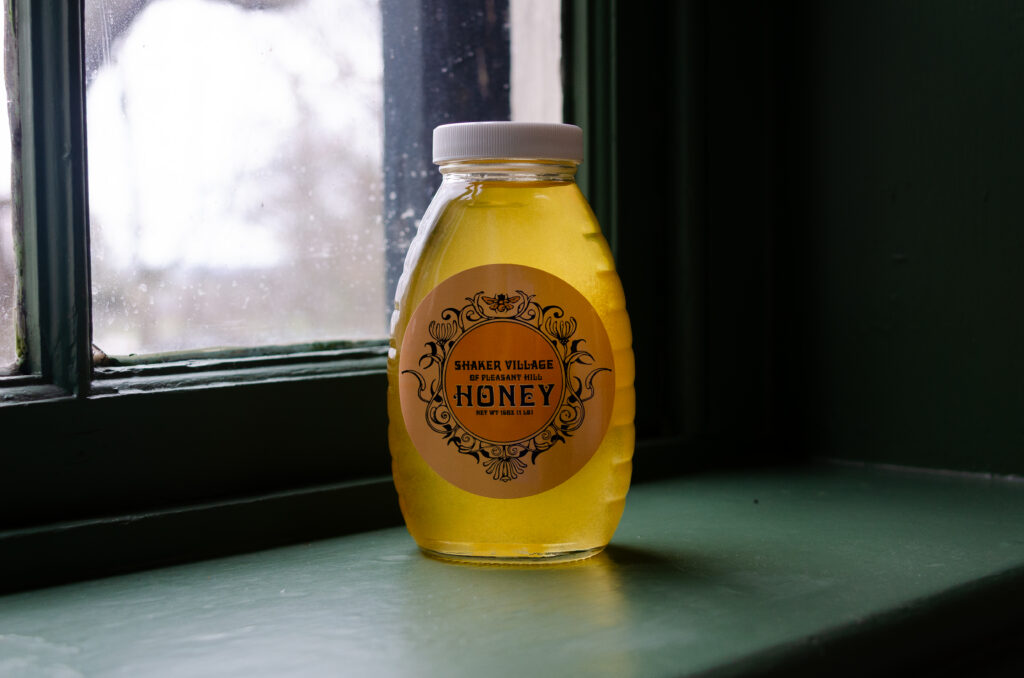
You can taste the fruits of our labor by purchasing a bottle of Shaker Village Honey online or in our onsite Shops.

Shaker Village honey is available in 1 lb and 1/2 lb jars.

Preserving the Past, Inspiring the Future

Billy Rankin, President & CEO

All That Remains

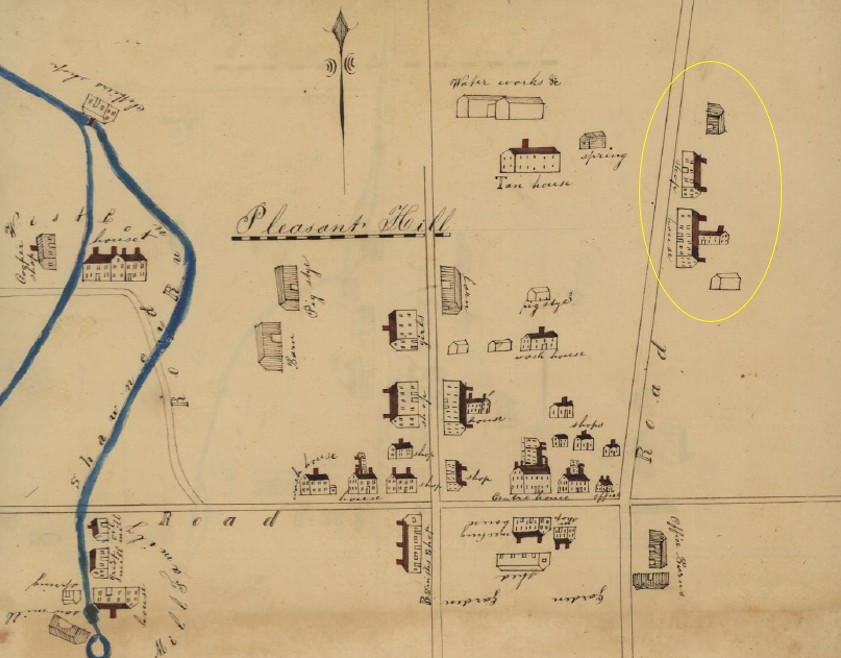
Although I began working at Shaker Village of Pleasant Hill in the fall of 2015, it wasn’t until late 2016 that I first visited the Village’s North Lot. Historically used as a “gathering order” for novice Shakers, and a site to welcome visitors to the community, by 2016 the North Lot seemed entirely separated from the guest experience at the Village.

The North Lot is located only a quarter mile from the Historic Center of Pleasant Hill, though that distance seems much farther due to the presence of highway 68 bisecting the property. The highway, and the fact that the last historic building that remained at the North Lot had been shuttered for nearly a decade, is why it took so long for me to make my first visit.

My interest in exploring the 1816 North Lot Family Dwelling was purely for curiosity’s sake. I had read about the building’s interesting design, and was told that it “might not be around much longer” due to its poor condition. It seems that when the Village had fallen on hard times financially in the early 2000’s, among the casualties were “satellite” buildings that could no longer be maintained.

I crossed the highway on foot, hopping gates until I came to the long, maple-lined lane that led to the rear of the dwelling. Walking along the lane I noticed the foundations and ruins of several other structures, remnants of the dozen or so buildings that would have comprised the North Lot Family. There, at the end of the lane, stood the last of what had once been a vibrant collection of structures.

A Long Road Back

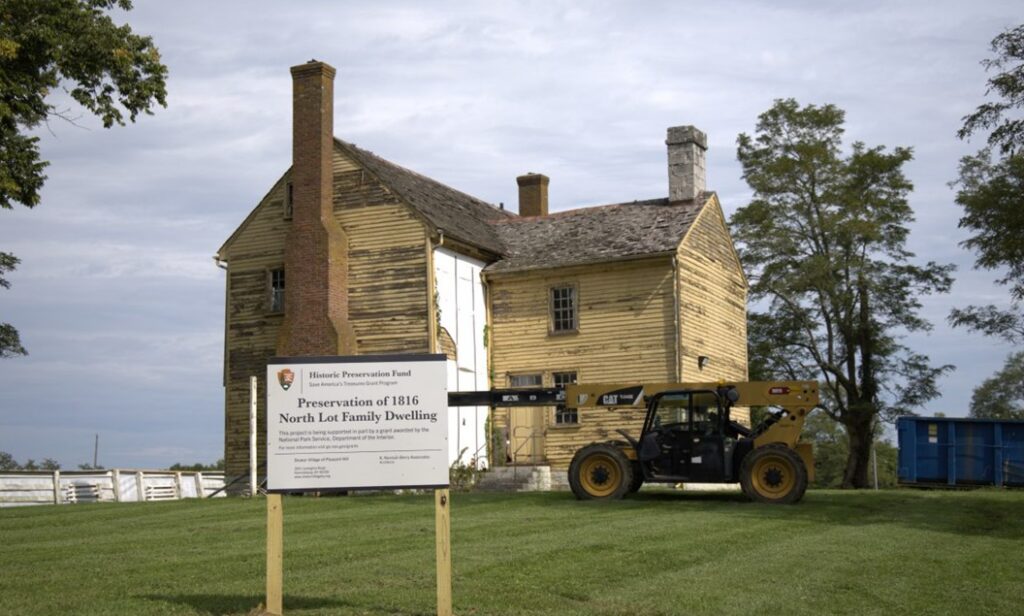
Encircling the building, I stepped over broken window panes and a gutter spout that had fallen. Torn construction wrapping from a prior attempt at preservation flapped in the breeze.

Looking past these abysmal conditions, I imagined the lives this building had lived. Shaker brethren raising its timber framed walls during construction, then coming and going for their daily labors while it served as their dwelling. After the Shakers, tenant farmers making their home here and caring for the fields. And, later families on a retreat to central Kentucky, exploring, making memories and then returning to their comfortable “home away from home.”

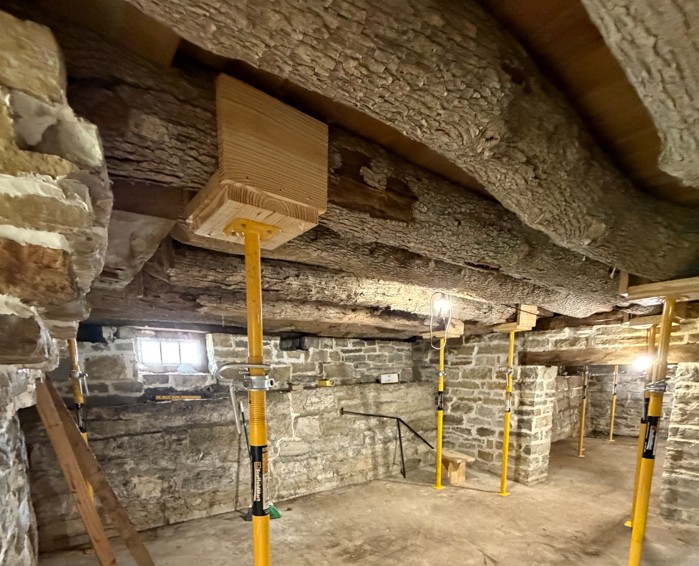
As I climbed the steps through the three levels of the building and then down to visit the cellar, my thoughts turned away from the past, and toward the future. How can we save this irreplaceable building? What could it become in its next life?

In subsequent years, as our team tackled all the challenges presented by a 3,000-acre historic property, the North Lot was never far from our minds. By 2022 we had developed a long-range plan that included bringing new life to the North Lot. Fundraising efforts began that fall with lead contributions from two private donors, and the search for applicable grants and other funding sources.

They say that “good things come to those that wait.” That may be true, and patience is certainly a virtue, but I will submit an adage that better fits at Shaker Village is “good things come to those that work hard and don’t give up.” The Development Office at Shaker Village hosted dozens of tours, submitted multiple grant applications, solicited support from elected officials and government offices, and finally, after years of effort, succeeded in securing $1.5 million in grant funding and private donations for the preservation of the 1816 North Lot Family Dwelling.

The North Lot, Reborn

With the 2025 announcement of a grant award from the Department of the Interior’s Save America’s Treasures initiative, and matching funds through Kentucky’s GRANT program, the real work of preserving and sharing the 1816 North Lot Family Dwelling could begin.

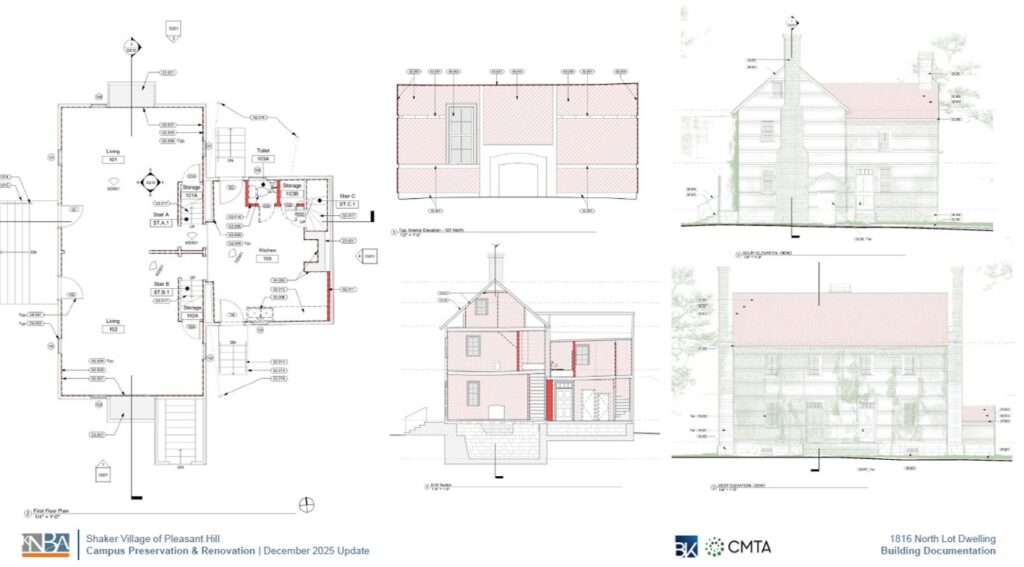
The team at Shaker Village enlisted our partners at K. Norman Berry Associates Architects to help assess current conditions and develop a restoration plan. First, we will remove the non-historic elements of the building to better view structural elements. This includes modern plaster, insulation, mechanical elements, bathrooms and roofing shingles.

Next, engineers will assess the building’s structural integrity and determine any treatments that will be needed to ensure its stability. Then, exterior surfaces will be restored or renovated, including siding, trim, masonry, windows, doors and roofing. Lastly, work to install new mechanical systems and restore interior finishes will take place.

By 2029, the North Lot Family Dwelling will be “alive” again.

Completing the Picture

As the restoration of the 1816 North Lot Family Dwelling takes place, Shaker Village continues to raise funds for landscaping, furnishings, kitchen appliances, and other amenities to compliment and fulfill this project. Once completed, the dwelling will once again be available for overnight rental – a perfect destination for a family or small group retreat.

As the project continues, follow our blog to learn more about our progress, and how this initial project will open up new guest experiences across the entire northeast portion of Shaker Village’s property.

You can also lend support to the 1816 North Lot Dwelling project by making a donation. Gifts to the North Lot will support the building and additional needs, including landscaping, fences, interior furnishing and pavement. 

Discover More

If this is your first time learning about the 1816 North Lot Family Dwelling, you may enjoy these articles for additional context:

A New Way to Belong at Shaker Village

Amanda Birch, Development Coordinator

For more than 200 years, Shaker Village has been shaped by people who returned again and again — to work the land, to care for one another and to preserve something larger than themselves. That spirit still guides us today.

The 1809 Farm Deacon’s Shop is one of the 13 historic buildings where Members can enjoy an overnight stay.

This March, we are proud to introduce Membership at Shaker Village — an evolution of our Annual Pass program that reflects not just how people visit the Village, but why they return.

At its heart, much remains the same. Membership continues to offer complimentary access to The Historic Centre, The Farm and The Preserve. It provides the freedom to walk the trails, attend signature events and return as often as you like throughout the year. The value that passholders have come to rely on — access, flexibility and ease — continues unchanged.

The Farm and Garden are steps away from The Trustees’ Table where Members can enjoy special discounts.

What has evolved is the way those benefits come together.

Membership brings greater intention to how people experience the Village. In addition to the access members already enjoy, the program now includes new ways to deepen that relationship — from preferred member benefits across the site to thoughtfully designed member-only experiences throughout the year.

These experiences are designed to slow the pace and invite return visits. They create opportunities for members to linger, learn something new and experience the Village in ways not always possible during a single-day visit.

Membership also reflects a rhythm of return. Through frequent visits and shared experiences, members become part of the ongoing life of the Village—shaping how it is experienced today and carried forward over time.

Membership at Shaker Village is not a departure from what people know. It is a refinement of what has always mattered. It is about access, made easier. Connection, made deeper. Stewardship, made visible.

We invite you to explore Membership at Shaker Village — and to continue making this place part of your life, season after season.

Members receive complimentary admission to enjoy the Village any time of the year.

Learn more about Membership at Shaker Village by visiting our website and reach out to our team at [email protected].

Growing, Restoring and Welcoming: Highlights from 2025 at Shaker Village

Amanda Birch, Development Coordinator

Every year Pleasant Hill unfolds in its own rhythm. In 2025, that rhythm was shaped by moments of renewal, community and connection from the first bright days of spring to the final celebrations of the season. Across the Village, guests explored, learned and shared in the simple joys that make this place feel like coming home.

As we reflect on all that happened this year, we’re grateful for the steady work that continues to strengthen the Village and carry its spirit forward.

A Year Filled with Shared Experiences

One of the most joyful parts of 2025 was welcoming guests back for traditions both new and old.

  • Our nine signature events created moments of celebration, creativity and togetherness throughout the year.
  • Explorer Summer Camp filled the Village with curiosity and confidence, with scholarships helping local students join in the fun.
  • Families returned for hands-on programs, guided walks and opportunities to discover the Village through fresh eyes.
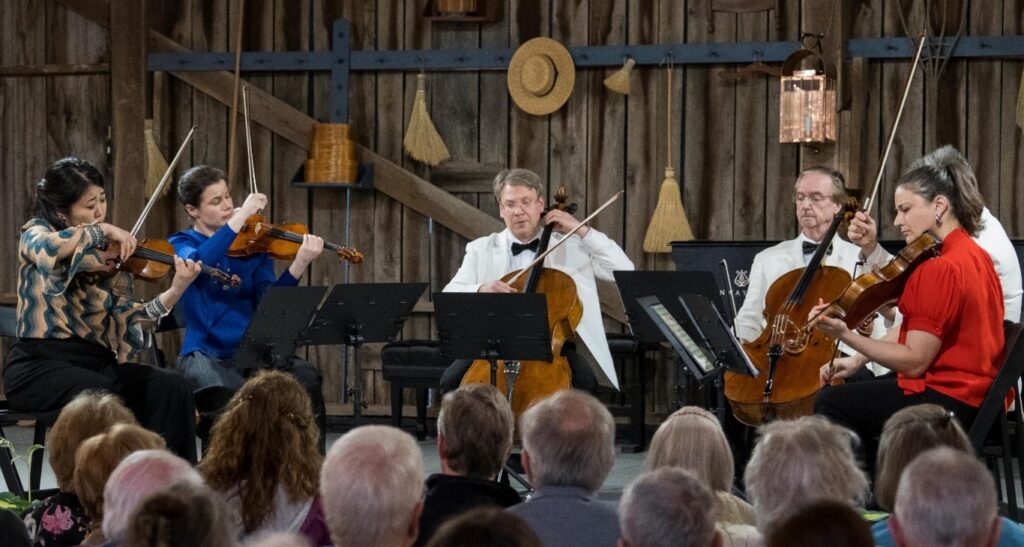
  • Music drifted across the Village all year, including standout performances by the Chamber Music Society of Lincoln Center and the Louisville Orchestra.
2025 Chamber Music Festival of the Bluegrass.
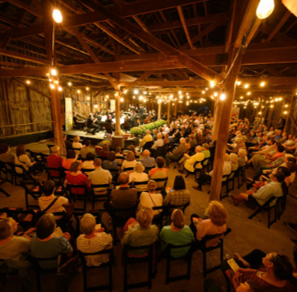
The Louisville Orchestra performed in the Meadowview Barn.

Preservation Work That Honors the Past

This year brought meaningful progress across the historic site, with careful stewardship guiding
each project.

  • Preservation efforts continued at the East Family Wash House, helping ensure this building remains part of the Village’s story for generations.
  • The 1839 Trustees’ Office feasibility study concluded, and the project entered the design phase, shaping the vision for preserving and reimagining this landmark of Shaker hospitality.
  • The Carriage House was fully restored after an unprecedented storm caused a tree to fall onto the building, using as many original materials as possible to complete the reconstruction.
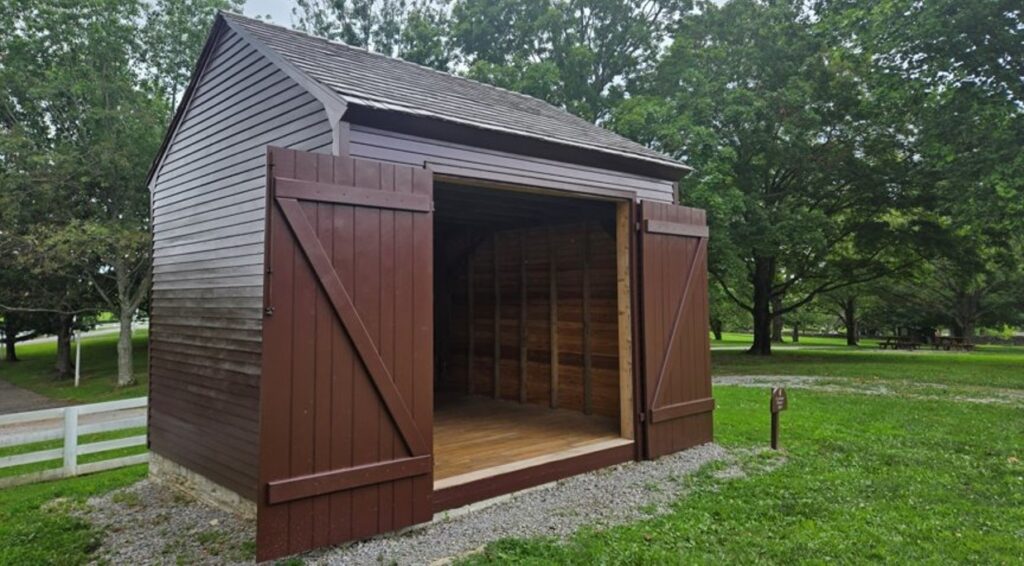
  • Fresh paint brightened the Stables, Preserve Barn, run-in sheds and the Old Ministry’s Workshop, preserving these working spaces and keeping them welcoming for staff, animals and guests.
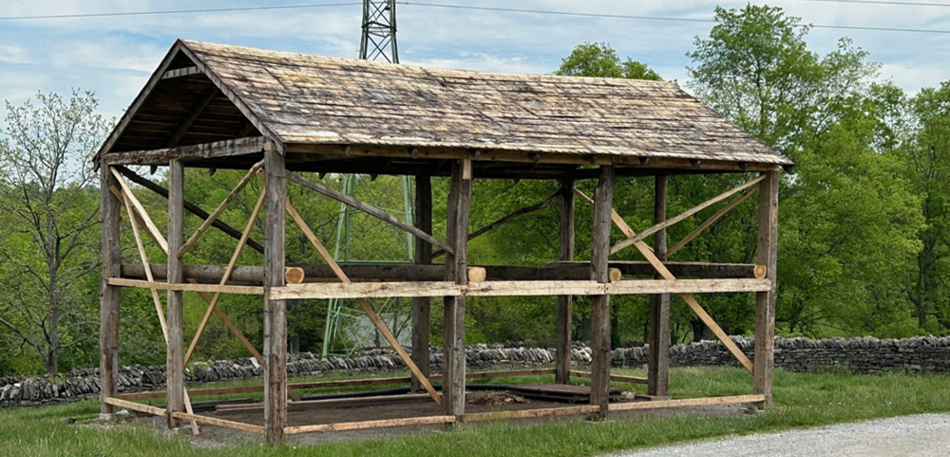
  • Restoration continued at the West Lot Timber Frame Stable, protecting this rare surviving structure with historically grounded attention.
  • Work kicked off at the North Lot Dwelling, beginning a significant chapter in restoring one of Pleasant Hill’s most important structures.
The East Family Wash House undergoes restoration.
The restored Carriage House.
The freshly painted Old Ministry’s Workshop.
The West Lot Timber Frame Stable under construction.

Hospitality Rooted in Tradition

Warm hospitality is a defining thread of Shaker Village, and this year brought new improvements that made the guest experience even more memorable.

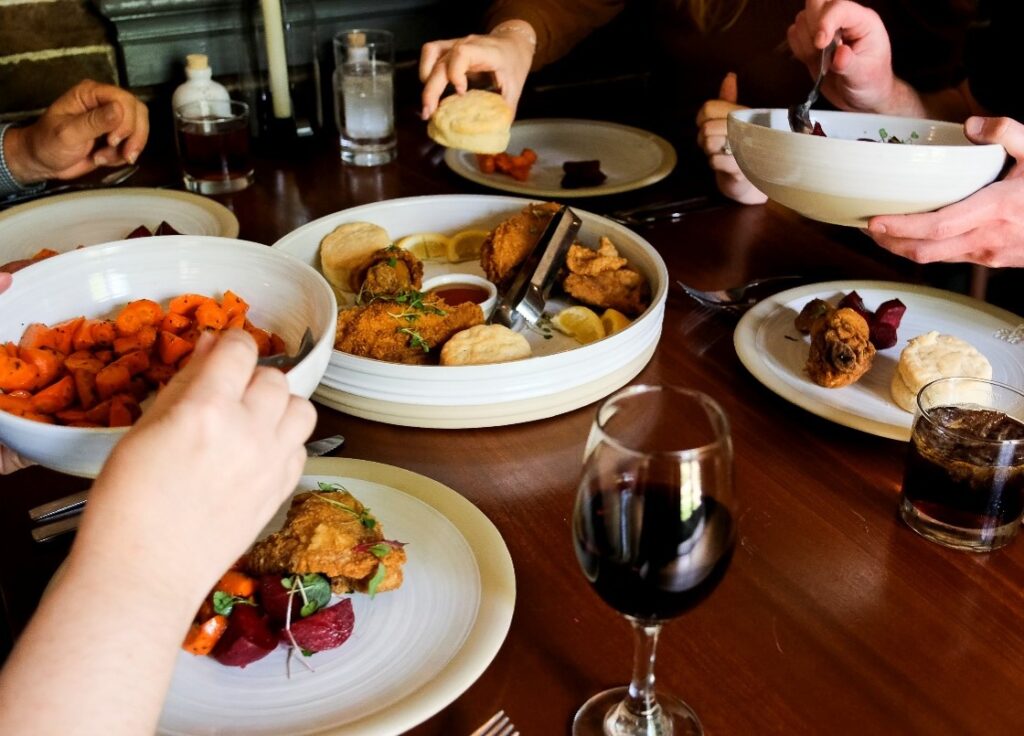
  • Family-style dining returned to The Trustees’ Table, featuring dishes inspired by Shaker tradition and crafted with produce grown right here on the Farm.
  • The Inn strengthened its guest services through dedicated leadership, focusing on the thoughtful touches that turn a stay into a cherished memory.
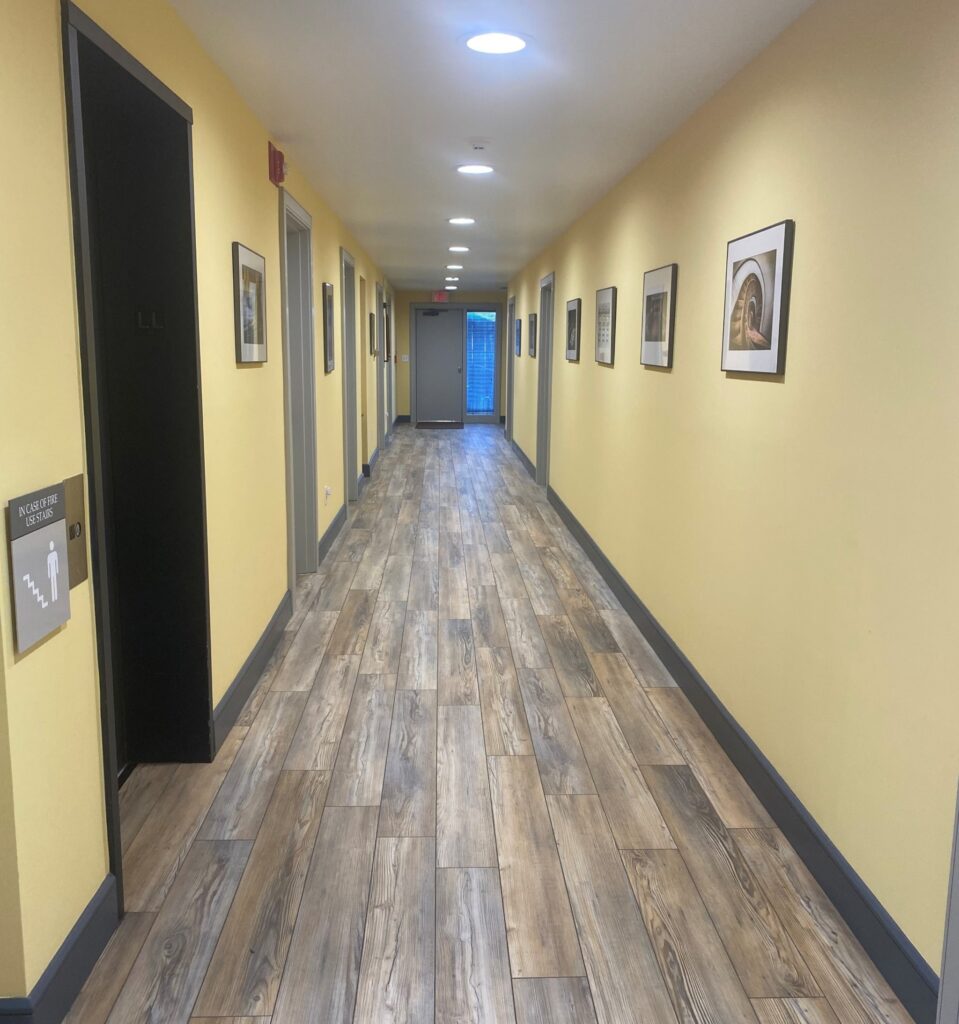
  • A refreshed administrative workspace created a more comfortable and efficient environment for the teams who support every corner of the Village.
Family-style dining at The Trustees’ Table.
The Administration Building received a makeover.

Caring for a Living Landscape

From the Preserve to the riverfront, the land at Pleasant Hill continued to flourish through
mindful stewardship.

  • Long-term ecological work including bird banding, butterfly tagging and habitat monitoring remained central to caring for the Preserve.
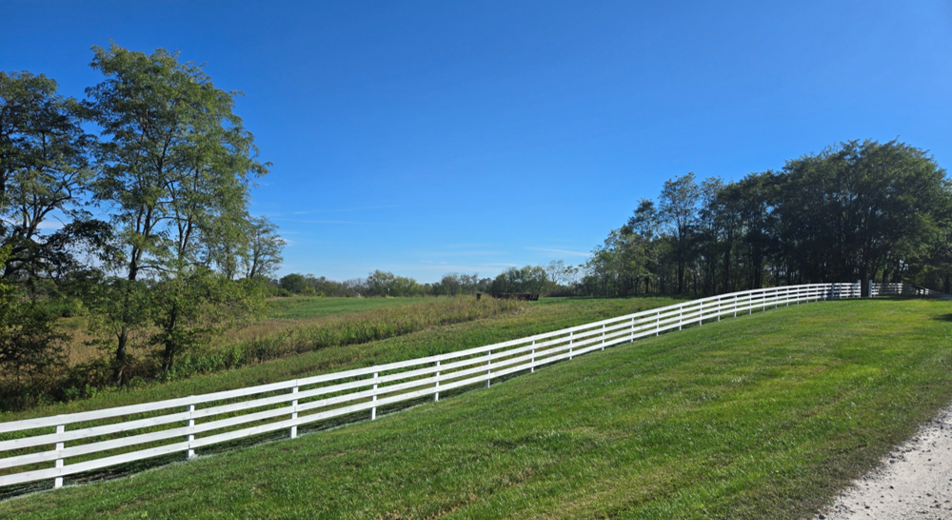
  • Prairie restoration progressed alongside plank-fence replacements, strengthening the health and safety of the landscape.
  • A new, sustainable effort brought goats into the work of invasive plant control, blending agriculture, conservation and creativity.
  • The Farm continued its seed-to-table tradition, nurturing the ingredients that supply the Trustees’ Table with fresh, seasonal flavors.
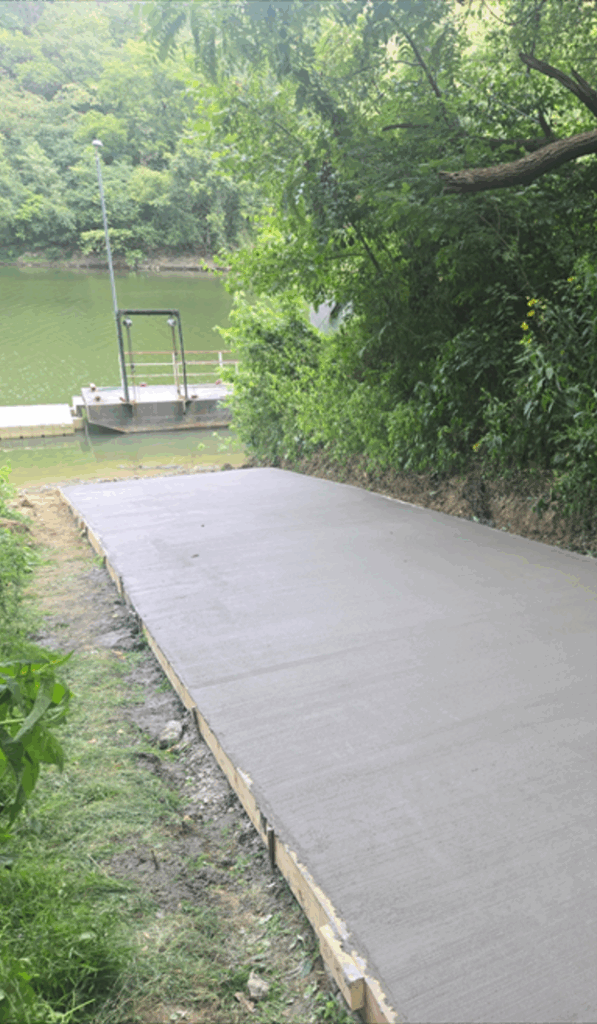
  • Two grants-funded investments helped replace the riverfront boat ramp, creating a safer and more accessible experience for guests exploring the waterway.
New plank fences line the Preserve.
The boat ramp leading to the Kentucky River.
Goats help to control invasive plants.

Sharing the Shaker Story Every Day

Throughout 2025, visitors connected with Pleasant Hill’s history in meaningful and memorable ways.

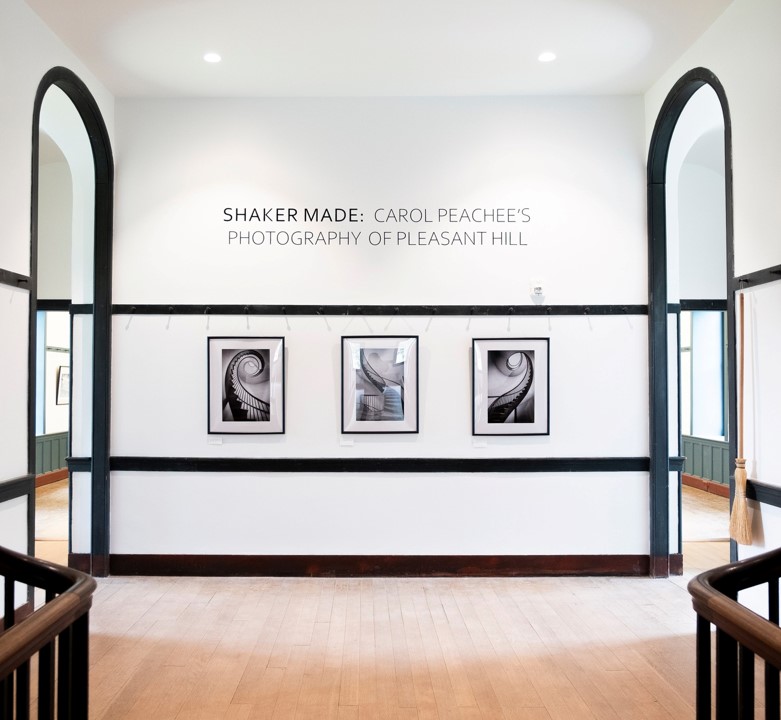
  • A temporary Carol Peachee photography exhibit in the Centre Family Dwelling offered a fresh look at Shaker life, craftsmanship and belief through photography.
  • Daily tours and school field trips brought stories of community, innovation and resilience to life for guests of all ages.
  • Volunteers arrived in record numbers, especially during It Takes a Village Volunteer Day, helping tackle projects that keep the Village strong.
Photographer Carol Peachee’s exhibit, Shaker Made.

Looking Forward

As we close out 2025, we do so with deep appreciation for the people who walk these paths, share in these experiences and care about this special place. This year’s work in preservation, hospitality, education and stewardship reflects the ongoing story of Pleasant Hill. It’s a story still unfolding, carried forward by a community that believes in what this Village offers the world.

Here’s to the year ahead and to all the moments of discovery, connection and renewal still to come.

Shaker Village Museum Internship

Collections Intern Lauren Lieske

Walking into the collections building at Shaker Village of Pleasant Hill in Harrodsburg, Kentucky, I was awestruck by the sheer number of artifacts in the concrete structure. Due to my limited professional experience, I would never have conceived of such a unique way to disguise the practicality of housing historical objects amongst nineteenth-century structures; a cinderblock building within an old tobacco barn, or the Building in a Barn (BiB). Fully climate-controlled, Shaker furniture stacked to the ceiling, rolling shelves layered with various artifacts, cabinets named after Shakers, and a limited library and archives, the BiB was a physical manifestation of how I envisioned my professional life. Under the mentorship of Rebecca Soules, Collections and Education Director, and Alli Bramel, Collections Specialist, I was provided with the incredibly valuable opportunity to analyze, handle, organize, preserve, and curate these relics of Shaker life at Pleasant Hill.

During my work-study program at Berea College, I have gained career experience working in the Hutchins Library Special Collections and Archives. Working for the project archivist, Peter Morphew, I had achieved a background in sorting, scanning, cataloging, and curating archival materials and 3D objects. When I initially joined the department, I did not intend to continue working in informational and cultural studies beyond my undergraduate career. I began to adore my projects and tasks as I became more entrenched in archival and museum work operations. From then on, I knew gaining more insight and experience into this profession was essential. Additionally, since I worked mostly with archival materials, I wanted to introduce myself to the museum works and 3D artifacts. I was introduced to Shaker Village of Pleasant Hill’s summer internship at Berea College’s Internship Fair and discovered that they offered an opportunity to explore the career questions that had recently arisen.

Collections Interns Ally Walton and Lauren Lieske.

The first week, I was instructed to explore the Historic Center of the Village, which included most of the 34 historic structures that remained and were restored on the 3,000-acre property. Within almost every building, exhibits and demonstrations displayed exhibit labels and historical objects that told the story of the Eastern Kentucky Shakers. Once I became more knowledgeable about the Shaker Village history and layout, my supervisors began their instruction on the PastPerfect database software and their unique numbering system. Additionally, I was provided with finding aids and care manuals. Shaker Villages Collections Department’s policies, guidelines, and methods were distinct from those I had experience with at Hutchins Library. These differences in approaches and procedures presented me with an opportunity to expand my skills and challenged me with unfamiliar territory. Achieving diverse knowledge and abilities was paramount to my internship experience and future career decisions.

Once settled into the operations of the Collections Department and the Village itself, working alongside another intern, I was assigned my first project: organizing and creating a finding aid for the Flat File. I was thrilled to have the occasion to implement all that I had learned during my labor position at Berea College. However, I had never interacted with blueprints, historical maps, or large documents; most materials were in the flat file. For the finding aid, I was instructed to list each document’s title, author, number of pages, and number of copies. As far as organizing, as I continued to record the properties of each document, I decided to organize the twelve-drawer Flat File by specific categories and sub-categories. I was also taught the proper handling of such large materials without damaging the document or oneself, which most of the time required a second hand. I utilized much prior knowledge for this project, yet I encountered many moments to learn about this career’s process, functions, and appropriate procedures.

Among other duties and ventures during my time interning at Shaker Village of Pleasant Hill, I always worked on a project within the BiB. After I had checked my work on the Flat File, my fellow intern and I were assigned to house, organize, and document the Non-Archival Shaker Manuscript Collection in the Vertical Files. Once again, this archival project broadened my experience in library and information sciences. Most of the materials I processed were copies of Shaker correspondence, either between each other, separate villages, or the outside world. Other manuscripts, such as journals, legal documents, and financial records, were among the piles of affectionate letters and village reports. Under each category, I documented each file with its author, recipient, and date, which were commonly difficult to make out due to nineteenth-century cursive or photocopy distortions.

The Vertical File project also challenged me with new aspects of the archival and museum profession. More importantly, it reminded me why I was attracted to this career path in the first place, the interaction with not only historical materials, but also the lives of those in the past. History is worth studying because it is someone’s history, and making that accessible is a privilege for which I am grateful.

Nonetheless, not all my projects were archival, as my next project involved curating a new exhibit: Shaker Made: Photography by Carol Peachee. While I had minimal experience in curating and installing exhibits, I contributed to the Janis Ian Breaking Silence Exhibit at Hutchins Library. This third project was going on while I was working with the Non-Archival Manuscript Collection. Over a month before the exhibit’s opening, we met with Carol Peachee to discuss the theme and layout, taking room measurements, calculating the size and amount of each photograph, and setting the dates for installation and opening. Shadowing my supervisors was especially enlightening, allowing me an understanding of the discussions that occur in the initial stages of exhibit curation and installation. After obtaining the photographic prints or installing them, I was assigned to catalogue them in PastPerfect, with their Object IDs, accession numbers, titles, descriptions, dimensions, and locations. Despite the tediousness of cataloguing, I enjoy inputting information into a database.

Outside the Centre Family Dwelling where the ‘Shaker Made: Inside Pleasant Hill’s Shaker Village’ exhibit featuring Carol Peachee’s photographs are displayed.

The installation day was frustrating, invigorating, and fulfilling all at once. Each photograph was hung using fishing line, making it challenging to hang the pictures in parallel. However, once achieved, the completion of such a challenge was satisfying. On opening night, I was so pleased with what I participated in and what I had learned in the process. Due to this experience, I would like to be involved in more curation opportunities in the future.

A look inside the exhibit where Carol Peachee’s photographs were hung with attention to detail.

My final project also entailed curation, which I was eager to begin. Earlier in my internship, my supervisors and I had discussed creating displays for the two Welcome Center Cases.  Once my last projects were finalized, I began to search through PastPerfect to identify potential topics, subjects, and themes. These cases obviously were limited in space, so only artifacts within their dimensions could be included, restricting my options for issues and items. With dimensions in mind, my fellow Intern and I cross-referenced our lists and decided to center our display on needlework. After collecting Object IDs and titles of artifacts in PastPerfect, I sourced and gathered the items from their designated locations in the BiB. Admittedly, I found navigating the BiB challenging, especially in locating smaller objects. However, when finding an artifact on my list, I usually found another object to include or replace the one I was searching for.

Once I had located and retrieved all necessary items, I placed them on the cases’ base perimeter cutouts. Shifting and arranging the artifacts in association was very gratifying, as I could exert creativity in assembling the cases’ layout. Moreover, deciding which objects to include involved a creative eye: comparing colors, sizes, shapes, and heights in correlation. I could express myself within my work, even in writing up the theme and object descriptions. This final project exemplified my motivations in this career path, as I interacted with historical objects and organized a presentation of them.

Behind the main projects I contributed to during my internship at Shaker Village of Pleasant Hill, there were other tasks to be completed. One of the first tasks was moving and assessing a new acquisition: a Pleasant Hill Shaker blanket chest. I had never handled historical furniture before, so I was taught the proper attire, precautions, and lifting of larger objects. This was beneficial instruction, and I will take the knowledge into my future career. Additionally, I was assigned to shadow two interpreters from the Program Team to gain insight into the schedules, information, and procedures of giving tours. Shadowing also helped me grasp the general history of the village as my internship was starting. I also contributed to the relaunch of the Trustee’s Restaurant by participating in a commercial for the opening. This task allowed me to interact with departments outside my own, specifically the Marketing Department. I attended many meetings, including a Historic Preservation, Collections, and Museum Committee Meeting, a monthly Marketing Meeting, a Safety Meeting, and an All-Staff Meeting. These various tasks throughout my internship provided me with an understanding of company operations and interdepartmental communications.

My summer internship at Shaker Village of Pleasant Hill was an indispensable experience due to its contributions to expanding my skills, expertise, and understanding in the career field I intend to pursue. The historic site is a pleasure to work at, mainly because it is surrounded by nature and historical artifacts. However, the knowledge and experience I gained made my internship so valuable. In organizing and documenting two collections in the library, I was allowed to utilize what I had previously learned, and I was still challenged with new and difficult assignments. My supervisors involved me in installing an exhibit opening and allowed me to curate a display. I worked alongside others, whether the other interns, my supervisors, different departments, or artists, and those connections made are essential to obtaining a space within archives and museum works.  Even the daily chores around the village taught me valuable teamwork, perseverance, and problem-solving lessons. Most of all, my experience at Shaker Village of Pleasant Hill provided me with introspection on my appeal to collections management, whether archival or 3D, confirming my pursuit in the informational sciences profession.