HP Lovelace, Farm Manager
It’s been an amazing year for growing grass. Looking out at the lush green pastures and lawns, I’m surprised it’s late September and not late June. And of course, I’m grateful for this bounty as are the fattened livestock and the myriad of creatures that call this grass home. There are, of course, places where I sometimes wish the grass might take a break such as along stone or wooden fencerows and particularly beneath the bee hives.
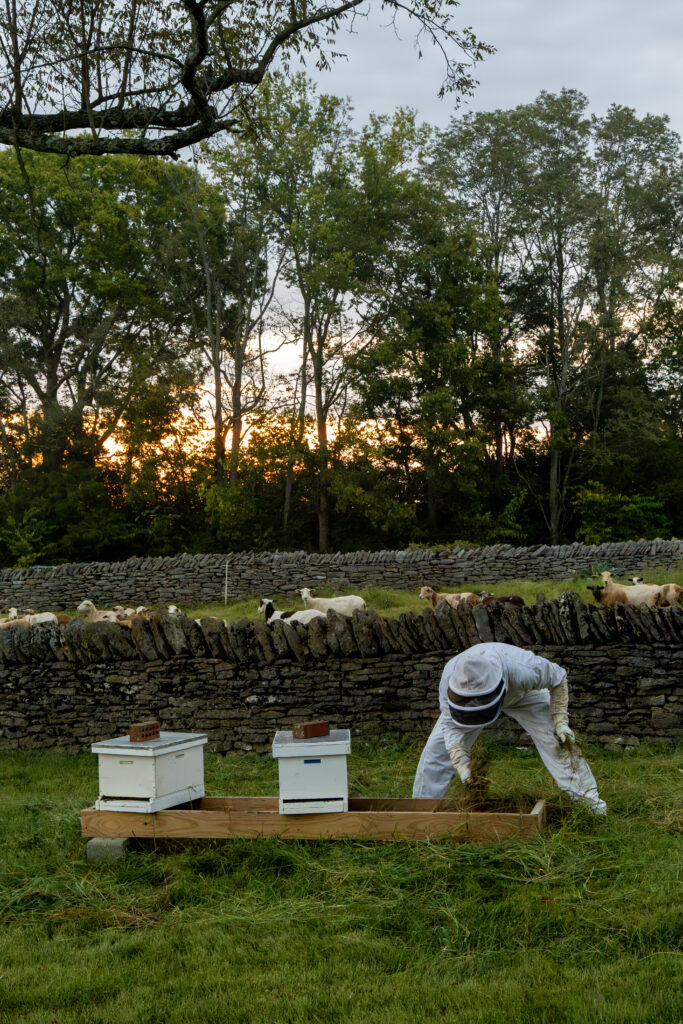
Beyond any aesthetics, tall grass compromises the health of the bees. Tall vegetation increases moisture, reduces ventilation and creates an ideal habitat for the dreaded hive beetles which can and are devastating colonies in the southeast United States. For that reason, all but three of our 39 hives are elevated above concrete. For the remaining hives, the grass must be cut.
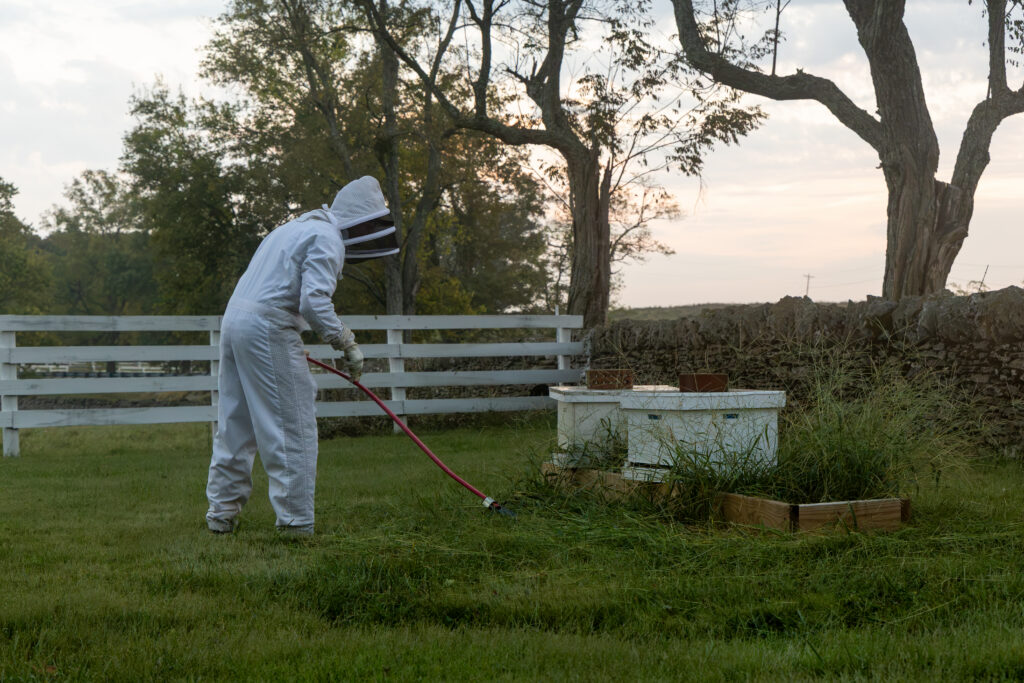
Unfortunately, bees are not privy to these noble intentions and have been known to retaliate with fierce attacks. Bees are sensitive to noise, vibration, and changes in air quality. So, herbicides that broadcast toxins, along with mowers and weed eaters that shake the ground and release CO2 are probably the wrong tools for the job.
At Shaker Village, we elect to use a scythe, as the Shakers probably did. The scythe is nearly silent, and it’s possible to complete the task without alerting the bees to our work. We still wear protective equipment, arrive before the sun tells the bees it’s time to fly, try to hold our breath or at least refrain from talking, and consciously avoid any accidental contact with the bee boxes. And we are always prepared, if necessary, to run!
Bees are amazing—their ability to pollinate the flowers and then create honey and beeswax is nothing short of a miracle. It is a joy, in our small way, to lend a hand.
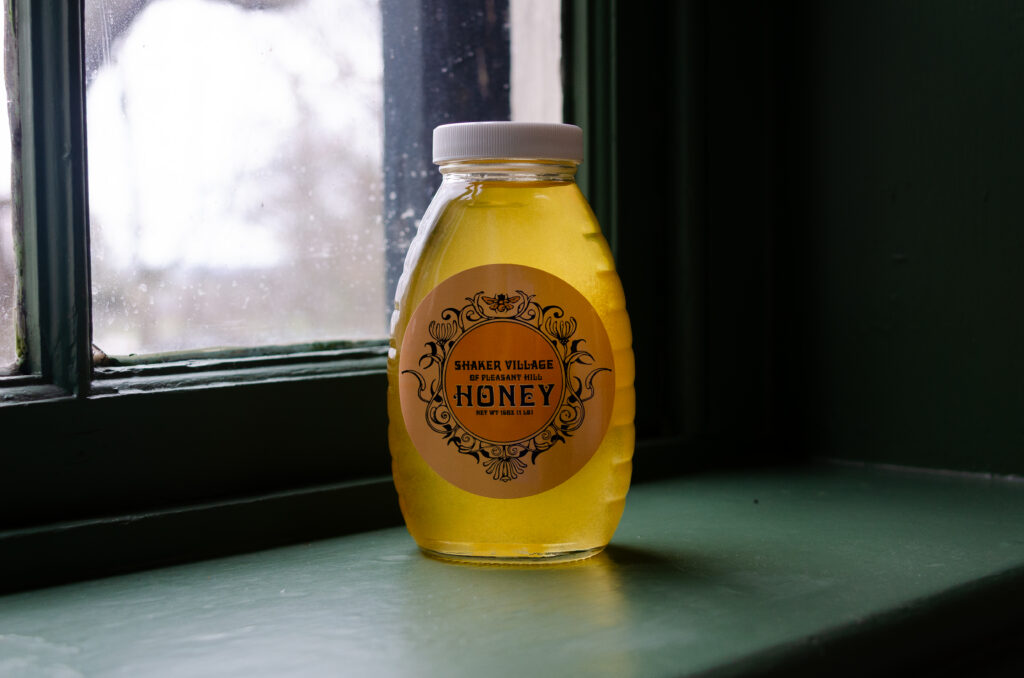
You can taste the fruits of our labor by purchasing a bottle of Shaker Village Honey online or in our onsite Shops.