Melissa Williams, Chief Development Officer
Preservation work rarely follows a perfectly predictable path.
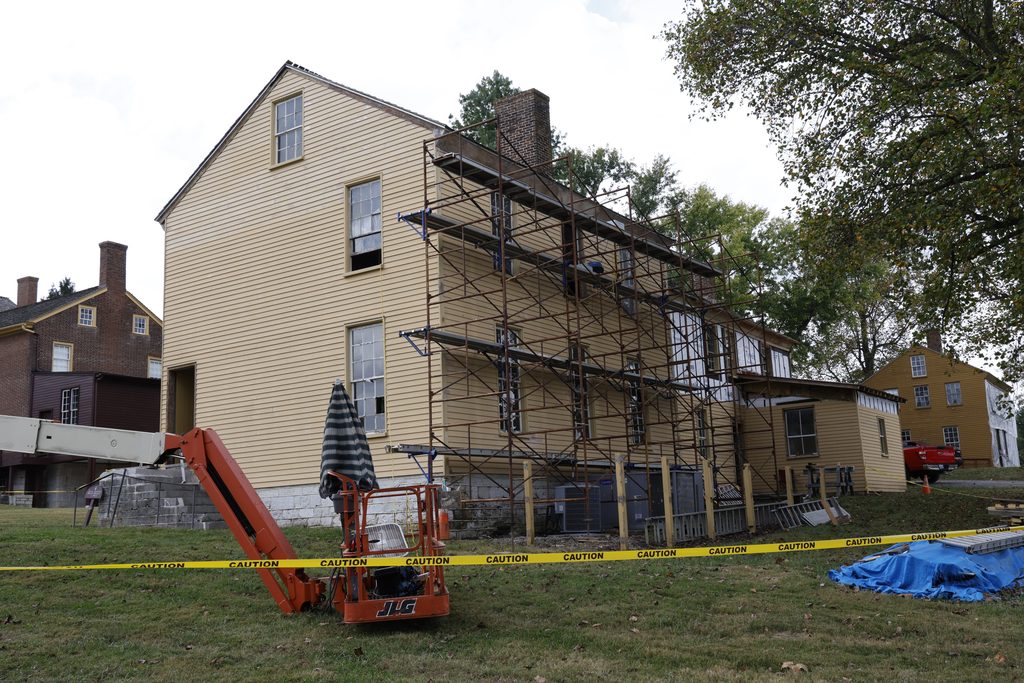
That has certainly been true at the 1835 East Family Wash House, where an exterior preservation project has evolved into one of the most instructive restoration efforts Shaker Village has undertaken in recent years.
The work has taken longer than originally anticipated, and along the way our team has uncovered conditions that could not have been fully understood until the building was opened. But those discoveries have also given us something valuable: a better understanding of how to approach the preservation of Pleasant Hill’s historic structures and a stronger team and process for the projects ahead.
Looking Beyond the Building Envelope
The original preservation project at the East Family Wash House focused primarily on the building envelope — siding, windows, exterior carpentry, masonry and other elements that protect the structure from the weather.
As siding and windows were removed, however, our team discovered additional needs beneath the surface.
Structural framing required repair. Problems with plumbing and electrical systems became apparent. Inside the building, work on those systems disturbed plaster and other finishes that would also need attention.
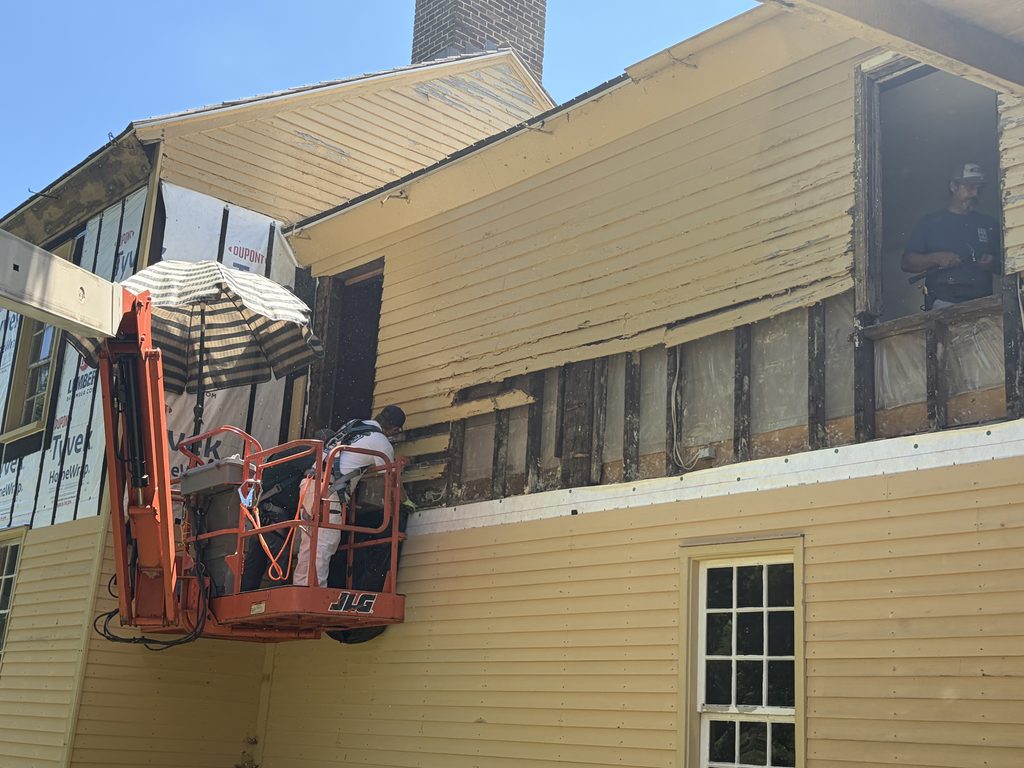
Rather than close the building back up around those problems, the decision was made to address them correctly while they were accessible.
The experience reinforced an important lesson: on a historic structure, the exterior envelope can never be considered in isolation.
Opening a wall, removing siding or replacing a window can reveal conditions that have developed over decades — sometimes generations. Future preservation projects at Shaker Village are now being planned with a more comprehensive understanding of the building and with greater consideration for what may be encountered once work begins.
A New Model for Getting the Work Done
Perhaps the most important lesson from the East Family Wash House was about how we organize the work itself.
Shaker Village is fortunate to have craftspeople with deep knowledge of Pleasant Hill’s historic buildings and the traditional materials and methods used to preserve them. The East Family Wash House project demonstrated, however, that large and complicated projects can require more construction capacity than an internal team alone can reasonably provide.
Increasingly, our preservation staff will serve not only as craftspeople, but also as the experts who help plan projects, oversee their execution and ensure the quality of work completed by outside contractors.
We have already put that approach into practice.
The recent preservation of the 1848 Post Office was completed largely by an outside contractor working under the close supervision of Shaker Village’s preservation team. While the Post Office is a smaller and less complicated building than the Wash House, this approach allowed the project to move efficiently while keeping preservation expertise and quality control firmly in the hands of the Village.
That experience is helping establish a model we can apply to additional preservation projects across Pleasant Hill, including the 1847 Cooper’s Shop preservation that is now underway and the 1821 West Family Dwelling project that will kick off before year end.
Strengthening the Team Behind the Work
As our approach has evolved, so has the preservation team itself.
Shaker Village recently reorganized several staff roles to better reflect the expertise required to care for more than 30 historic structures and to support an increasing number of projects involving architects, contractors and specialized preservation partners.
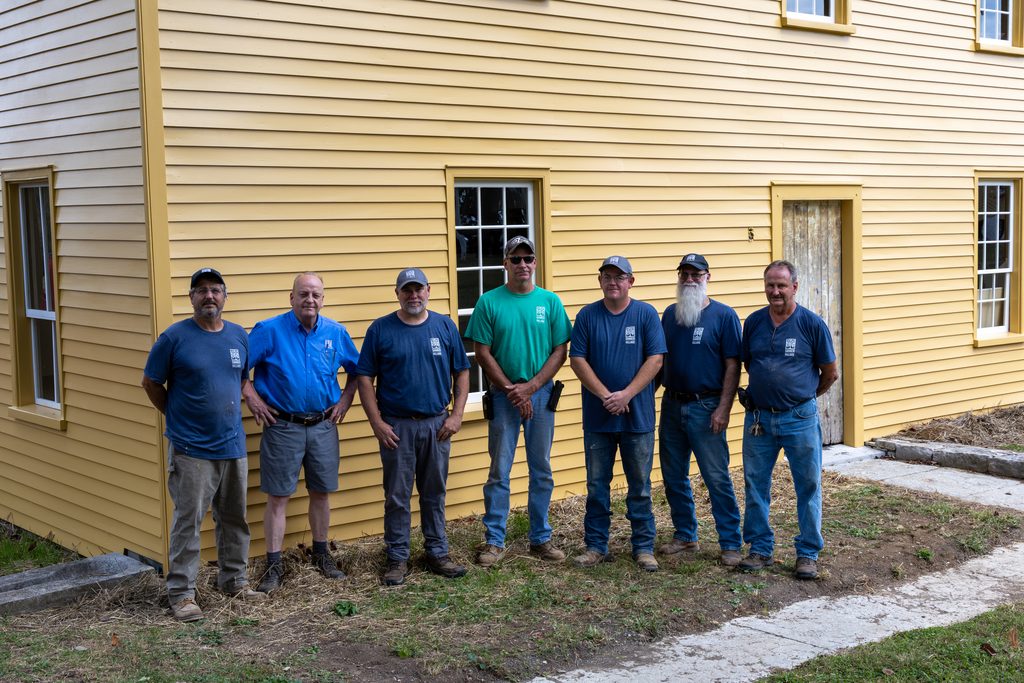
Robert Brown now serves as Historic Preservation Project Manager, supporting project logistics and overseeing quality control for historic preservation work across the property. Robert also serves as an important liaison between outside contractors and Shaker Village, helping ensure that every project meets the standards appropriate for these nationally significant structures.
Terry Cowart serves as Carpentry Shop Foreman, overseeing the organization and care of the Village’s wood shop, its equipment and materials, as well as training and supervision for staff working there.
Our former Paint Team and carpentry staff have also been brought together as the Restoration Department, better reflecting the broad range of work they perform.
Mike Worthington serves as Restoration Foreman, John Ray as Restoration Carpenter, and Bobby Dixon and Derrick Brady as Restoration Specialists.
Together, they bring decades of practical experience with the buildings, materials and craftsmanship of Pleasant Hill — while continually learning new preservation techniques and working alongside architects, contractors and other specialists.
That combination of institutional knowledge and outside expertise will be increasingly important as Shaker Village takes on larger and more complex preservation projects.
Doing It Right — Not Simply Getting It Done
There is still work ahead at the East Family Wash House.
Remaining exterior work includes repairs to framing and the cornice, installation of window sashes, masonry repointing, gutters, improved site drainage and shutters. Interior repairs associated with the plumbing work and the renovation of the second-floor bathrooms will follow.
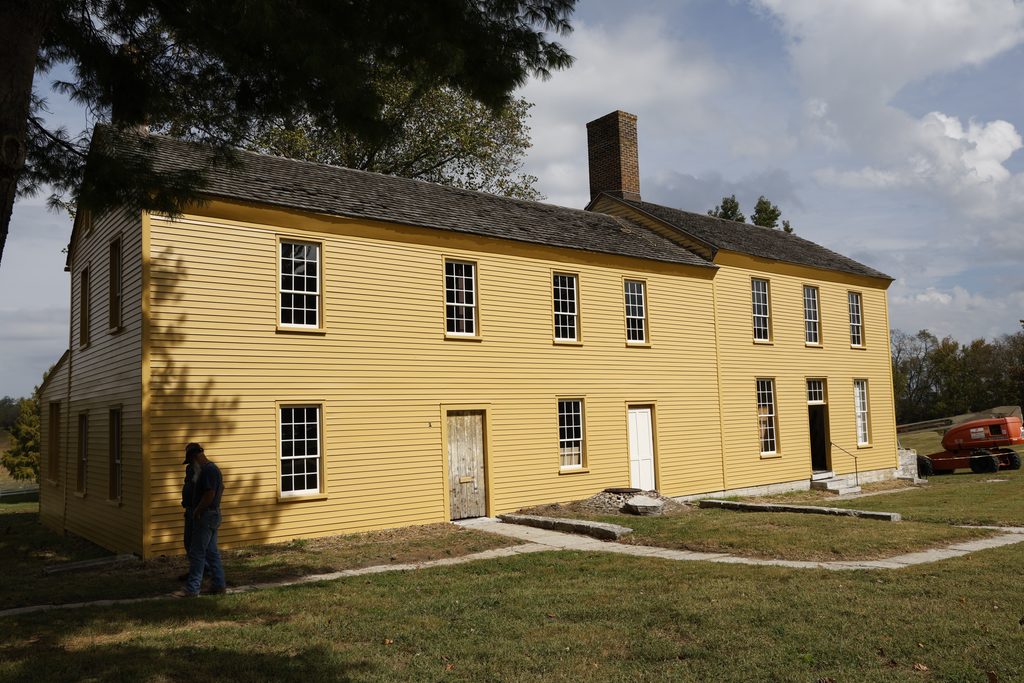
When the work is complete, the building will be stronger because of what was discovered along the way. So will Shaker Village.
Preserving Pleasant Hill is not simply a matter of completing a list of projects. It is an ongoing process of understanding these buildings more deeply, strengthening the people and systems responsible for their care, and carrying lessons from one project into the next.
The East Family Wash House has challenged our team, but it has also made us better.
Every preservation project that follows will benefit from what we have learned here.
The preservation of the 1835 East Family Wash House was made possible by six donors who pooled their resources to fund the restoration. Learn more about current opportunities to support preservation at Shaker Village here.
