Hello, November

burn

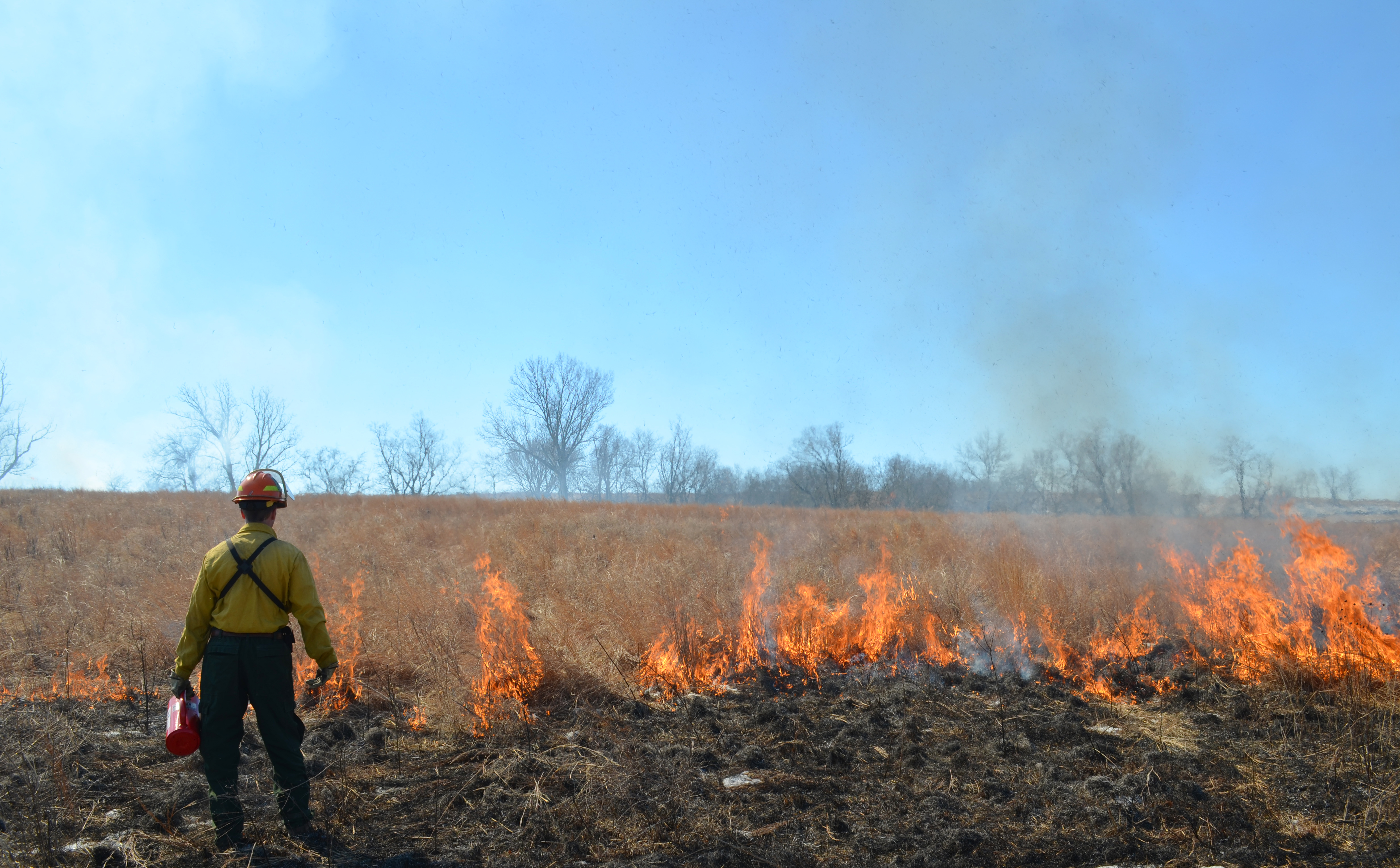
We set The Preserve on fire! Every year, Shaker Village fields are managed on a 2-year fire rotation to maximize conditions for habitat. Controlled burns are an integral part of the restoration and maintenance of the more than 1,200 acres of native warm season grasses and wildflowers found throughout the 3,000-acre property. Burns, such as this one, are carried out as part of our property management plan. Funded through grants from the Kentucky Department of Fish and Wildlife Resources (KDFWR) and the Natural Resources and Conservation Service (NRCS), our projects have returned the land to the prairie appearance that existed prior to the Shakers’ settlement of the area.

During the last 10 years, we have successfully converted 1,200 acres of unproductive pasture land into native prairie grasses and wildflowers. The results have been extraordinary—60+ coveys of wild Northern Bobwhite quail (the highest density of this declining species in Kentucky) and thriving insect, songbird and mammal populations.

You can see more about Shaker Village and quail restoration on This American Land airing on PBS later this year.

We take a “bottom up” ecosystem approach to quail management. We start at the bottom by providing high quality habitat consisting of native warm season grasses and wildflowers. Through late-winter prescribed fire and field specific management, we hold succession in check and provide premium nesting and brood rearing habitat in adjacent fields. We work to provide woody cover and “rough edges” to support quail across the entire range of habitat types they prefer. Our efforts not only support quail, but all other organisms that thrive in a native prairie ecosystem. Through intense monitoring of the quail and songbird population, we are able to see how our management positively affects overall bird populations. We also are able to determine sustainable hunting limits for quail with proceeds from hunting supporting The Preserve at Shaker Village and 1,200 acres of high quality quail habitat.


Join us this month for a Quail Dinner.
Learn more about our Land Conservation work.
Consider donating to Shaker Village to help us continue to make great things happen here.

Please note: The Preserve and trails will be closed Mondays – Fridays from Nov. 1 – Dec. 30 for habitat and wildlife management and trail restoration work.
The trails along River Road (River Road Trail and Palisades Trail) will be open every day for guests who want to hike/walk during the week. All trails will be open Saturdays and Sundays in November and December.


Ben Leffew is the preserve manager. A Kentucky Proud product straight out of Boyle County…

Pleasant Hill Personalities

0013-high-res

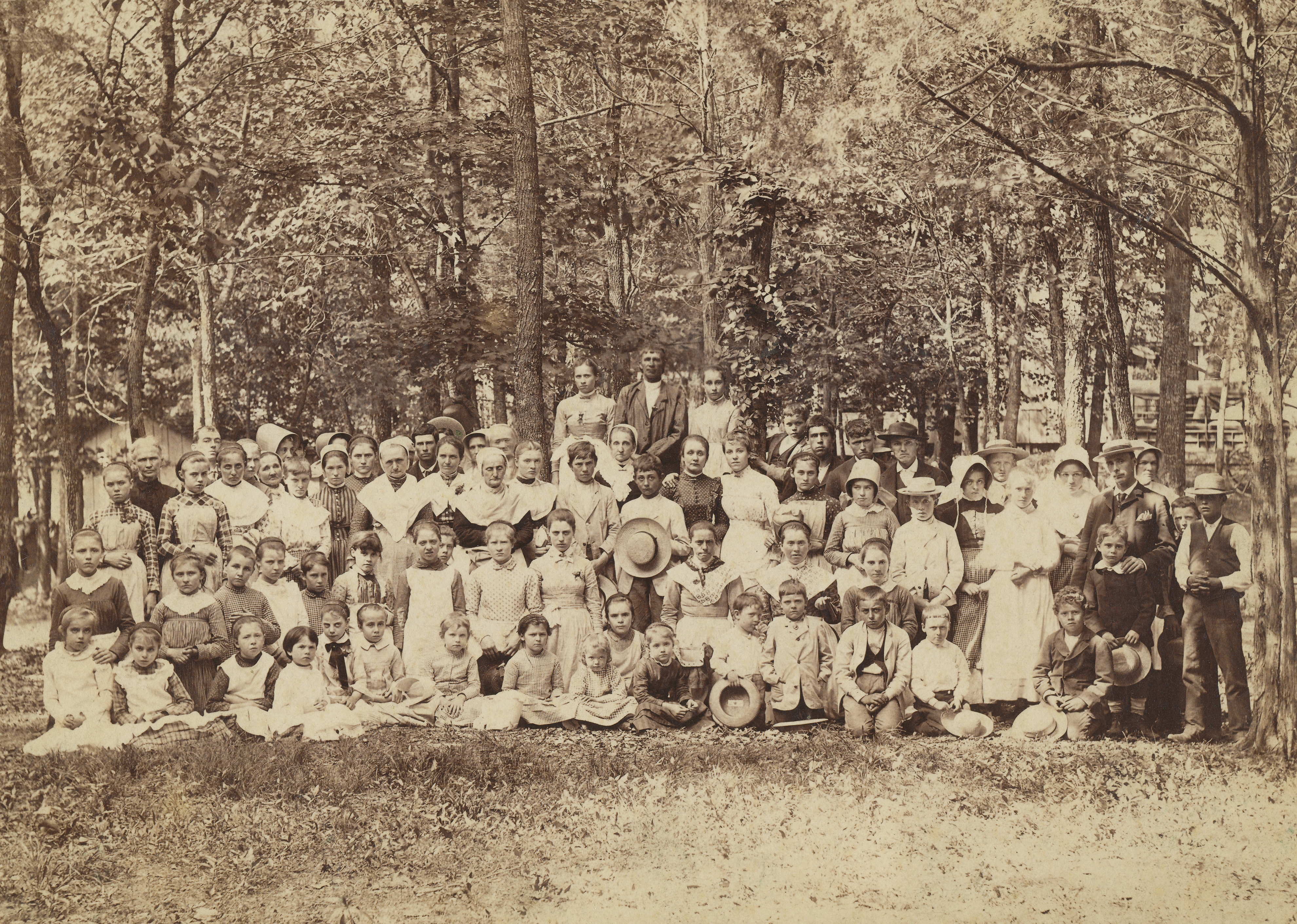
The legacy of the Pleasant Hill Shaker community has often been assessed exclusively through their material culture.  However, each physical item is inseparable from the people who used these items while alive.  During its century of existence as a Shaker community, more than 2,000 people called Pleasant Hill home – each with a unique background, experience, personality, set of quirks, hopes, dreams, desires and reasons for being a part of this endeavor.

Meet some of the Pleasant Hill Shakers:

  • Mary Settles arrived at Pleasant Hill with her two small children.  Later in life, she was described as one whose “personality permeated the entire house,” as she engaged visitors on subjects ranging from Shaker theology to American politics.
  • William Pennebaker arrived as an orphan who survived the death of his parents and was brought by extended family members to live with the Shakers, with whom he spent the remaining 73 years of his life!  He was described as “an upright, truthful man, quiet and peaceable in his demeanor.” Yet he must have also had a big personality that clashed with others, as he was at one time engaged in a long feud that culminated in his assault by other members of the community – and resulted in the accidental wounding of one of his attackers!
  • William S. Byrd was noted as a person of “honourable standing,” – he was “a descendant of the prestigious Byrd family of Virginia, distinguished for more than four generations by its wealth, prominence, and leadership in American society” (quoted in Stephen J. Stein, Letters from a Young Shaker, p.1).
  • Napoleon Brown served in the Union army during the Civil War, and following the war somehow found his way to Pleasant Hill.  Shortly thereafter, he was placed in the local asylum.  Whatever his ailment was, he recovered enough that by the end of the same year was back and contributing to the community in a meaningful manner.
  • J. R. Bryant, the picture of courage, showed great intestinal fortitude when he stared down the barrel of a Confederate soldier’s gun, and had bullets whizzing by his head during a guerilla raid on the community…(which he did to secure the safety of his brethren).
  • John B. Shain, a strict vegetarian, advocated exercise and “free use of water both drinking and bathing.”  He lived until the ripe old age of 92.
  • Micajah Burnett was a man of superior intellect and was described as “the principal architect of this village.” He was not only an intelligent person, but also a hard worker, who at the age of 78 was going on trading trips as far away as New Orleans.
  • Kitty Jane Ryan, among others, enjoyed the occasional break from a hard day of work.  She reported one evening that “the Sisters went to the West Pond to see the brethren skate.  We had a very amusing time, we sit in chairs and sailed over the pond like lightning, assisted by the brethren who skate…” (January 6, 1860).
  • Benjamin Dunlavy, a man who wielded a pen as well as anyone, appears to have had quite the dramatic tendency – even when reporting something as straightforward as the weather: “With a mild, pleasant evening, such as we have enjoyed the past week, the thermometer at 50° at dark, the old year was gliding out almost as gentle as the balmy zephyrs of May – When Lo, & Behold! Old Boreas with his northern hordes, made a sudden dash upon the sunny South, completely surprising her principal Chief, (Mercury,) who was so shocked at the humiliating disaster, that his spirits made a sudden plunge into despondency, and continued the descent for about twelve hours, making 60 degrees at one leap, & was found 8 degrees below zero at sunrise this morning…” (January 1, 1864).
  • Henry Daily, a man who might very well have been village curmudgeon: “The Centre Family…have Andrew Bloomberg a Swede for second Elder & he has a dog following him wherever he goes…This is not according to Shakerism but belong without…If we all had a dog we would all starve before spring since we have very little to live on & cannot afford a dog for each member in the Society.  The dog is a perfect nuisance anyhow and them that keep them are no better certain.” (September 20, 1887)

What brought a single mother, an orphan, an aristocrat, a former soldier, a health nut, a drama queen and a guy who didn’t like dogs together in one place?  If there was a reason beyond religious conviction, we will never know for sure.  But one thing is for sure about this motley crew: it isn’t exactly the kind of group you would assemble if you needed to save the world.  And yet, they created and maintained their own amazing world at Pleasant Hill.

Who do you relate to most? See personalities like these and more in our Shaker Selfies exhibit on view now in Centre Family!


Aaron Genton is the collections manager. A love of history led him to study and work in the field….

From the Archivist

There’s something special about October at Shaker Village! From the moment you step onto the property, you can sense it—something wonderful is afoot. Is it the pumpkins, cornstalks and hay bales scattered about? Maybe it’s the tractor-drawn hayrides, or the eerie tales shared during Spirit Stroll’s. Or perhaps it’s the anticipation of Trick-or-Treating in the Village.

While all of these things make October a bewitching month to visit Shaker Village, October is a special month for another reason – it’s American Archives Month!

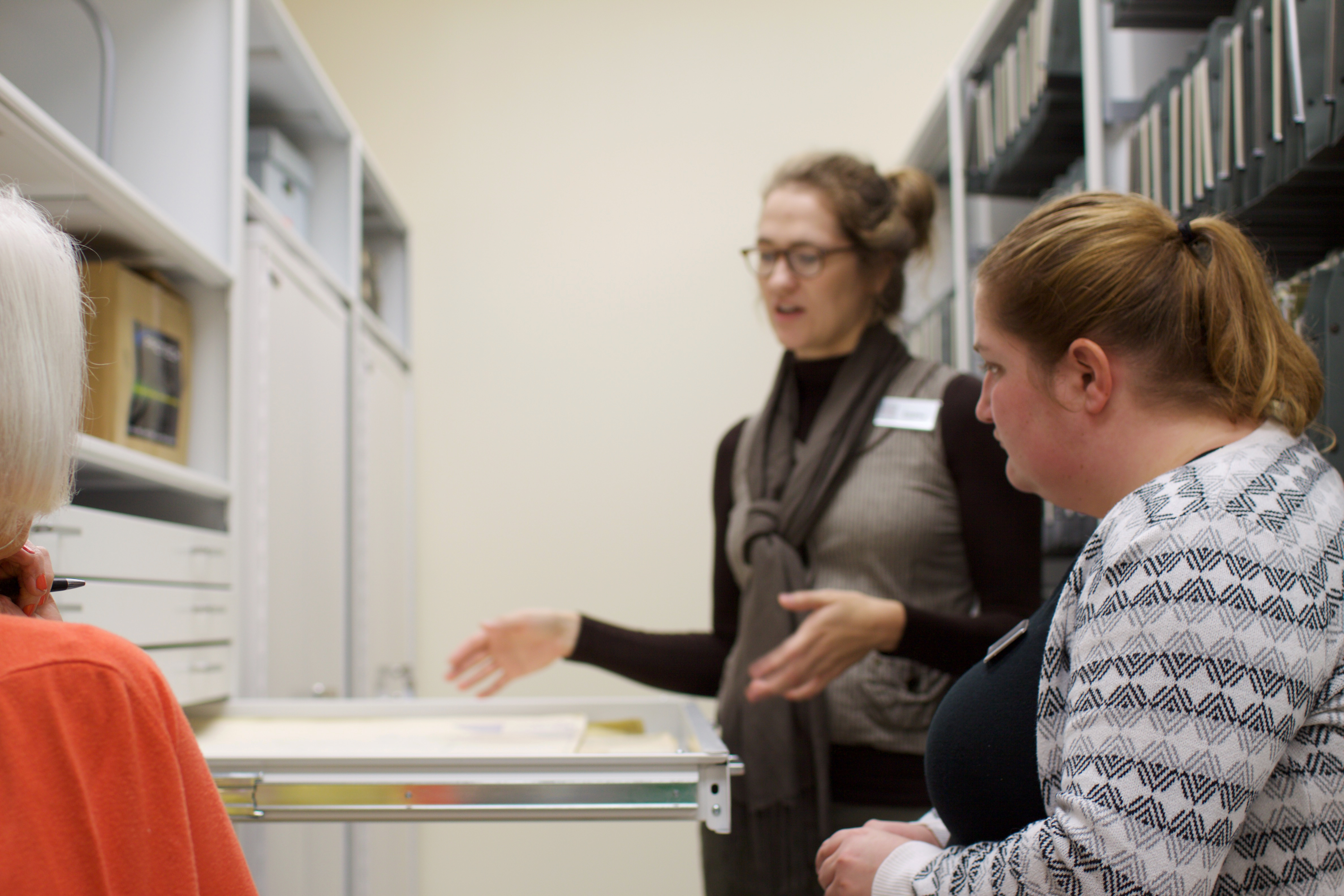
To kick off the celebration, the collection staff hosted an Open House of our archive facility and library today. It gave us an opportunity to update Village staff about the work being done to preserve, arrange and provide greater access to the site’s archival collection.

img_8497

Curious about our collection? Check out our Facebook page to see exclusive photos and stories about items in our archives throughout the month of October.

Want to know more about the work of an archivist? October 5th is Ask an Archivist Day. Hashtag #askanarchivist to @shakervillageky on Twitter to ask our archivist questions about the collection, the work and the facility of our archives.

Interested in researching with us? Consider applying for a research fellowship.


Emálee Krulish, Archivist

Hair-raising History

spirit-stroll

Tales of lunacy, danger, persecution, brawls and even death were recorded in harrowing detail by the Pleasant Hill Shakers throughout their time here. Some of the most spellbinding accounts were communicated to living Shakers by the deceased. That’s right—messages from the dead. These other-world connections were shared by “inspired instruments” who relayed messages from the departed in the form of letters.

This spectral activity is just one of many expressions of spiritualism which swept through Shaker communities from the late 1830s until the mid-1850s. Amongst the Shakers, this period was known as the Era of Manifestations; however this spiritual swell preluded, and briefly corresponded with, an even larger movement of spiritualism which captivated the nation with claims of spirit communication until the 1920s.

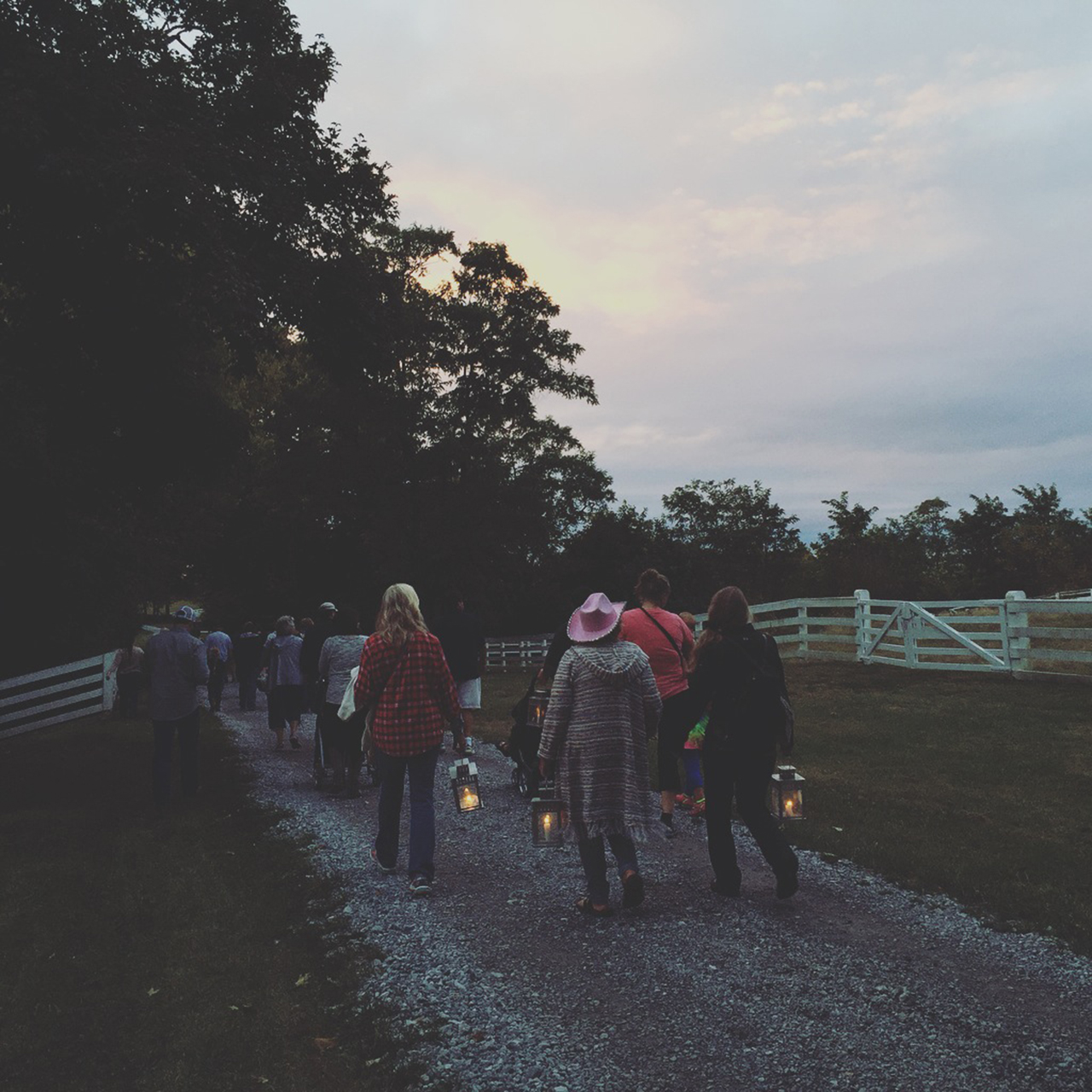
So while you won’t find ghastly ghost tours at Shaker Village, we think you’ll find something far more gripping and mystical—the spirit of the Shakers. Take a lantern-led Spirit Stroll every Friday and Saturday night through October and discover the spirit of the Shakers for yourself!

Pausing for Thought at Shaker Village

We have exciting news! For the first time in its series history, Live From Lincoln Center takes its show on the road, presenting performances by The Chamber Music Society of Lincoln Center (CMS) filmed right here in 2015. Live From Lincoln Center’s “Simple Gifts: The Chamber Music Society at Shaker Village” will air tonight, Friday, September 9, at 9:30 pm on PBS.

We are thrilled to present our 11th annual Chamber Music Festival of Bluegrass in partnership with CMS artistic directors David Finckel and Wu Han in May 2017.  In anticipation of tonight’s big premier, Finckel shares his thoughts about the Festival:

With the sun’s warm rays raking the pasture to my left, I watch two men – one from France carrying a violin, and one from New York carrying a viola – ascend the side staircase to perform the first concert of the Chamber Music Festival of the Bluegrass. I can’t believe I sat here exactly ten years ago and did the same thing: yes, this is the tenth anniversary season of a now-historic partnership between Shaker Village and the Chamber Music Society of Lincoln Center

When a gentleman named George Foreman (no, not the prizefighter, but the former director of performing arts at Centre College in Danville) and I grabbed a bite to eat together some twelve years ago in an Applebee’s, George proposed the idea of a chamber music festival in a nearby Shaker village. Having been an American antiques aficionado all my life, and a particular fan of Shaker furniture and architecture, it took very little work to imagine the setting. A trip to the village to look at the tobacco barn which was proposed for the concerts confirmed the viability of the project, and just like that, we were off on the always-wild and perilous ride of a performing arts startup.

During the first critical ten years, the trustees of Shaker Village took ownership of the festival and truly made it an integral part of their mission. The Village’s entire staff, from cooks to groundskeepers to carpenters, now know us, and we know them. When we return here each May, we reconnect with our Kentucky family. It is a truly joyous time.

I’m sure that as the Village was considering the move to formally adopt this festival, the question must have come up as to how the culture of chamber music would fit into and connect with that of the Shakers. The Shakers, from what I’ve learned, were apparently not big on music, save for hymns. So how would five concerts in a weekend filled with music by Austrians, Russians, Germans, French, Norwegians (among others) composed over the last four hundred years, and performed by musicians hailing from some eighteen different countries, find an appropriate place in a village built with such a clear and strong mission of its own? This question kept me up at night, a bit.

At the risk of sounding presumptuous, it didn’t take me long to come to a conclusion that what we were going to do did indeed align with so much of what this miraculous place is all about. I’m not prepared to categorically state that playing classical music is a faith-based profession; however, there is not a serious musician I know who does not sense working for a higher authority. For us performers, that father figure is always the composer; we are on the stage to represent the great geniuses of our art. And for those composers, from where did this great music come? I’m equally sure that each of them would likely characterize themselves as simply vessels, through which divine inspirations found their way to ink and paper. Indeed, the music we play is imbued with such timeless greatness that we freely admit: it is much better than it can ever actually be played. We performers are therefore on an endless, yet joyful quest, in search of an ever-better interpretation, one more compelling, beautiful, and fulfilling of the composer’s dream.
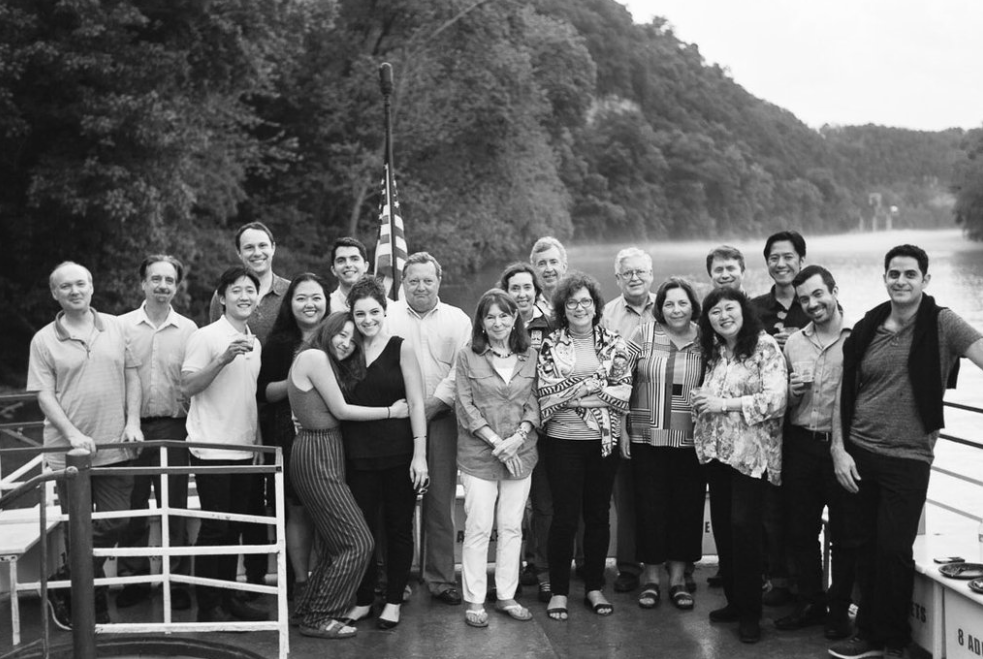
On the Dixie Belle

2016 Chamber Music Festival musicians enjoy an evening on The Dixie Belle Riverboat at Shaker Village of Pleasant Hill

While ruminating on potential paths of logic for our residency in Shaker Village, a further turn of thought opened up another perspective: that of the composer. Many of the giants of our art – Haydn, Mozart, Beethoven, Schubert, Mendelssohn, Schumann and Brahms – never made it to the New World. But one of them, the Czech master Antonín Dvořák, did come to America in the 1890’s, summoned to head the new National Conservatory in New York and to assist our nation in finding its own musical voice (American composers had been imitating European styles since the 18th century). Dvořák found roots for a distinctly American tradition in the music and dances of African and Native Americans, imbuing his now-iconic works composed here with genuine American spirit. I believe that not only Dvořák, but all of his mighty predecessors would have not only been fascinated by and admiring of the Shakers, but might well have composed music inspired by their spiritual principles and incomparable work ethic

My assumption – that composers long gone, who never set foot in America, would be thrilled that their music was being played on such storied ground – seals my personal case for feeling that when I come here, I come not to intrude, but to be “kindly welcomed” and to contribute to this place art which extols decency, was created through both divine inspiration and plenty of hard work, and like this place, has stood the test of time, existing today with endless energy, relevance, and beauty.


David Finckel, Artistic Director, Chamber Music Society of Lincoln Center


Live From Lincoln Center’s “Simple Gifts: The Chamber Music Society at Shaker Village” will air tonight, September 9, 2016, at 9:30pm on PBS. Click here to learn more.


Pre-order the Simple Gifts CD >>