Jacob Glover, PhD, Director of Public Programs and Education
On January 24, 1871, Pleasant Hill took the step of expelling a family of seven from their ranks. Interestingly enough, this newsworthy note is intermingled amongst more practical concerns in a Shaker journal:
Trip – El. H. L. Eades started for South Union via Lebanon. See 13th inst
Expelled – The Morrison family from the Society. Minerva the mother & Henry from the West Lot, & Hiram, Jacob, Leah, Belle & Ginny from the Center Family. See March 7, l870.
Trip – H. Daily went to Lexington with two wagons, & returned the following day.
LTR: James Shelton, John Pilkington, Henry Daily, Francis P., Napoleaon Brown. Girls unknown.
As the entry reveals, this expulsion had evidently been in the works for a rather long time! Going back to review that entry from March 1870:
“Mon. 7 Sent Away – The Widow Morrison family – who came some time since from the Mouth of Salt River viz. the Mother Manerva Ann & children William J. Morrison, Jacob T. Leah Ann, Sarah Isabel, Mary Jane & Henry William Morrison. the Mother & youngest from the West Lot. The rest from Centre all went on board the Boat for Louisville thence to their home.”
That’s all the Shakers wrote. It makes one wonder exactly what they had done to be “sent away” and “expelled” during a time of general population decline at Pleasant Hill.
“…We visited the department for the sick which was under the charge of Jane Ryan.…The infirmary is in the dwelling house & adjoining the meeting room.” – Henry C. Blinn, “A Journey to Kentucky in the Year 1873”
Henry Blinn’s description of the infirmary in the Centre Family Dwelling at Pleasant Hill is a reminder of some of the unique healthcare challenges (and opportunities) that confronted the Shakers in nineteenth century America.
On one hand, as a concentrated community with members who lived in close proximity they were more subject to the quick spread of epidemic illness. On the other hand, however, Pleasant Hill also had members with medical training, and the village grew many of their own medicinal plants.
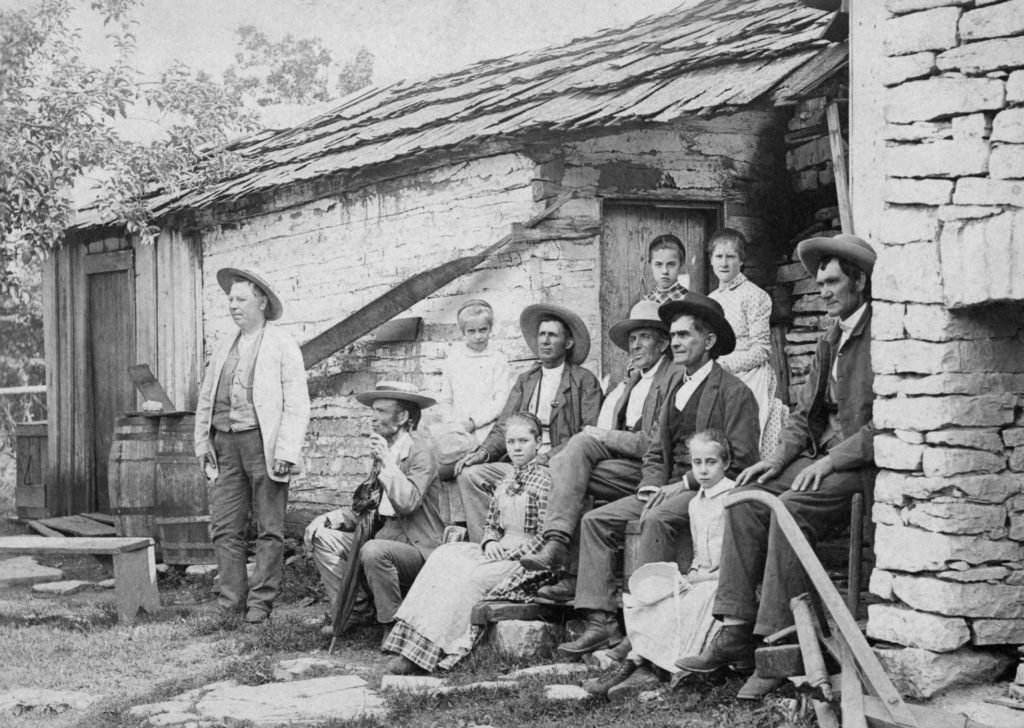
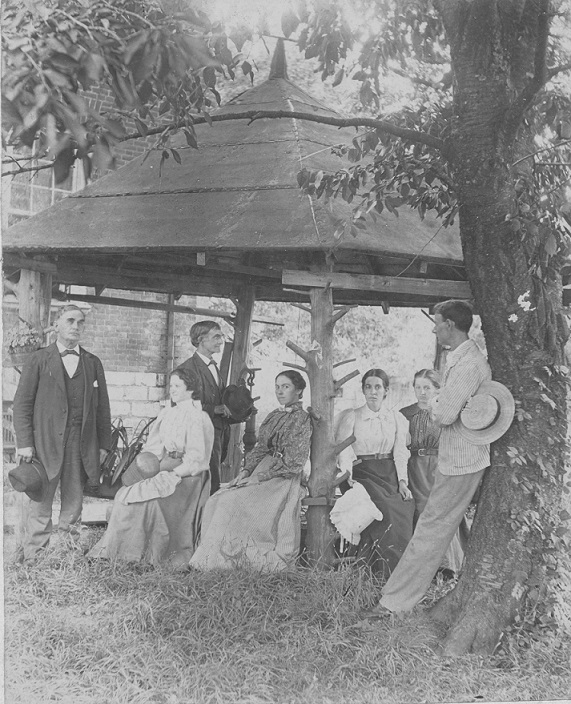
At different points in the history of Pleasant Hill, the Shakers in the community relied on healthcare provided by both Shakers, and non-Shakers. In this image, standing from left to right, are Dr. William Pennebaker, Francis Pennebaker (dentist) and a non-Shaker medical doctor. C. Late 19th Century.
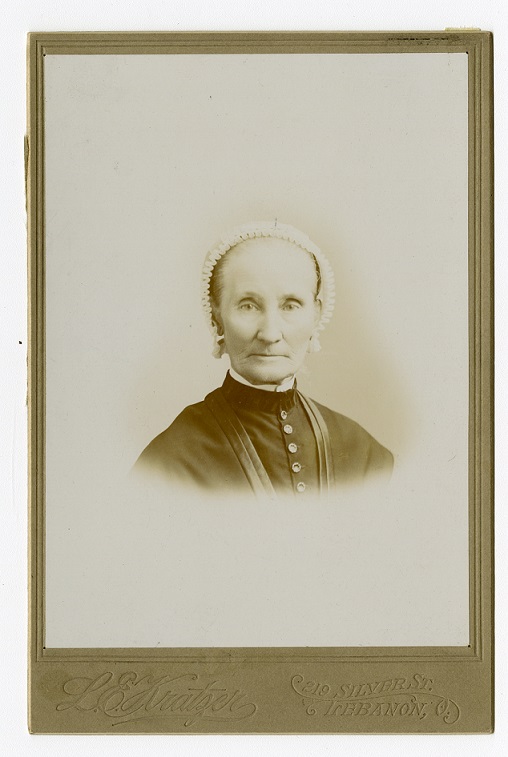
Elizabeth Downing was one of many Shaker sisters who served as nurses at Pleasant Hill. According to Shaker rules, caregivers could only treat members of the same gender, although it is unclear if this dictate was always strictly followed.
In addition to outbreaks of infectious diseases such as the measles and cholera, Pleasant Hill also met the same healthcare challenges as all Americans of their day and age. Although many of the treatments provided during the nineteenth century would later prove to be ineffective (if not downright harmful), Pleasant Hill’s trained healthcare staff was vitally important to the overall well-being of the community.
Although hardly the only caregivers at Pleasant Hill, we wanted to highlight the following individuals and share some snippets of their stories.
The Downing Sisters
Three natural sisters who arrived at Pleasant Hill in 1840 as children all later served as nurses at Pleasant Hill. Their names were Eldress Elizabeth Ann Downing, Mary Ann Downing, and Rachel Downing. Although Rachel left the community in 1863, both Elizabeth Ann and Mary Ann remained faithful for the rest of their lives. In addition to serving as a nurse, Elizabeth was also a caretaker of children and worked in the preserve industry.
Dr. John Shain
Shain was an early Shaker convert who served as a physician at Pleasant Hill for 35 years. He promoted healthy eating and a vegetarian lifestyle. Shain was critical of doctors who practiced “heroic” medicine, and he spoke out against calomel, describing the popular mercury-based medicine as poison. Shain lived until the age of 91, and advocated drinking only ice water until the very end.
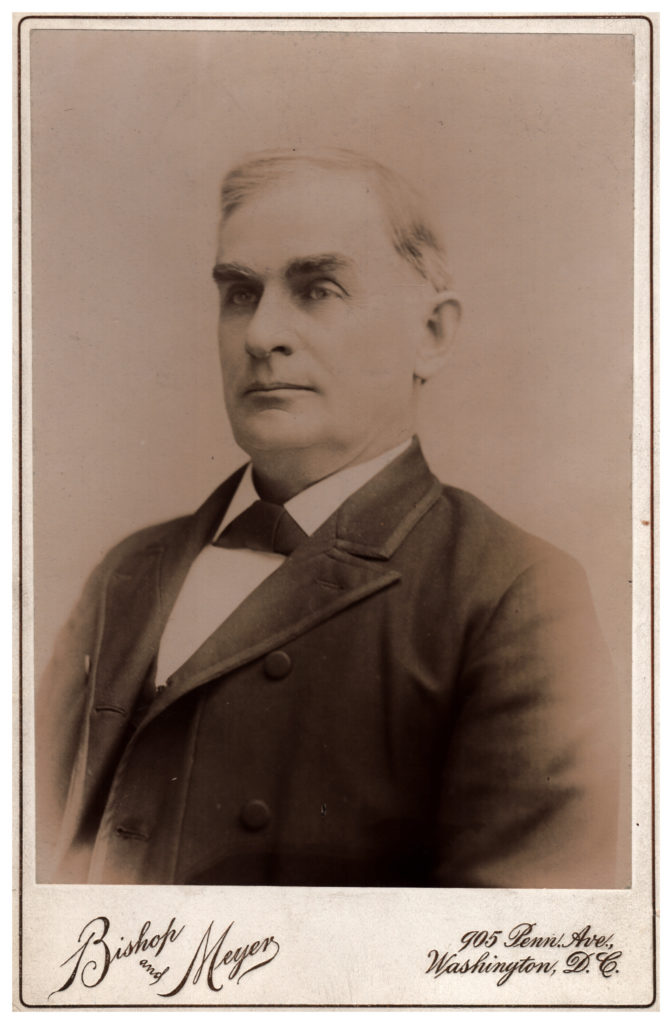
Dr. William Pennebaker spent nearly his entire life as a member of the Pleasant Hill community. Upon his death, he deeded a portion of the remaining Shaker property to open a school to provide education for underprivileged girls.
Dr. William F. Pennebaker
Pennebaker arrived at Pleasant Hill as a child in 1849. After expressing an interest in medicine, the Shakers reportedly sent him to Cincinnati for medical and surgical training. Pennebaker authored several nationally published medical articles, and in 1876 he became chief physician at Pleasant Hill. During this time, Pennebaker used his training to care for the community when an influenza epidemic swept through the village in 1892.
Writing to the Shakers’ magazine the Manifesto after the aforementioned influenza epidemic in 1892, Sister Mary Settles gratefully noted “our kind physician and brother, W. F. Pennebaker, has safely carried many patients through La Grippe as well as other ills. We feel thankful that so many of our aged ones have been spared to us.”
Pennebaker served his brethren and sisters faithfully until non-Shaker Dr. J. B. Robards and his wife took over care of the elderly members of the Centre Family in December 1910.
Shaker Village of Pleasant Hill | 3501 Lexington Road, Harrodsburg KY 40330 | shakervillageky.org | 859.734.5411