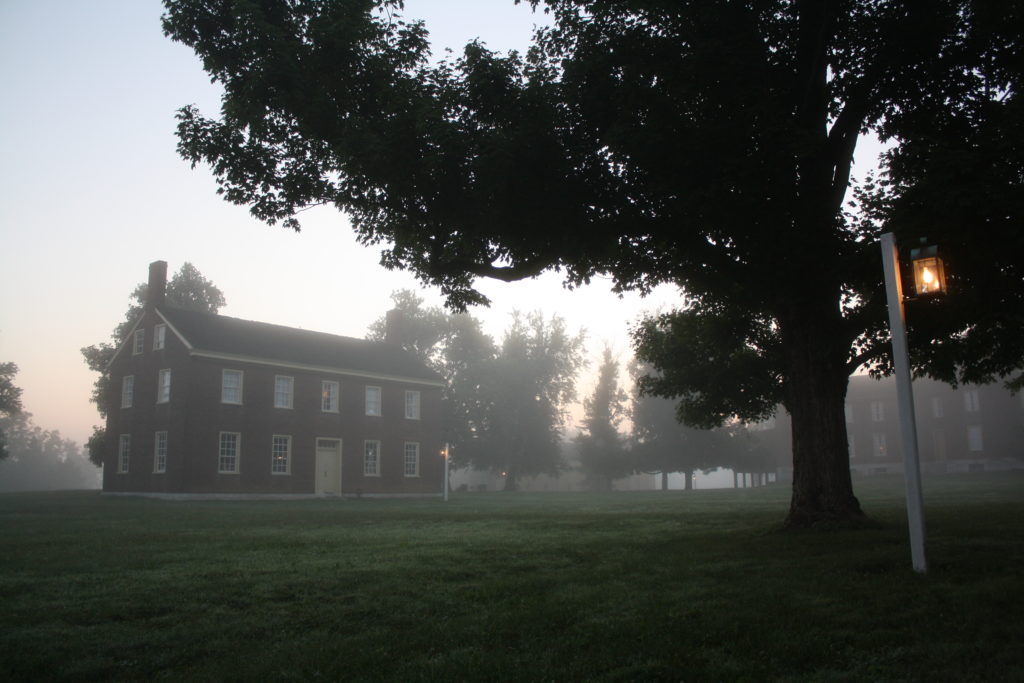
Gender Equality, In Theory: Sister Jane Sutton

Maggie McAdams, Assistant Program Manager

This blog post is dedicated to Rebekah Roberts who sought the truth in the past, and tried to give voice to the voiceless.

In 1899, visitors from Berea arrived at Pleasant Hill for a meal.  As they began eating, they asked the Shaker “sister in charge” a series of questions to learn more about the history and beliefs of the Shakers. 

“‘How do you deal with such difficult problems as woman’s rights?’

Jane Sutton, the sister in charge, responded:

‘Theoretically the brethren and sisters are equal in all things, but practically,’ with a little laugh, ‘the brethren try to keep just a little ahead.'” (The Berea Reporter,
“Shakertown,” April 3, 1899)
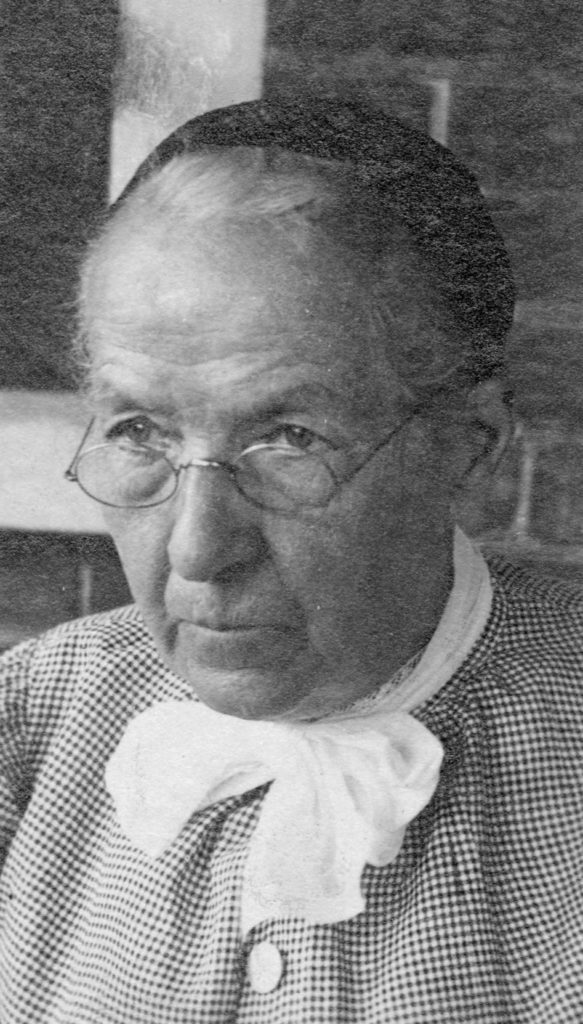
Portrait of Sister Jane Sutton

As a woman in power at Pleasant Hill, Jane Sutton would know!  Pleasant Hill’s first and only active female Trustee, Jane Sutton saw the practical reality of doing business as a woman in the 19th century. 

Gender equality has always been a core belief of the Shaker faith.  Men and women were equal in all things through the Shaker’s belief in the duality of God.  This belief was manifested in the leadership and hierarchical structure of Shaker communities.  Gender equality in practice for the Shakers meant that all received an education, all could aspire to leadership roles, and all had access to the same accommodations and amenities.  Yet, the Shakers were still products of the 19th century. 

During the 19th century, men and women were thought to inhabit separate spheres in society, with women inhabiting the private sphere and men the public sphere.  Often referred to as the ‘Cult of Domesticity,’ it was believed that woman, as traditional caregivers, had control of the home, the children, and domestic affairs.  This gendered role also dictated that women had no place in the business world that existed outside of the home.  Though the Shakers practiced gender equality in their leadership structure, these traditional gender roles were still present in their distribution of labor.  Shaker sisters were responsible for cleaning, cooking, laundry, and textile production, while Shaker brethren were responsible for broom production, furniture making, tending to the livestock and crops, and other matters of industry. 

Men and women did have equal say in matters of governance at Pleasant Hill, but women did not have access to leadership in business for much of the 19th century.  Throughout the history of Pleasant Hill, there were usually two male Trustees that handled the community’s finances, legal deeds and contracts, and managed commercial partnerships with businesses of the world.  Women did have a role at the Office, but their primary responsibility was to cook and clean, and serve meals to the visiting public. 

As demographics shifted in the second half of the 1800s, however, women began to assume more responsibility based on need. Sister Jane Sutton was one such woman. 
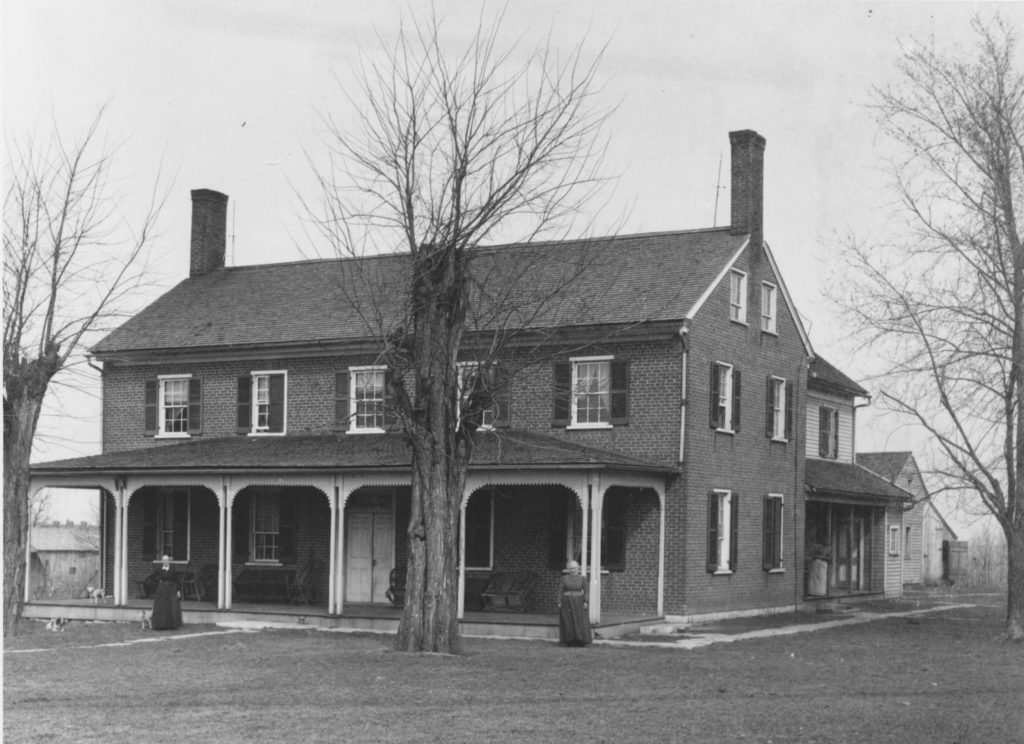
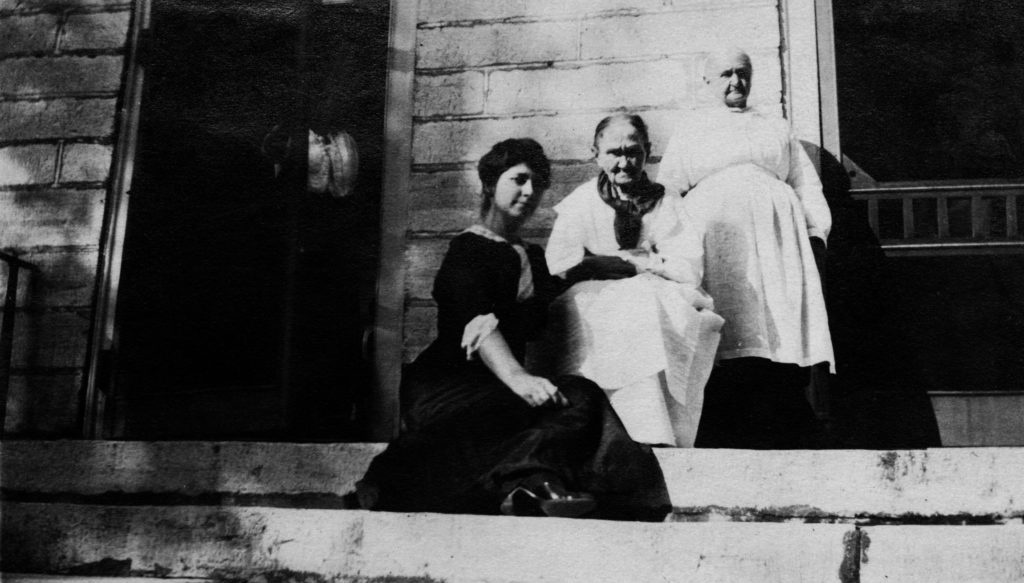
Jane Sutton and Mary Settles standing in front of the East Family Brethren’s Shop, then being used as the
Village’s Office.

Sister Jane Sutton was born in 1832, and arrived at Pleasant Hill in 1834.  By 1868 she went to live and work in the Office.  Journal records indicate that Sutton joined Pleasant Hill Trustees on trading trips throughout the 1870s and 1880s, and oversaw the “public dining room” at the Trustees’ Office.  On Oct. 1, 1894, she was officially appointed a Trustee along with two other Shakers.  In her role as Trustee, she also oversaw the Shaker Hotel after it opened in 1897 to visitors.  By 1910, however, it appears that Sutton no longer served as a Trustee. In the contract that sold the declining community’s lands to a local businessman, Sister Jane was not listed as one of the official Trustees that signed their names to the contract.  Though she and her fellow sisters outnumbered the remaining men of the community, 10 to 2 in fact, the men took charge of this final matter of business.      

Sister Jane Sutton passed away on December 29, 1912.  The following journal entry was written in the weeks before her passing, “Sister Jane is known and loved by everyone.  She has been one of the commanding figures of Shakertown for years and is a natural leader who would command respect and a following no matter in what walk of life she had been placed.  There are many, even outside the Shaker Village, who will grieve that her firm hand is beginning to tremble with the weakness of age.”    

While gender equality was a staple of Shaker ideology, it appears in practice that such equity was often hard to obtain. Jane Sutton provides us with a glimpse into the world of nineteenth century business from the female point of view, and as she says, with a little laugh, “the brethren try to keep just a little ahead.”
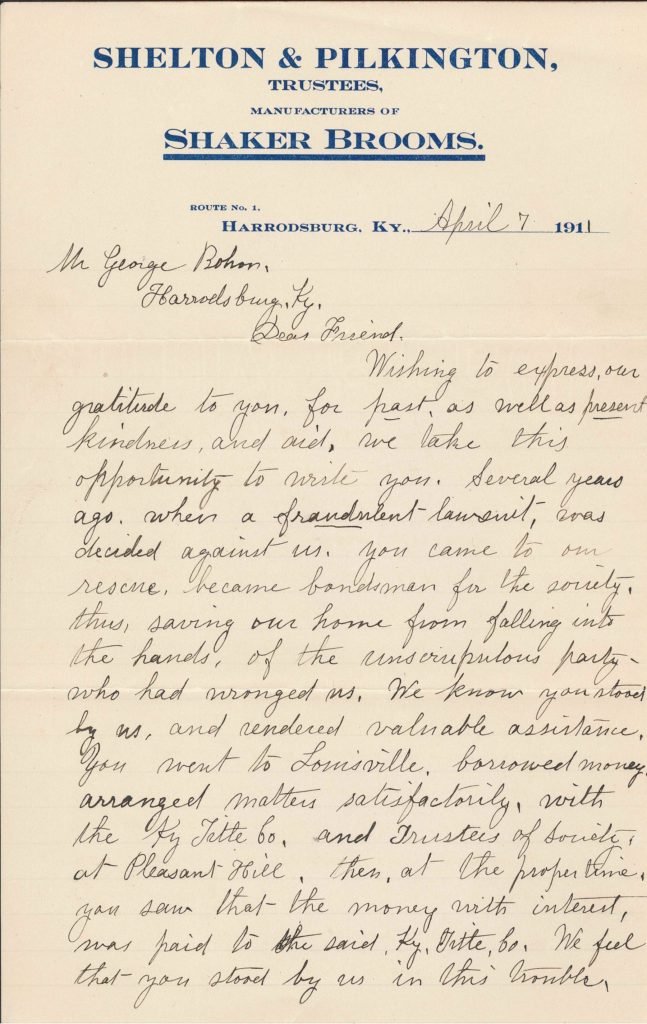
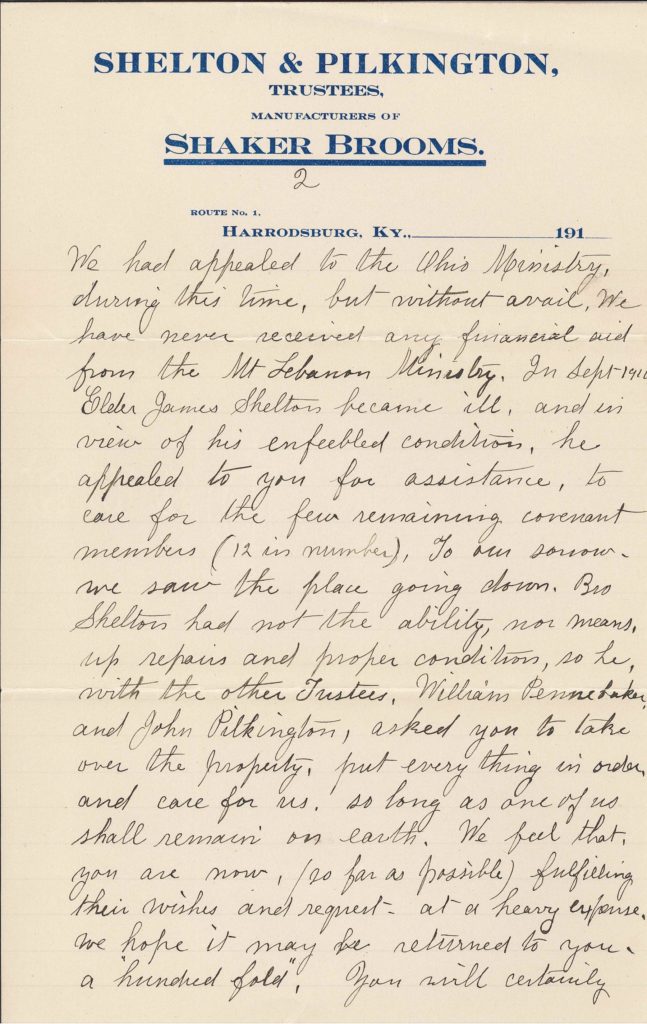
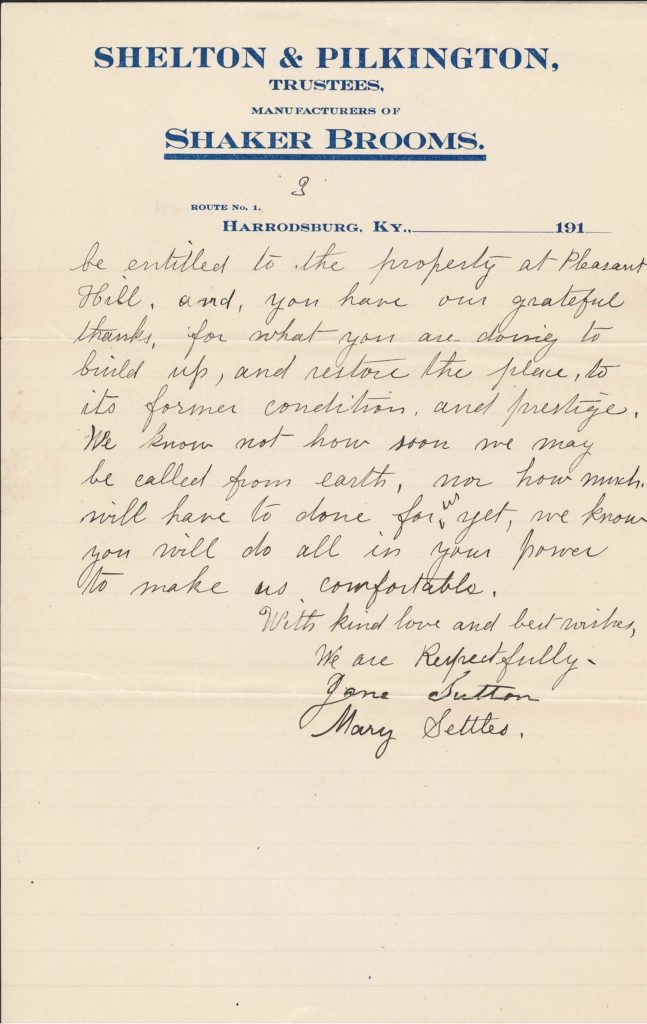
Pages of a letter sent to George Bohon by Jane Sutton and Mary Settles in 1911.

Sister Charlotte Tann: Strengthened by Faith

Holly Wood, Music Program Specialist

“And I am thankful I was called into the gospel when I was a child, and I am also thankful I can say, that I never turned my back on the way of God although I have had some very trying scenes of trouble and distress to pass through . . .” {1} – Sister Charlotte Tann at Pleasant Hill, Kentucky, 1841.

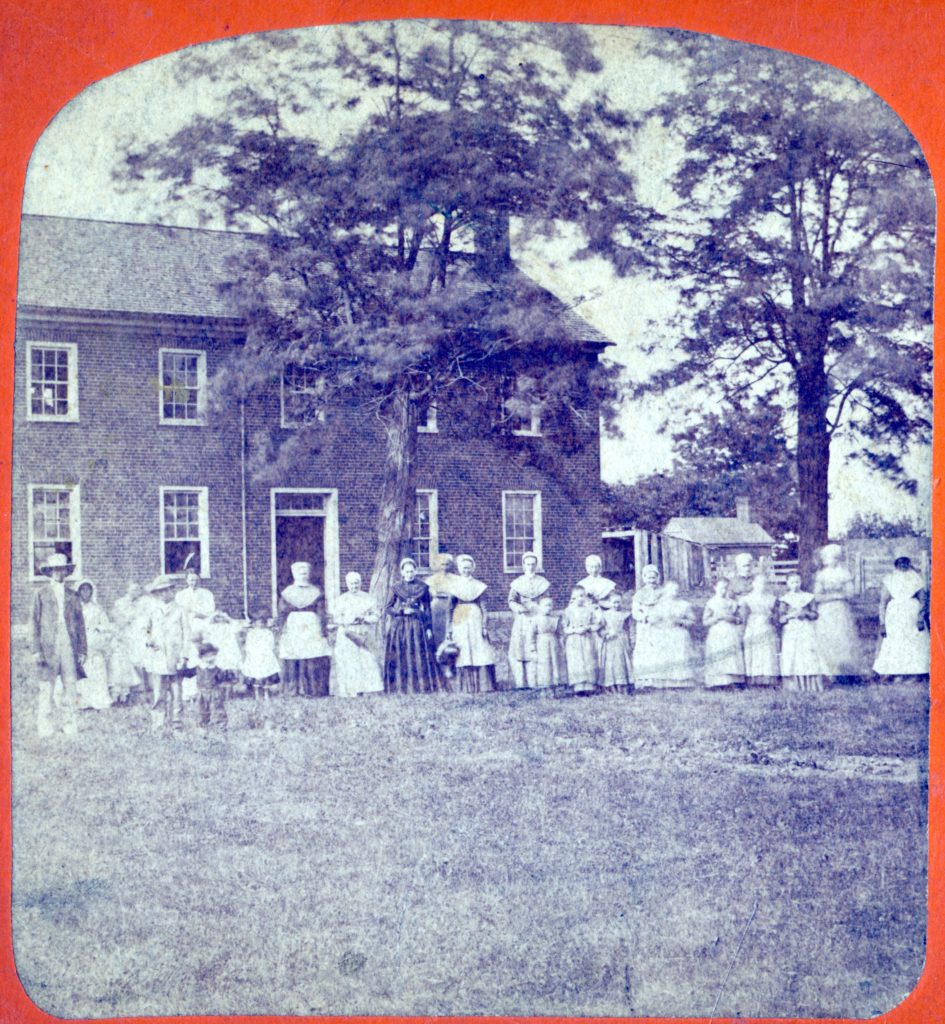
Based off census records, the far right figure is probably Charlotte Tann. c. 1870s

Here are a few examples of those “trying scenes”:

  • Living in the chaos of the 1811 New Madrid earthquake on the Western frontier, where aftershocks disrupted the isolated community for months.
  • The War of 1812 caused thirteen year old Charlotte Tann to flee from West Union Shaker Village with hundreds of pacifist Shakers on a 431 mile journey to safety.
  • Returning home after two years of war to discover her entire village destroyed.
  • Orphaned at age fifteen.
  • The closing of her childhood Shaker community and removal to Pleasant Hill, Kentucky.

When the Indiana community formally closed, Charlotte Tann was assigned by the Shaker ministry to live as a free person of color in Kentucky, a slave-holding state.

How did this woman of faith, this unsung pioneer, face the difficulties of her life?

Tann’s testimony reflects the perseverance of a woman who’s trying life did not break her. She survived loss, disease, war and grappled with societal inequities while staying devoted and strengthened by the faith.

“And now I will give myself up to Mother and her good work, and labor to gather in a substance and treasure up the gospel into my own soul, for it is my unshaken faith and resolution to abide and endure to the end, let what will come.” {2}

Her faith compelled her to heal and to flourish. As believers in gender equality, the Shakers recognized the spiritual gifts of both women and men. Pleasant Hill had a wealth of women who wrote beautiful Shaker hymns and, unlike so many women in the world, the Shaker women were recognized as the composers.

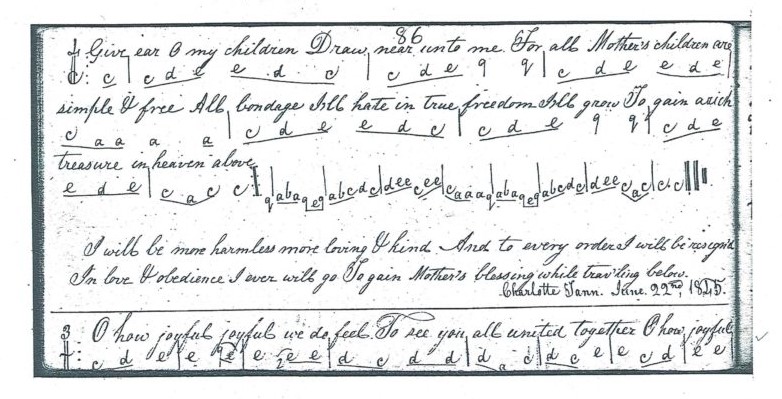
Image of “Give Ear O My Children” from Benjamin Dunlavy’s Song Book, 1844-45.

Sister Charlotte was referred to as an “inspired instrument,” or, led by God to compose. She wrote many songs, including “Give Ear O My Children,” which admonishes all bondage and hails freedom, love and kindness as the tools to gain entry to Mother’s heaven above.

Upon the passing of this resilient woman in 1875, the Pleasant Hill Shakers reflected on her as a tower of faith:

  “And thus has fallen another Veteran that has stood since childhood through many trying scenes . . . She is worthy of much honor, for She has been a faithful and zealous Surporter of the cause.” {3}

Learn more about Sister Charlotte Tann, and the stories of other Shakers from Pleasant Hill, on tours conducted daily at Shaker Village of Pleasant Hill.

{1} Testimony of Charlotte Tann, “Testimonies of the Pleasant Hill Shakers,” WR-VI-B49 pp. 38-40
{2} Ibid
{3} Filson Club:  Bohon Shaker Collection.  Volume 16 of 40 volumes. 
A Ministerial Journal.  October 24, 1868 – September 30, 1880.  March 15, 1875. Page 140.

Donor Impact: Improvements to the Visitor Experience

Melissa Donahoo, Development Coordinator

The Shakers practiced their faith at Pleasant Hill for more than a century, but their impact at the site has endured well past the 2oo-year mark. The Shakers were really remarkable for their beliefs that fostered a strong community, embraced both ingenuity and sustainability, and nurtured equality among men, women and all races.

The 34 historic structures here at Pleasant Hill exemplify how the Shakers organized their community with these ideals in mind and how they led their daily lives. For our visitors, we present daily programs and tours to make this fascinating Shaker story come alive.

Over the past two years, the Shaker Village staff has worked to develop a site-wide interpretative plan. Collectively this initiative will further enhance the visitor experience by providing you with access to more information about the Shakers through exhibits and multi-media experiences.

We first told you about this plan last year as the staff entered the final stages of its development and had begun to undertake activities to raise funds to support the implementation. Over the course of 2020, you’ll start to see this plan implemented.

• This spring, we are installing 20 outdoor waystations across the property. These waystations will lead our guests through a self-guided tour of the property and provide a much more accessible experience for all visitors.

• A new Shaker Village app will launch by early summer, and will provide an augmented reality experience across the property. Expanded content, such Shaker journals, historic newspaper clippings and additional exhibit content will be available through the app. Visitors will be prompted to access this content from the waystations as well as from exhibit panels.

• Exhibit panels will be installed in the Centre Family Dwelling, the Meeting House and the East Family Brethren Shop. These panels will be the initial implementation of a site-wide exhibition staged with sub-themes such as communal living; faith and spirituality; industry and economies; gender and race; and, immigration and migration. You’ll see more artifacts and interactive displays added to round out the exhibits in the future as additional funding becomes available.

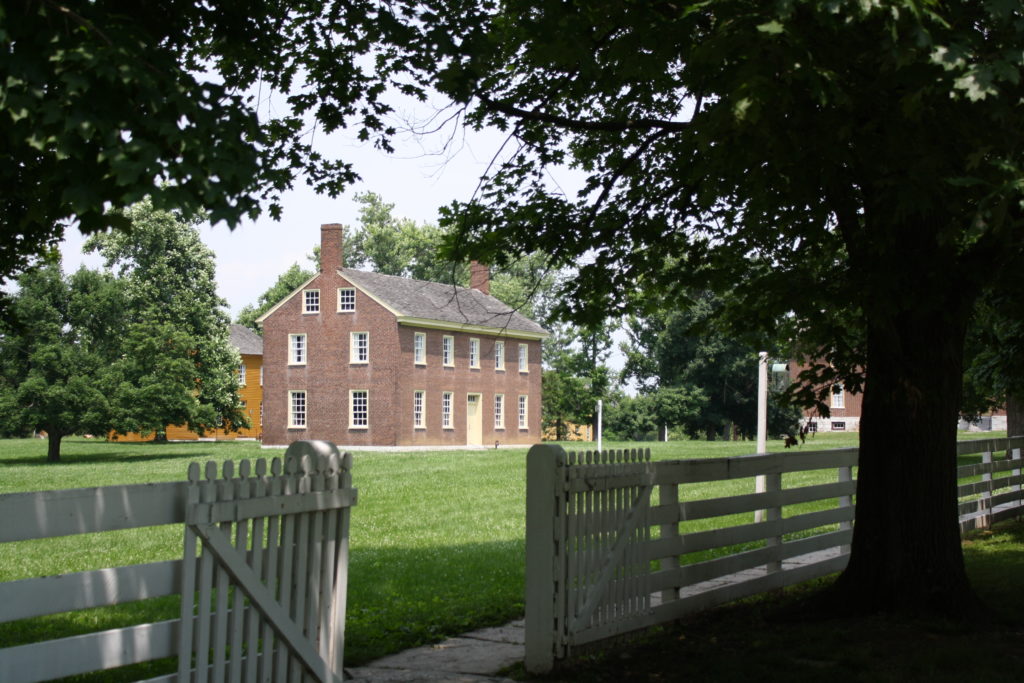
The East Family Brethren Shop will be one of the buildings with new exhibit panels.

These first steps in the interpretative plan are going to have a significant and positive impact on Shaker Village’s mission, and the visitor experience. We can’t wait to share them with you, and hope you’ll visit often throughout the year!

Please consider making a donation to support theses exhibits and interpretative activities at Shaker Village. For more information on our programs, services and other philanthropic opportunities, please call the Development Office at 859.734.1545.

Shaker Village is on a mission to inspire generations through discovery, by sharing the legacies of the Kentucky Shakers.

THE MARGINS THAT DEFINE US

Brandon Wilson, Program Specialist

Over the course of its history, the Shaker community at Pleasant Hill was the spiritual home to 28 people identified as Black or mixed race. But the story proves more complex, than what that simple number, 28, can represent. Pleasant Hill’s location on a major thoroughfare, within the boundaries of a slave-holding state, meant that hundreds more African American people were enmeshed into the Shakers’ rich history in Mercer County, Kentucky. Take a close look at some of Shaker Village’s archival images, and see just how complex the Village’s racial history really was.

An African American woman stands in the shadows. Circa 1910.

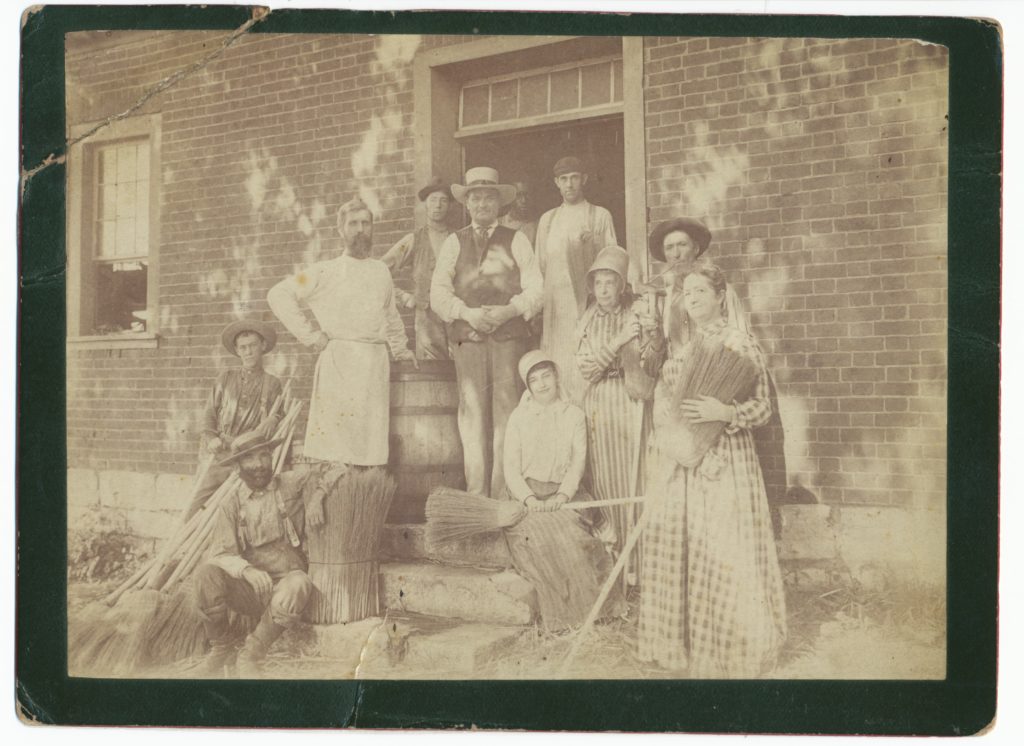
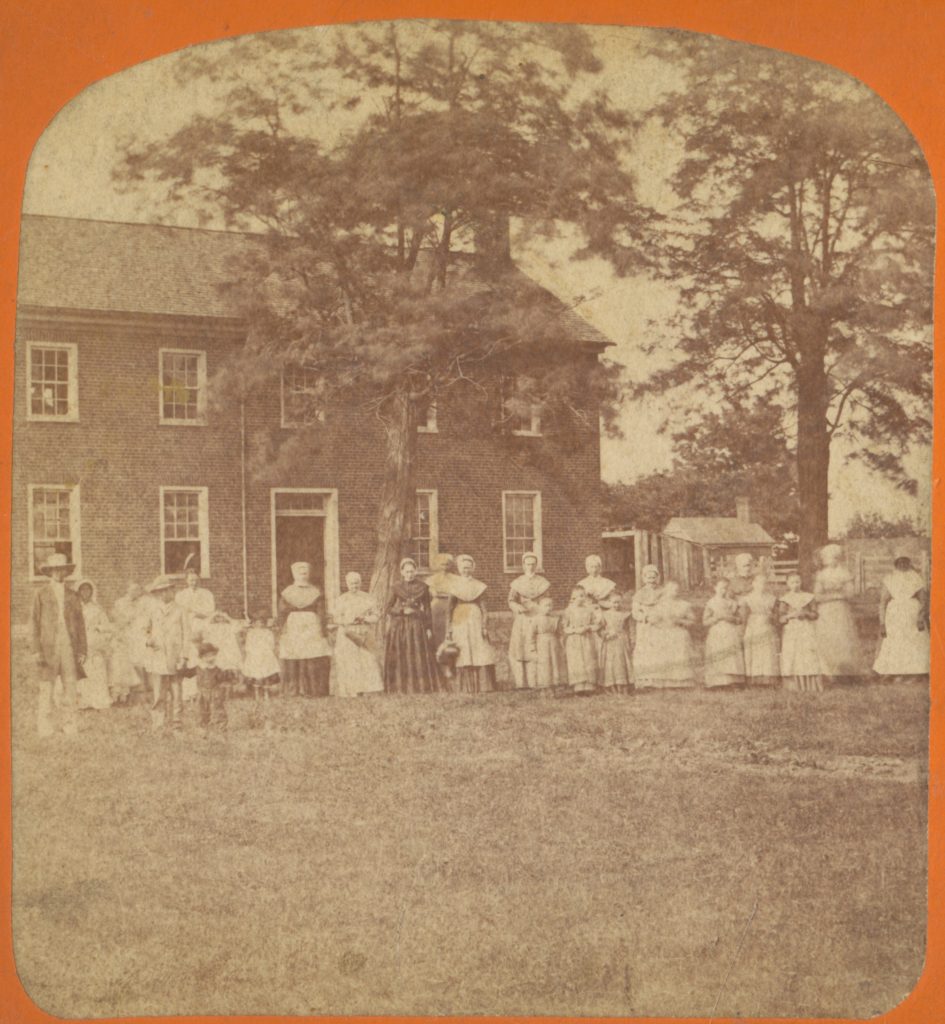
A great place to start is the photograph below, of a group of Pleasant Hill Shakers in the doorway of the Broom Shop circa 1886-1891. The African American man stands in the rear of the group, in the shadow of the doorway, with his head tilted downward. Then there is the image of the Children’s Order, with an African American Shaker woman standing off to the far-right side, markedly distanced from the others. 

An image of Shakers beside the Broom Shop in the late nineteenth century. An African American man stands in the rear.
This image, taken in the late nineteenth century, depicts Shakers beside the East Family Brethren’s Shop. Notice the African American woman standing at the far right.

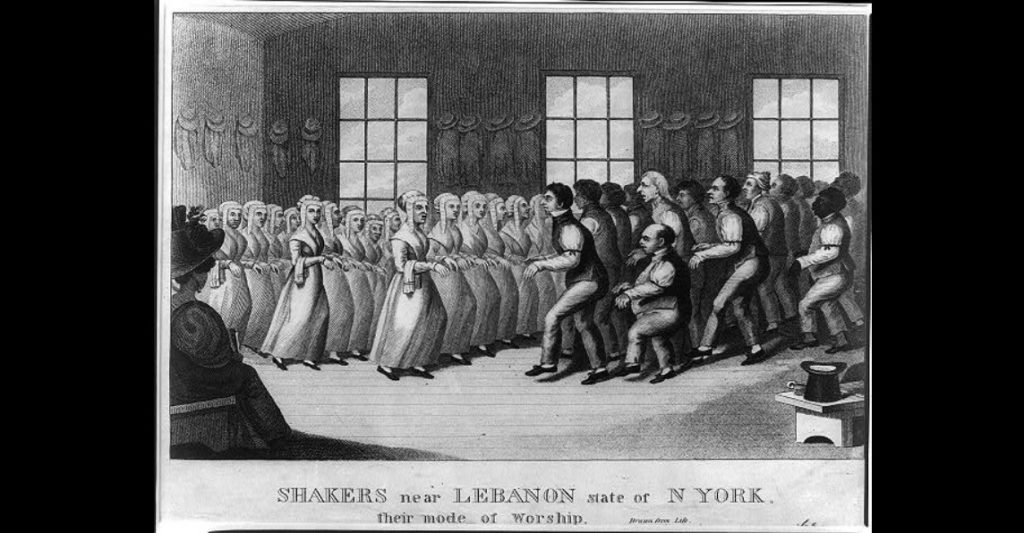
In many of our nineteenth century images, African Americans can be found at the margins and outer edges. If visual evidence can offer any clues about life as a Black Shaker, it is that the Shaker approach to race was both progressive and a product of its time. At Pleasant Hill, people of color could join the community and sign the Shaker covenant, but a certain level of prejudice percolated the community. As we see in these photographs, African Americans might stand in the shadows and on the edges of social life.

A Sketch of Shaker’s worshiping from New Lebanon, NY, with African American Shakers depicted on the far right.

We may use this history as an opportunity to look closer at our own lives. Whether it is in our office spaces, shopping spaces, or at community gatherings, who do you see standing in the margins? Who might you notice is present, but not fully included? What does this say about our own communities, and what can we do to change for the better?

To learn more visit Shaker Village and attend one of our daily educational tours featuring our seasonal program African American Experiences at Pleasant Hill Fridays and Saturdays through February 29th.

Built on Belief

Jacob Glover, PhD., Program Manager

“A village of Shakers lies a few miles beyond Kentucky river, and it is curious to see the effect of celibacy on barns and fences….I never saw such excessive neatness….The rich apple trees looked sorry they were such sinners as to be beautiful.” – N.P. Willis, “The Shakers,” published in The Flag of our Union in 1852

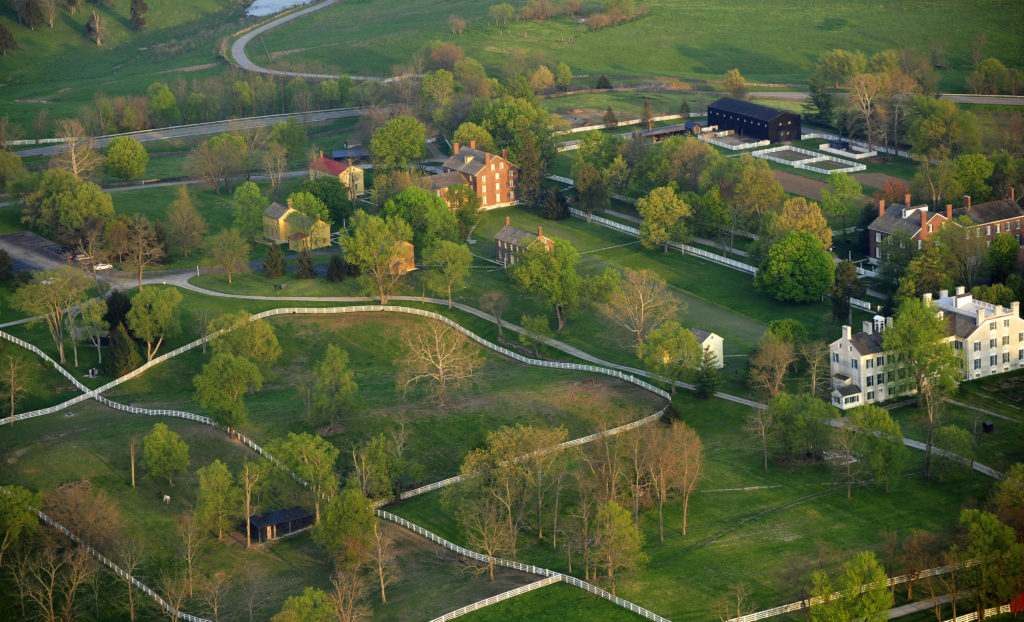
Although not always expressed with such singular focus, since the 1800s individuals from far and wide have been struck by the distinctive architectural features of the buildings at Pleasant Hill. In fact, from daily conversations with visitors to Shaker Village it is apparent that the beauty and grace of the 34 surviving historic structures remains a principle draw for guests from around the world.

Shaker Village of Pleasant Hill maintains the largest, privately-held collection of 19th century buildings in the United States – 34 original Shaker structures across 3,000 acres.

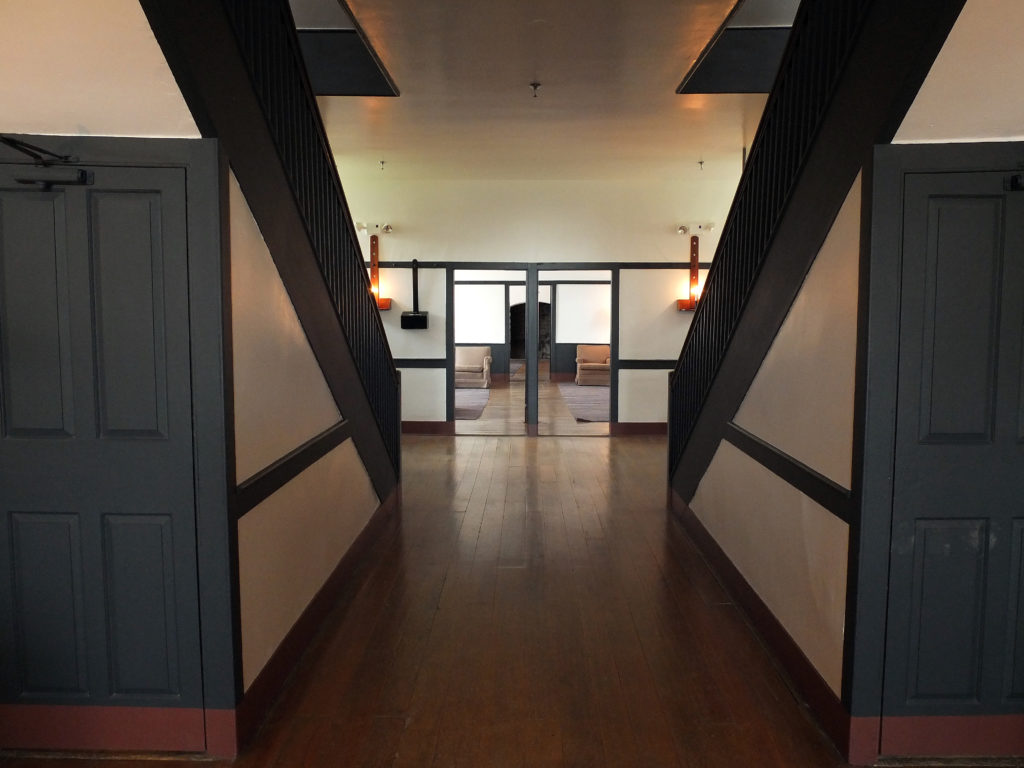
Indeed, a short walk through the Historic Centre can be awe-inspiring. From the sheer size of the Centre Family Dwelling to the unadorned majesty of the first-floor meeting room in the Meeting House, to the spiral staircases in the Trustees’ Office, the variety of architectural and engineering feats is incredible. Beyond these three iconic structures, guests will also often express an affinity for their favorite buildings—likely one in which they have spent the night or had the opportunity to explore in-depth, on a guided tour.

More than just aesthetics, the architecture at Pleasant Hill also reveals the influence of the Shaker’s theology and faith on the built environment. This sense of purpose and intentionality through building is something that speaks to many visitors, and it often leaves them with even more appreciation for the Shakers’ efforts to construct their version of utopia in rural Mercer County.

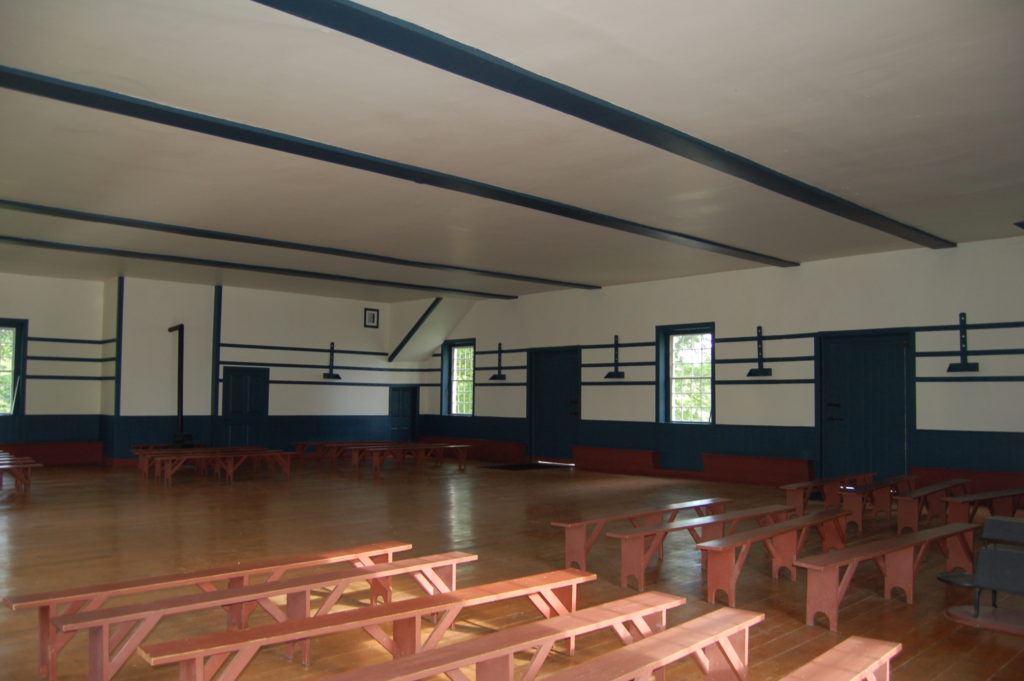
The 1st floor meeting room of the 1820 Meeting House at Pleasant Hill.

The Meeting House, with its aforementioned first-floor meeting room, is probably the best example of how the community’s faith inspired their construction efforts. With the need for an open room to practice their distinctive style of worship, Shaker brother Micajah Burnett, inspired by the Shaker Meeting House at Union Village, Ohio, built an ingenious system of trusses in the attic that support the weight of the building without the need for columns or standing beams in the worship space.

The symmetry within Shaker dwelling houses was functional, but also served as a physical representation of the Shaker belief in the duality of God.

Beyond the Meeting House, the communal dwellings with their large bedrooms and ample kitchens and cellars were purpose-built to provide for the community’s social and economic structures, rooted in the teachings of their faith. In regard to celibacy and the physical separation of men and women, the brethren’s and the sisters’ work spaces were positioned accordingly to prevent unnecessary interaction during the workday.

The buildings that surround the East Family Dwelling are positioned intentionally, with workshops for men and women located on each side of the dwelling to correspond with the side each gender inhabited.

All of this barely scratches the surface, of course, for we haven’t even started to mention the small touches and unique trappings that slowly reveal themselves as one explores the buildings and grounds at Shaker Village. Even all of these years later, I guess some things still do pique one’s curiosity!

Come out for a visit, and learn more about how faith and architecture intersect at Pleasant Hill on our Buildings and Beliefs program that runs daily throughout the year! Check our website for seasonal tour times!