Preserving the Past, Planning for the Future

Creating a New Long-Range Plan for Shaker Village

Billy Rankin, Vice President of Public Programming and Marketing

For most visitors to Shaker Village, the typical conversation is framed in the “past tense.”
Who lived here? How were these buildings used? What did this look like in the 19th century? What did the Shakers believe?

As Kentucky’s largest National Historic Landmark, this makes perfect sense, of course. It has been over 200 years since Shaker missionaries first came to our state, and the rich and vibrant stories of Pleasant Hill’s rise, decline and restoration have attracted millions of visitors since our nonprofit opened the Village to the public in 1968.
There are a committed few, however, that have recently been framing their conversations about Shaker Village in the “future tense.” With these conversations come a very different set of questions.
How will we use this building? What will happen in this space? What infrastructure is needed to support higher visitation? What will our guests need, that we don’t already provide? How do we ensure Shaker Village will be healthy for generations to come?

After 55 years of sharing Pleasant Hill with the public, Shaker Village is creating a new Long-Range Plan.

Building on Success

So, what has prompted this new planning process, and what are the intended outcomes?

Over the last decade, Shaker Village has tackled a number of major challenges and celebrated many successes. We have made great strides in historic preservation, exhibit installation, care of the grounds, upgrades to infrastructure, growth of our endowment and increases in annual visitation, passholders and individual donors. There is still much to be done to preserve and care for the buildings and property at Pleasant Hill, but we have turned an important corner. Our successes have built momentum, and with this momentum comes the opportunity for continued growth.
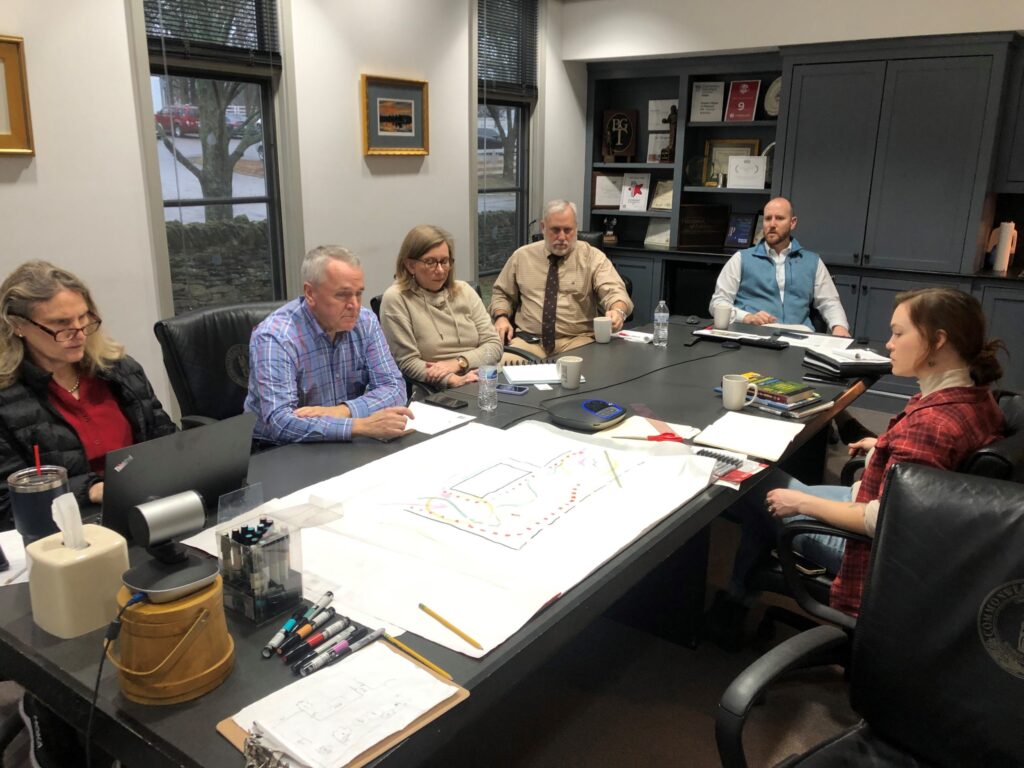
Shaker Village staff meet with representatives from Bernheim Forest to discuss initiatives to increase youth engagement at the Village.

In late 2021, the Shaker Village Board of Trustees, recognizing this pivotal moment in our nonprofit’s history, created a Long-Range Planning Committee (LRPC) and commissioned it with developing a new Master Site Plan for the property.  The committee, chaired by Centre College President Emeritus Dr. John Roush, is comprised of a select group of architects, preservationists and business people from the Board of Trustees, joined by members of the Village’s Senior Leadership staff.

Doing Our Homework

The LRPC wasted no time getting started with their assignment. In the last 18 months this committee has conducted studies of Shaker Village’s operations and identified key challenges and opportunities.
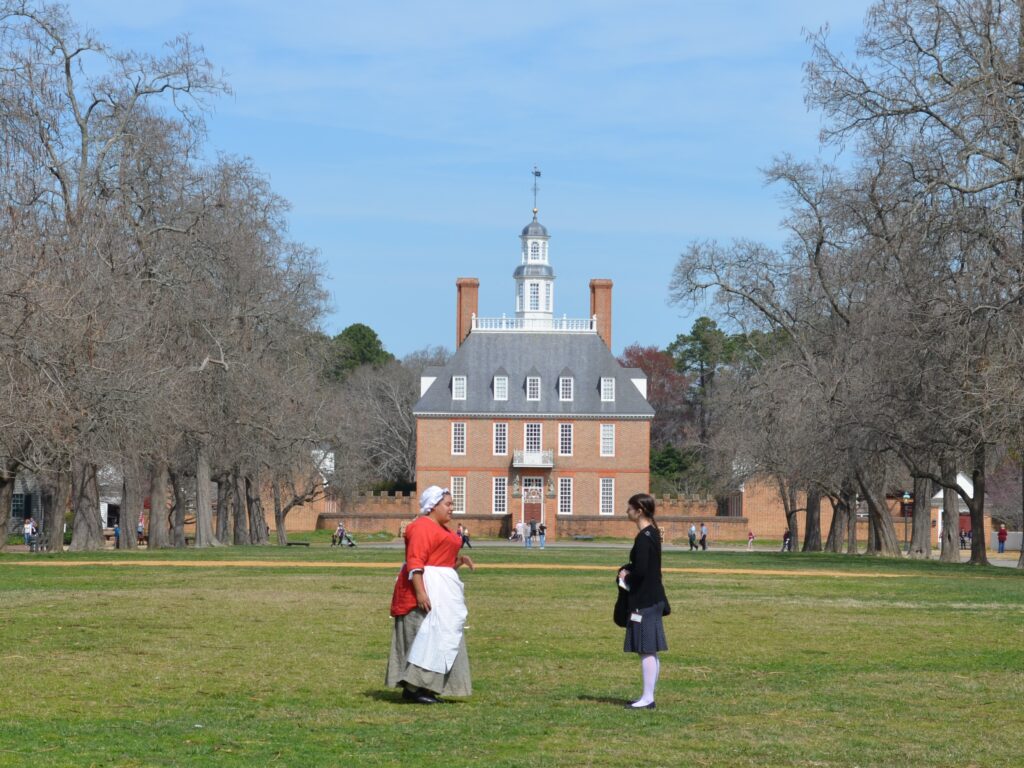
Shaker Village Curator Becky Soules speaks with an interpreter during a site visit to Colonial Williamsburg.

Members of the LRPC have made site visits to nearly 20 other cultural sites to draw comparisons and learn from shared experiences. These visits, to organizations including Colonial Williamsburg, Conner Prairie, Bernheim Forest, Yew Dell Gardens, and the Kentucky Historical Society, have inspired the team at Shaker Village not only through learning of successes, but by also learning of mistakes made by each organization along the way. 

The LRPC also conducted a series of interviews with architects, landscape designers and master site planning specialists to prepare for the questions and inevitable hurdles Shaker Village will face when implementing its own Master Site Plan.

Staying on Mission

One bit of wisdom the LRPC has taken from their study has been: “just because you can do something, doesn’t mean you should do something.” Shaker Village of Pleasant Hill is an incredibly special place, and always has been. As our team works to enhance guest experiences, grow visitation and increase accessibility, it is incredibly important that nothing we do detracts from what the Village already is.
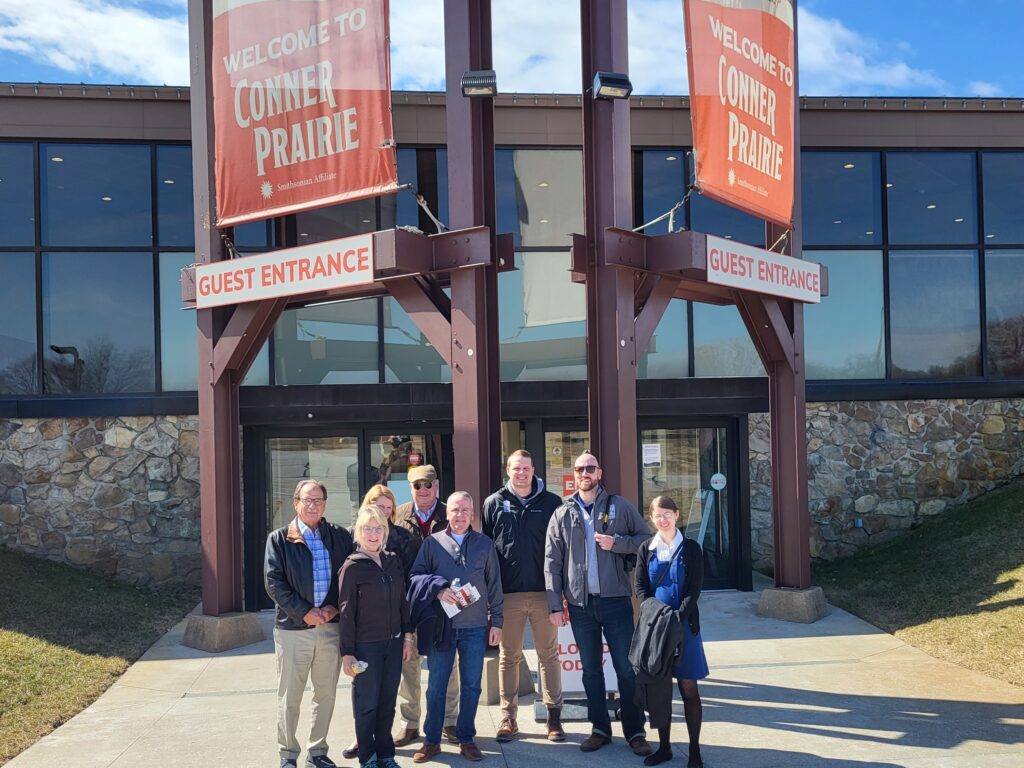
Shaker village staff and board members visited many other cultural sites over the last 18 months, including Conner Prairie in Indiana.

This perfect balance of preservation and hospitality is where the magic of Shaker Village is found.

To guide our team’s efforts, every idea and concept is run through a series of “strategy screen questions” and ultimately viewed through the lens of our mission, to inspire generations of guests through discovery, by sharing the legacies of the Kentucky Shakers.

As our team examines needs for additional overnight rooms, kitchen space, programming areas and more, coming back to our strategy screen and mission ensures that future projects are in line with the spirit and identity of Shaker Village, and only augment the overall experience of the site.

What Comes Next?

In the coming months, the LRPC will select and partner with a firm that specializes in master site planning for large, diverse properties. Together, they will refine a list of projects and initiatives that help to preserve the property, while enhancing guest experiences. At the end of this process, the leadership of Shaker Village will have drawings, site maps and other renderings to share this vision for the future to the public.

According to Dr. Roush, “Shaker Village is going to be here, as an organization and as an historic site, for a very long time. We are taking our time to plan for the long-term. Some tasks we discuss may be accomplished relatively soon, while others are years away, but the important thing is that we have a thoughtful plan that provides a playbook for the success and longevity of this incredibly unique place.”

Follow Our Progress

As plans develop, you can expect to hear more about the progress on social media, through emails and on the Shaker Village blog. We hope you follow along!

If you have questions about master site planning at Shaker Village, please reach out to our Vice President of Public Programming & Marketing, Billy Rankin at [email protected] or 859.734.1574.
The Origins of the North Lot Dwelling

Jordan Lewis, Interpreter

Early Homes

In the first decade after the arrival of Shaker missionaries in Mercer County, before the Pleasant Hill community had built many of the iconic structures that make up the village today, new converts lived on farmsteads scattered around what would eventually become the village center. Many of these homes and outbuildings had not been built by the Shakers, but were put to use to house the rapidly growing community as the Shakers bought land from their neighbors. Early journals make reference to many of these farmsteads, including “the Denny Farm on the hill West of the Grist mill pond, the Varner place about a mile North of the village, and the Brickey place about a half mile or more beyond that” (Church Record Book A, SVPH Archives, pg. 38).

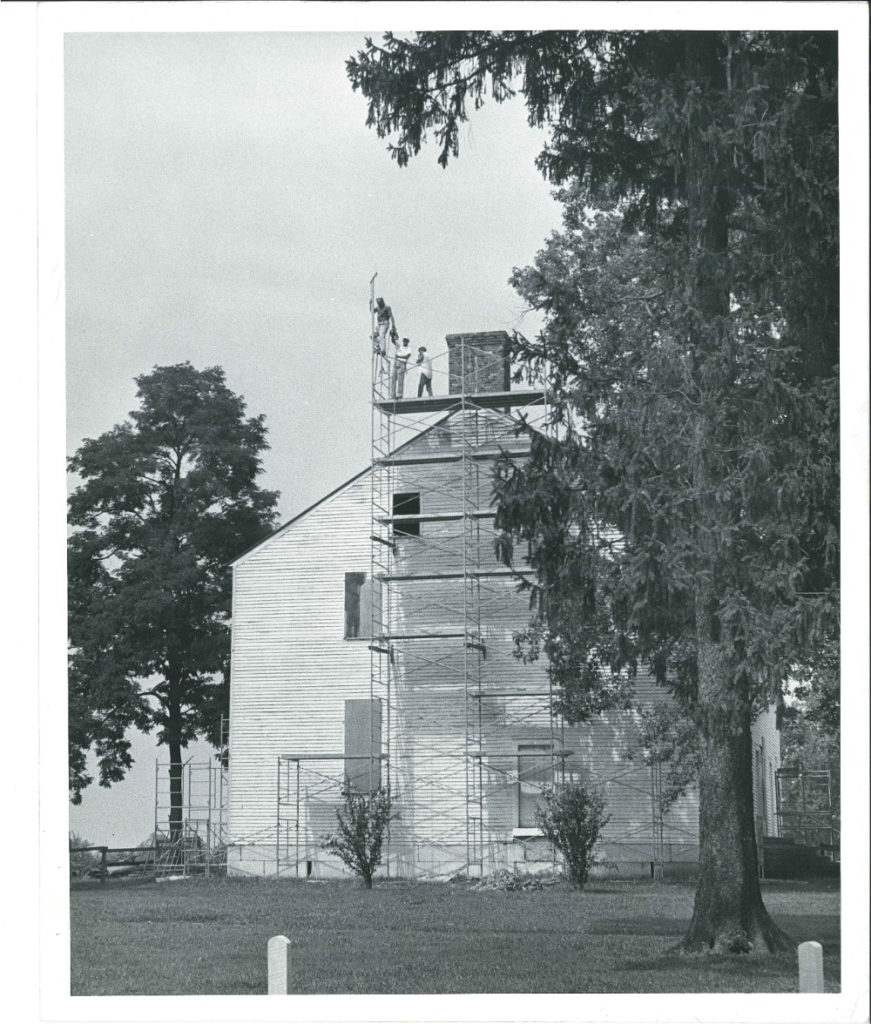
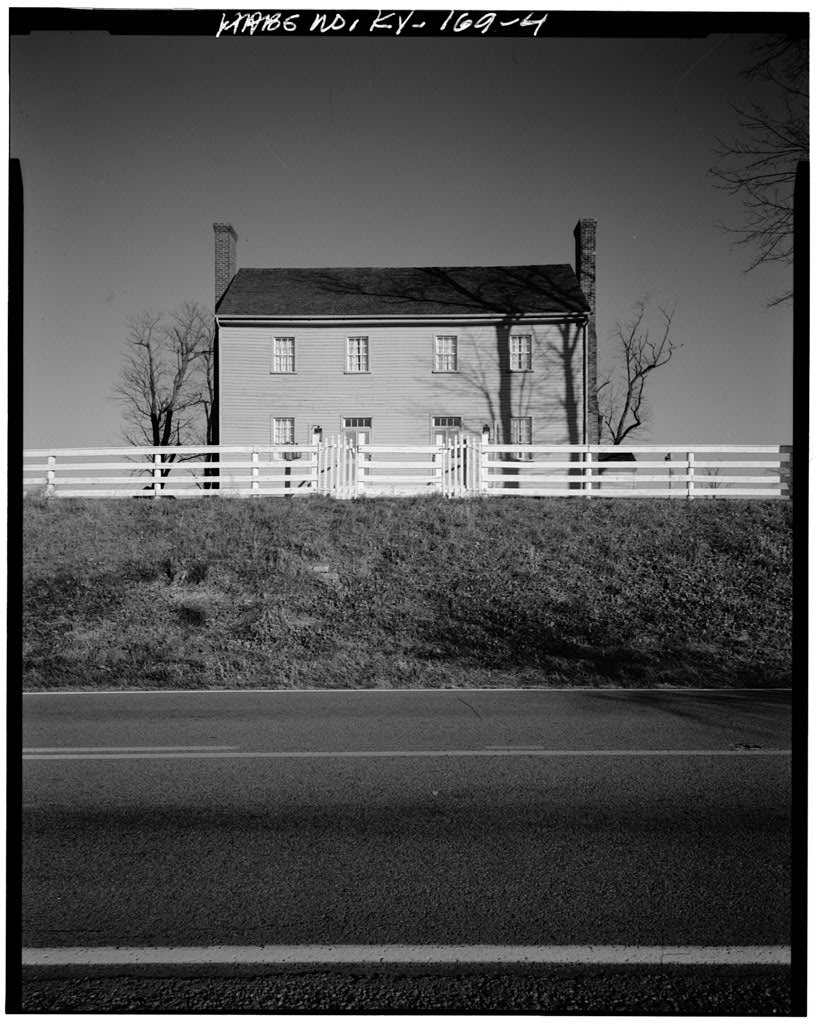
1816 North Lot Family Dwelling c. 1940s. Courtesy of the Historic American Building Survey.

One such property was a parcel of land the Shakers bought from William Hoard in 1807, just two years after Shaker missionaries arrived in Mercer County. The property included a frame house which had been built by a previous occupant, which became home for the next ten years to several groups of new converts, including some of Pleasant Hill’s most prominent early families – the Bantas, the Runyons, the Bryants, and converts like John Shain, who later became the village doctor.

A New Location

Over time, the Shakers at Pleasant Hill established two purpose-built Gathering Orders, the North Lot Family and West Lot Family, to house new members of the faith while they learned about Shaker lifestyle and religion. The scattered farmsteads that had characterized early village life were simultaneously being phased out. At this time, the Shakers deconstructed the frame house from the Hoard property and recycled some of the materials into a new dwelling.

On December 16, 1816, Shakers recorded the beginning of this work in their journals: “Today we began to pull down and move away the old fraim house where Samuel Banta collected a Family in 1807, we intend establishing a gathering family or family of young believers, the family is to be 1 mile North E of the Center Family it will be known by the name of North Lot” (Origins & Progress of the Society, SVPH Archives, pg. 123).

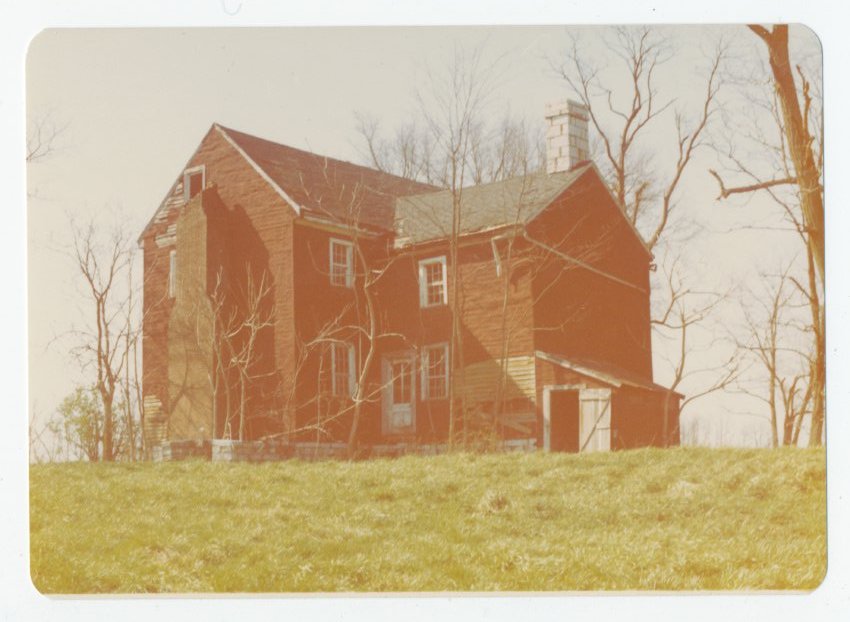
North Lot Family Dwelling prior to restoration efforts c. 1960s.

Over the next year, the Shakers built the new North Lot Family Dwelling, purpose-designed to serve as a home for the new gathering order and complete with a cellar, kitchen, communal meeting area, and staircases for men and women. The first residents moved to North Lot Family on November 25th, 1817. This building served as the primary dwelling house for the family until December of 1832, when a larger brick dwelling (lost to a fire in 1946) was completed, after which point it was used as a workshop.

Gathering Orders at Pleasant Hill

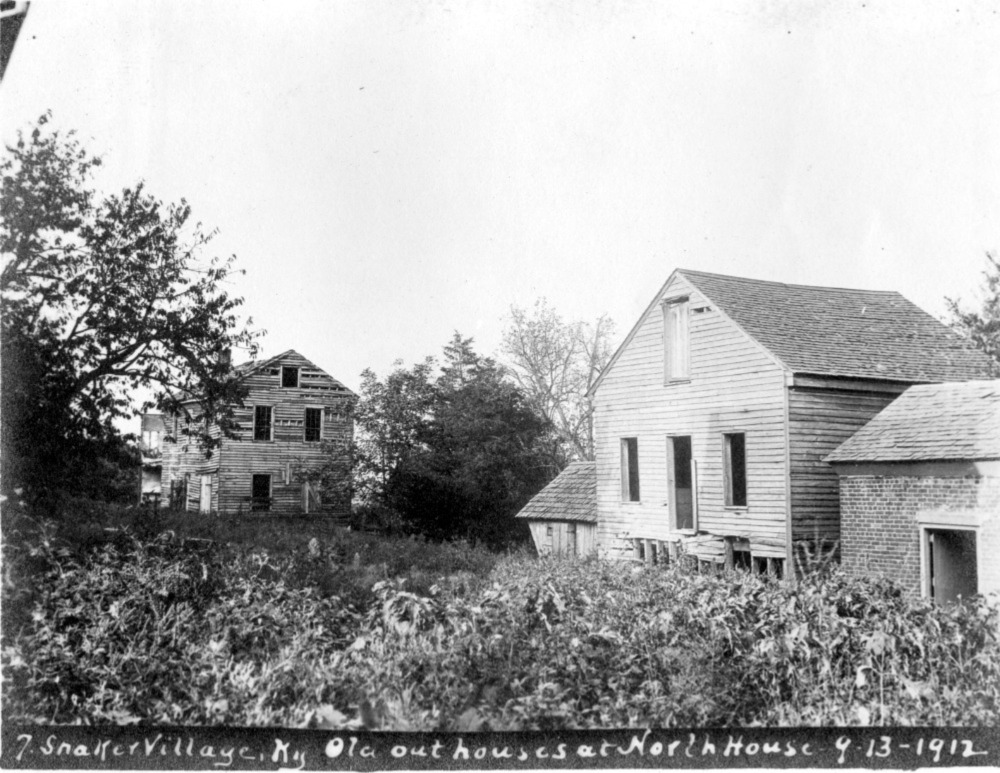
Shaker Gathering Orders hosted diverse and shifting populations of potential converts as needy families, European immigrants, spiritual seekers, free black Americans, and countless others arrived on the Shakers’ doorstep. Records note frequent arrivals and departures: members leaving the faith, novitiates transferring to other spiritual families, run-away children, expulsions and readmittances, births, deaths, and other dramas. Some residents of the North Lot Family Dwelling stayed for months, weeks, or years while never formally joining the community, while for others their time at North Lot Family was merely the first step toward a life lived in the Shaker community.

The North Lot Family was once home to almost two dozen structures. Several can still be seen standing here in 1912.

The North Lot Family Dwelling

Today, the frame dwelling is the only building remaining from the North Lot Family Gathering Order, 206 years after it was moved to its present location. Because the frame house was in existence before the Shakers began constructing some of their first structures on the site, the building likely contains some of the oldest materials still on the site today.

The building has been closed to the public since the 2000s, but preservation will begin as soon as funding is secured. As preservation of the building begins and progresses, we will continue to research and share the story of this significant structure, while preparing it to be used again someday very soon.

Learn more about the history of historic preservation at Shaker Village of Pleasant Hill!

Searching for Sister Mary

Maggie McAdams, Education and Engagement Manager

Who was Sister Mary, and why are we trying to find her?

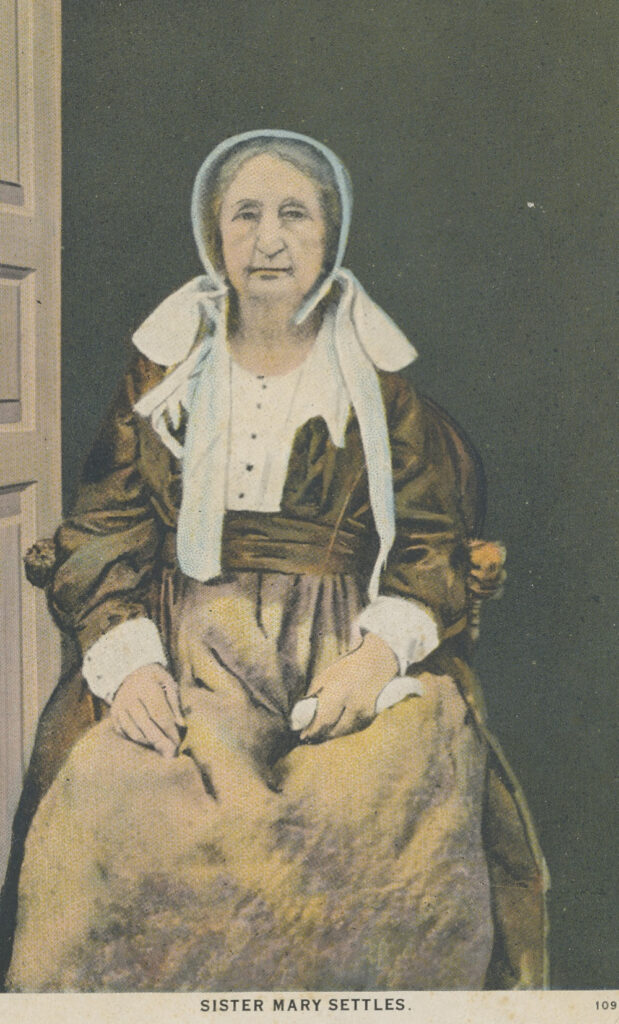
A born storyteller, Sister Mary Settles was by all accounts well read, well written, and loved to talk. She had a knack for effective, entertaining, and engaging communication.

“One of a few brilliant conversationalists now living. She will not only talk for publication but she does it so entertainingly and so accurately, that your only trouble lies in being able to keep up with the facts and dates, for which she has an alarming memory.” – Ella Hutchinson Ellwanger, 1919

Sister Mary arrived at Pleasant Hill in 1859 as a single mother of two young children.  She claimed to be a widow, but records indicate that her husband, Frank Settles was still living at the time and married another woman in the early 1860s. No matter the circumstance surrounding her arrival, she found a refuge at Pleasant Hill and a place to call home for the final 64 years of her life.

Pleasant Hill’s Last Shaker

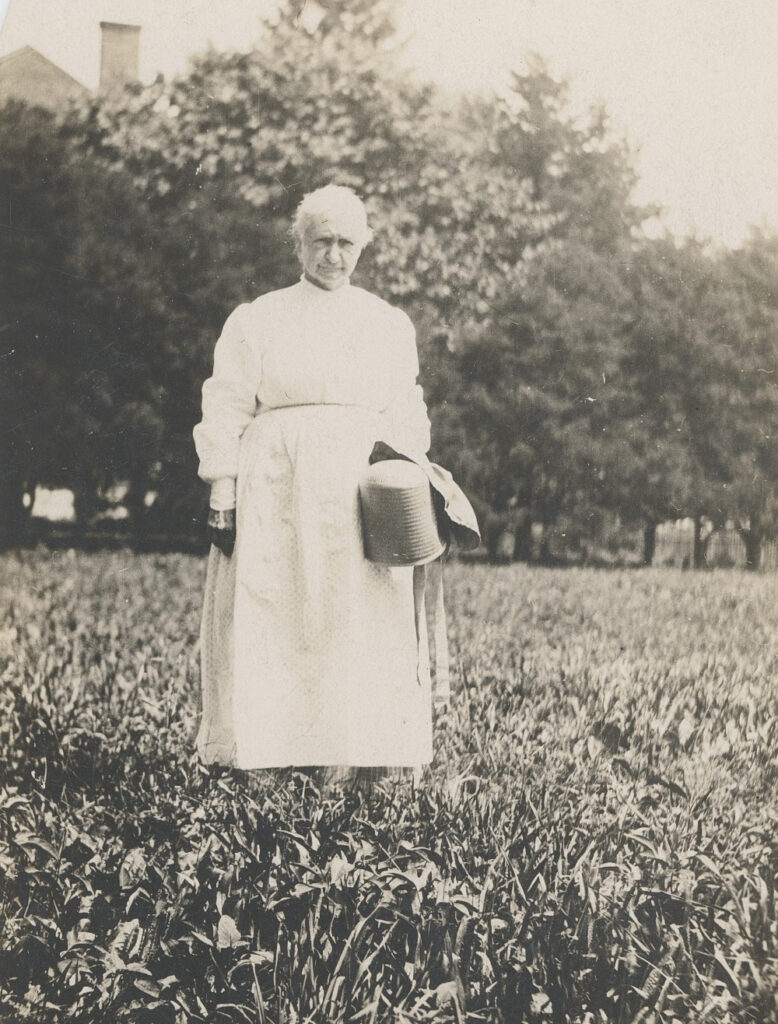
Sister Mary took on many roles in the community, notably as a leader and an educator, but one title often overshadows the rest, she was the very last Pleasant Hill Shaker.  As the 19th century came to a close, the population of Pleasant Hill was dwindling.  The Shakers decided to close the covenant in 1910, meaning they would no longer accept new members.  With only twelve Shakers left, including Sister Mary, it was challenging to maintain buildings and grounds, so they deeded their property to a local businessman in exchange for his care in the final years of their lives.  With this agreement, the remaining Shakers ensured that they would receive the care and support that they needed.  With the buildings in private hands, more hotels and restaurants began to open, and more visitors started to pass through.

A Local Celebrity

Automobile tourism in the 1910s and 1920s meant that people were looking for countryside attractions, and this opened a new world of activity at Pleasant Hill.  This coupled with a natural curiosity felt toward the Shaker sect, as communities were waning throughout the U.S. during this time.

Because of this increased visitation, Sister Mary became a local celebrity and tourist attraction.  With the passing of Brother William Pennebaker in 1922, her status as the last Pleasant Hill Shaker only intensified the public’s fascination with her and the community.  Luckily for Sister Mary and the visitors alike, she was always ready for a good conversation.

At a time when the community and the religion were fading around her, and the world was closing in, Sister Mary decided to spend her time helping curious people of the world understand her way of life. She welcomed questions on the Shaker faith and kept up with the daily newspapers so that she could voice her opinion on all manner of topics.  She eagerly contributed to discussions on women’s suffrage and when asked if she voted in the 1920 election, she claimed, “Of course, isn’t the equality of women part of our religion?” – The Courier Journal Sun, November 21, 1920.  She lent her voice where she could, and she used her celebrity platform as a tool to educate and instruct, as any teacher would.

Sister Mary, Remembered

Sister Mary passed away on March 29, 1923, so on the centennial anniversary of her death, we ask, how should Sister Mary be remembered? By who she was, by where she lived, by what she did, or by how she made people feel? 

At Shaker Village, we believe that studying the history of the Shakers, of Pleasant Hill, and of individuals like Sister Mary gives us perspective on our own beliefs, roles, and identities. Which begs the question: How will you be remembered?

Join us in exploring Sister Mary’s life at Pleasant Hill in our upcoming exhibit, Searching for Sister Mary located on the second floor of Center Family Dwelling.

2022: A Year in Review

Melissa Williams, Development Coordinator

2022 has been an incredible year at Shaker Village. There is so much to celebrate and none of it would have been possible without your support as a guest, a passholder, or a donor.

Major Milestone Achieved

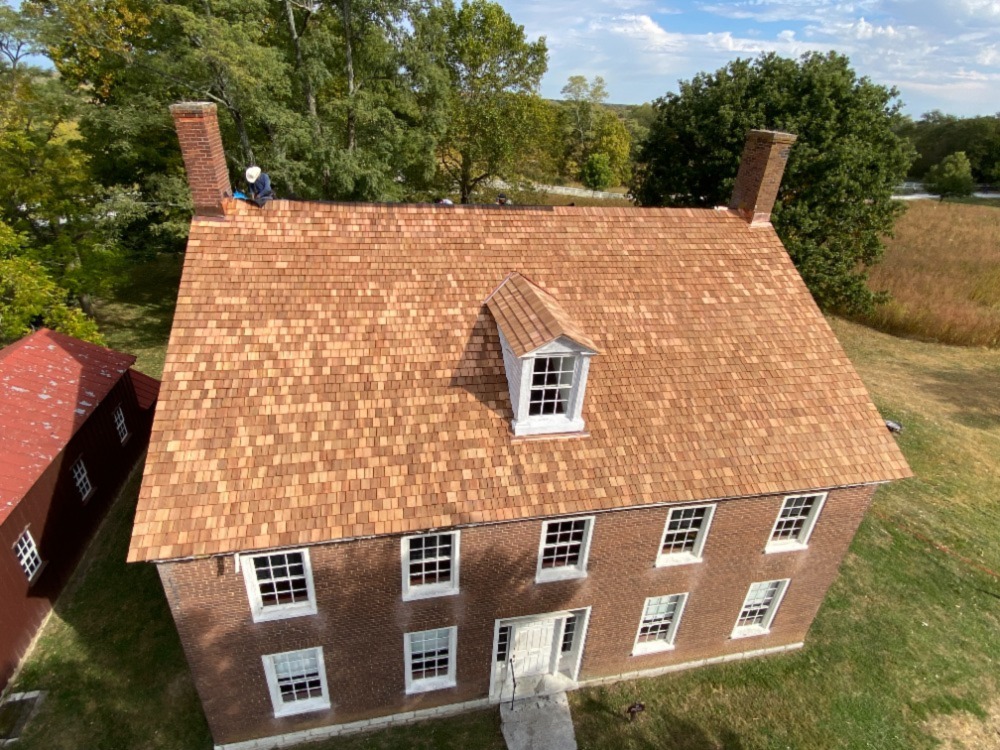
Five years ago, William Updike joined the Shaker Village staff as the Vice President of Natural & Cultural Resources. His goal was to secure each of the 34 historic Shaker structures on the site. The first step was to replace aging (and failing) roofs.  William says, “A dry building starts at the top!” Realizing this ambitious vision required significant resources and funding, and it happened.

The 1844 West Family Sisters’ Shop was one of six historic buildings at Pleasant Hill to receive a new roof in 2022.

When you take a stroll down the historic turnpike and throughout the Village you will notice new roofs have been installed on nearly every building over the past five years. Six roofs were replaced just this year.  This is a quite an achievement!

Water poses the biggest threat in historic preservation. When a roof reaches the end of its useful life, it starts to let water in which can damage the building’s structure. Preventing leaks and deflecting water away from the building helps to preserve these original Shaker structures for future generations.  And that is precisely our mission!

Our team of craftsmen have also been hard at work this year on windows in the Old Stone Shop and completing the full preservation of the 1817 East Family Dwelling.  With help from the grounds crew, the Village has truly never looked better!

Growing a Farm, and our “Farmily”

The Farm at Shaker Village is one of the most popular spots on the property for our guests. Can you guess why? It’s the animals!  The Farm and the Garden are cared for by four staff members, and their successes in 2022 are amazing! Check out some of their accomplishments this year:

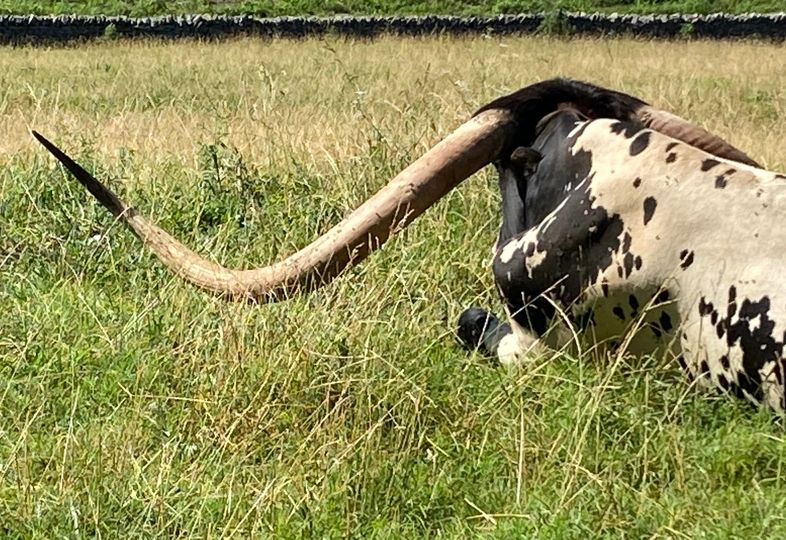
Alamo, a Texas Longhorn steer, was one of the new additions to The Farm at Shaker Village in 2022.
  • Completed the 3rd year of solar grazing at LG&E, with our sheep, controlling vegetation across 32 acres of solar panels.
  • Increased our flock population and now have almost 200 breeding ewes!
  • Expanded our cattle grazing into a 60-acre sections of native grasses.
  • Added 3 new registered Shorthorn Heifers to our herd, 2 calves and 1 Texas Longhorn steer.
  • Built 2 large sections of woven wire fence in our pastures
  • Redesigned the garden area to have additional walkways for guests.
  • Built a High Tunnel to extend the growing season and completed its first year of production.
  • Finished our 2nd full year of CSA garden shares across two, 10-week periods totaling 11 shares per season
  • Taught dozens of summer campers and hundreds of guests about honey bees and draft animals on our farm.
  • Donated hundreds of pounds of food to those in need.

Engaging Our Guests

Every day at Shaker Village there is a schedule of daily programs and tours for our guests to enjoy.  Our Program Team takes great care and preparation in putting these programs together.  They have a lot of fun interacting with our visitors.  It is the most rewarding part of our work. Continually enhancing the guest experience is our top priority.

This year we launched the much-anticipated Shaker Village App. This FREE app places hundreds of historic images and other rarely seen content right at your fingertips.  It is a great way for you to explore the Village and learn the stories of individual Shakers. Through the App, we hope you will gain a deeper understanding of the Pleasant Hill Shakers and their legacy.

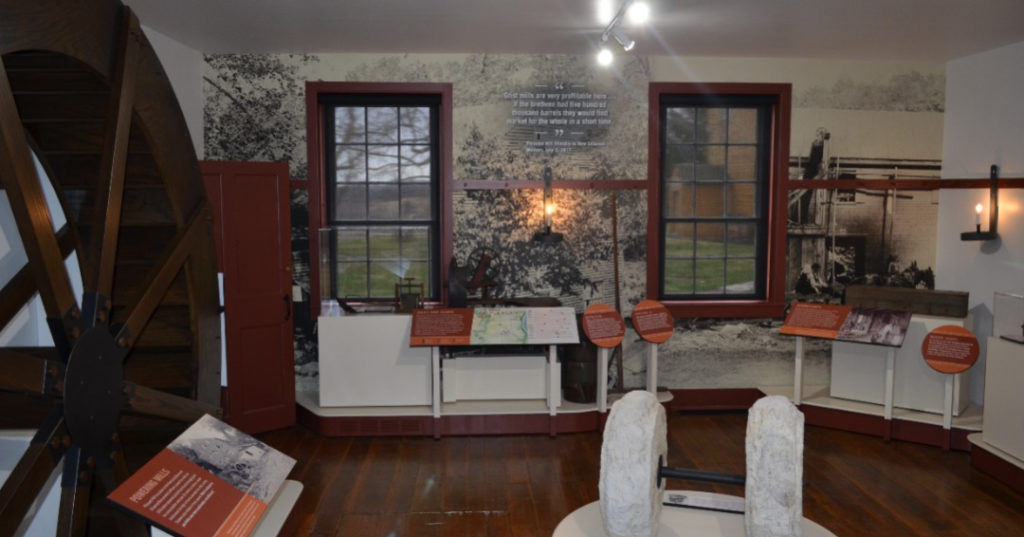
“Local Economies, Global Impacts” opened to the public in March 2022.

In March 2022 Shaker Village also launched the new exhibition, Local Economies, Global Impacts. Sponsored in part by the Institute for Museum and Library Services, this award-winning exhibit tells the story of Shaker industry and trade, and is located in the East Family Brethren’s Shop and East Family Sisters’ Shop.

The Program Team and the Curator of Collections are also working on the development, fabrication and installation of two exhibits that will open in 2023.  The first, Searching for Sister Mary, will open in March 2023.  It will celebrate Sister Mary Settles who was the last Shaker to live at Pleasant Hill.  The second exhibit, The Believers: Shaker Theology and Worship, will be installed on the second floor of the 1820 Meeting House.  It will open in fall 2023.

Volunteers Make Improvements to The Preserve

Since the unofficial beginning of The Preserve, we have been constantly working to improve the habitat for all the wild things that call this area home.  We gauge our progress through surveys of plants, trees, birds, small mammals and insects.  This year a quick plant inventory revealed approximately 130 different plant species in The Preserve. And over the years we have observed 108 different species of birds.

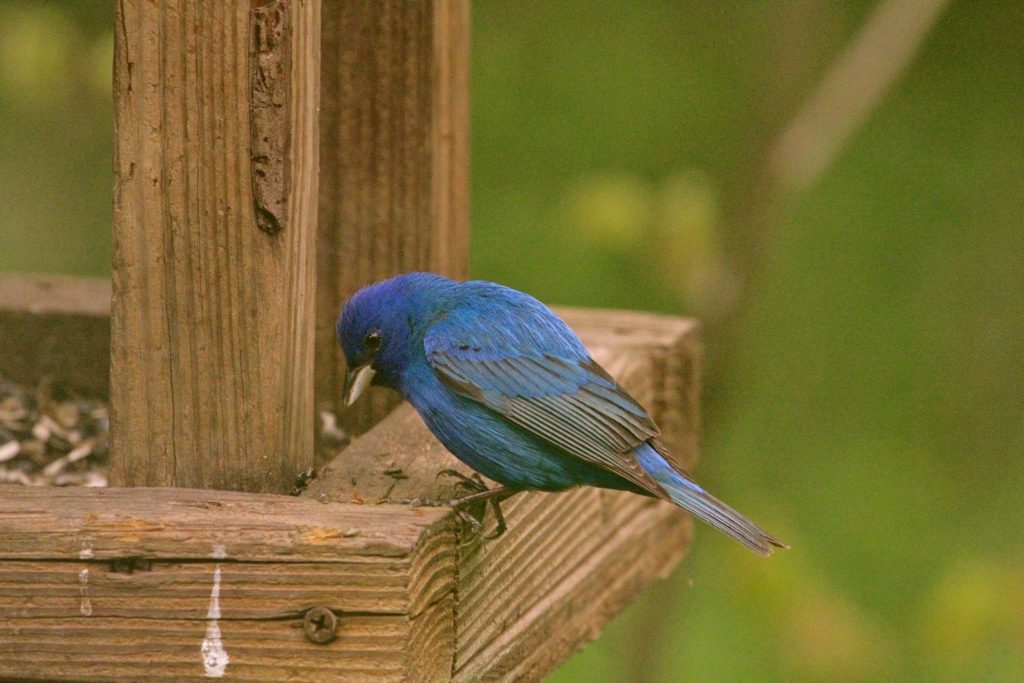
Indigo buntings are one of over 100 bird species that can be observed in The Preserve at Shaker Village throughout the year.

As a guest, you can make your own observations in The Preserve by hiking or riding on our multi-use trails.  Our trails are maintained by a team of two staff members and a growing number of dedicated volunteers who meet every third Saturday of the month (March through October). Our volunteers worked throughout the past year to improve the Heritage Trail by removing overgrown honeysuckle. This work opened up the trail and hikers should be treated to a beautiful wildflower display next spring!

We also encourage you to spend some time at the Bird Blind, which was updated this past summer.  It’s a great place to see some of the area’s most abundant birds and insects. The Bird Blind is located at the center trailhead and is accessible.

We Make You Kindly Welcome

The Pleasant Hill Shakers were known for their hospitality and we carry that legacy forward today. Whether you are visiting for the day, staying overnight or spending a holiday here, we look forward to seeing you!

At The Inn this year, we renovated the bathrooms in four of our guest rooms.  These updated bathrooms now feature walk-in showers and more spacious bathrooms. These upgrades were made possible by generous donor support and are part of our ongoing efforts to improve accessibility across the site.

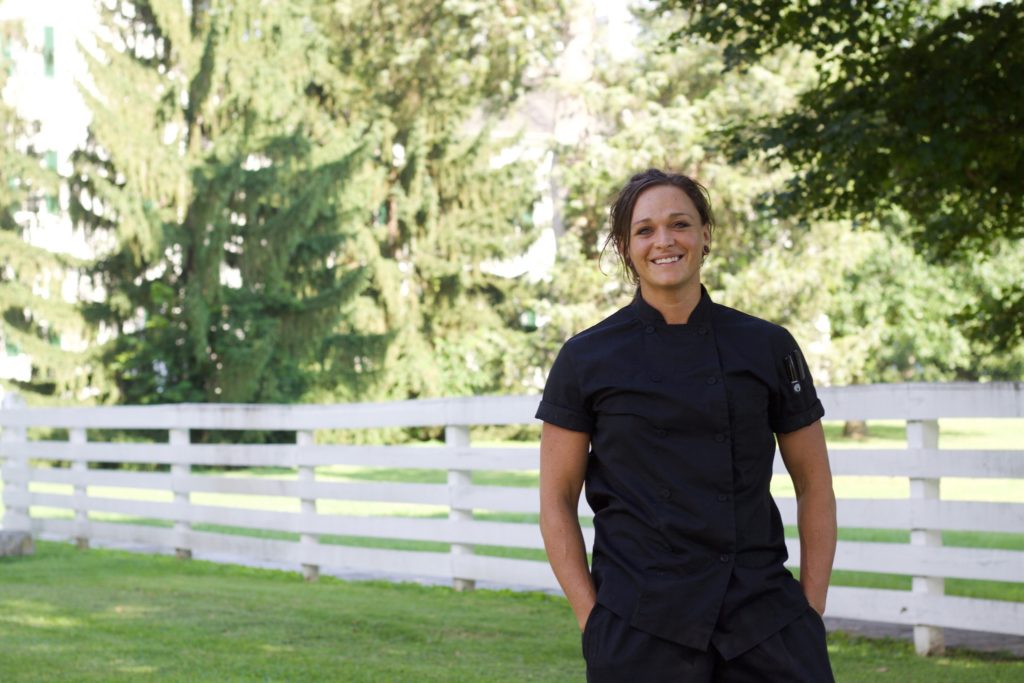
After a short sabbatical, Chef Amber Hokams returned to lead Shaker Village’s culinary experiences in 2022.

At The Trustees’ Table, we welcomed over 62,000 diners to our table. The fried chicken, Shaker Lemon Pie, and tomato celery soup are our guests’ tried and true favorites. If you’re looking for something a little bit different, check out our Fresh Food Adventure Series. Chef Amber Hokams is able to show off her skills and the best of the Shaker Village Farm during these events.  This past year we hosted six of these culinary adventures – and we invite you to join us in January 2023 for the Bourbon Dinner!

With Gratitude…to our Guests, Passholders and Donors

As the year winds down, we are so humbled by the support you’ve shown Shaker Village in a year that has been challenging for all of us. The best part about Shaker Village is that it is nestled in this beautiful rolling hills of the bluegrass.  When you visit, it’s because Shaker Village is your destination and you have made an effort to get here to enjoy the peace and tranquility.

In a year when the market has been unstable and inflation has caused rising gas prices, food costs and more, we know your charitable dollars may be limited. Yet we are celebrating all the things that you helped make possible in 2022. We cannot say thank you enough.

Pleasant Hill is a magical place. When the Shakers settled here in 1805, they had no way of knowing that this site would remain two centuries later.  Thank you for making that happen, and for generously supporting Kentucky’s largest National Historic Landmark.  We are so excited for 2023 and all the possibilities it will bring. 

We will see you in the New Year!

What we refuse to destroy…

Billy Rankin, Vice President of Public Programming and Marketing

“In the end, our society will be defined not only by what we create, but by what we refuse to destroy.” -John Sawhill

For more than 60 years, our nonprofit organization has been on a mission to preserve the buildings and property that belonged to the Shakers of Pleasant Hill, and to share this unique historic landscape with the public. This mission has not been achieved without struggle. Preserving a historic place presents many challenges, and doing it while also hosting 100,000 visitors each year can be quite a juggling act!

Although we have developed a sustainable, nonprofit model to support the preservation of Pleasant Hill, we are fortunate the National Historic Preservation Act of 1966 (NHPA) was passed early in our organization’s history. The layers of protection and support this legislation, and its later amendments, has offered historic properties like Shaker Village cannot be overstated. As Preservation Month comes to a close, it seems appropriate to take a moment to reflect on some of the designations this legislation provided that have impacted our mission.

The National Register of
Historic Places

The NHPA legislated the creation of the National Register of Historic Places. Designation on this list provides national recognition to a historic property, even if the scope of its story may be deemed to be local or regional. Listing on the National Register can provide certain federal incentives, though it doesn’t inherently protect a property or building from alterations, or even demolition.

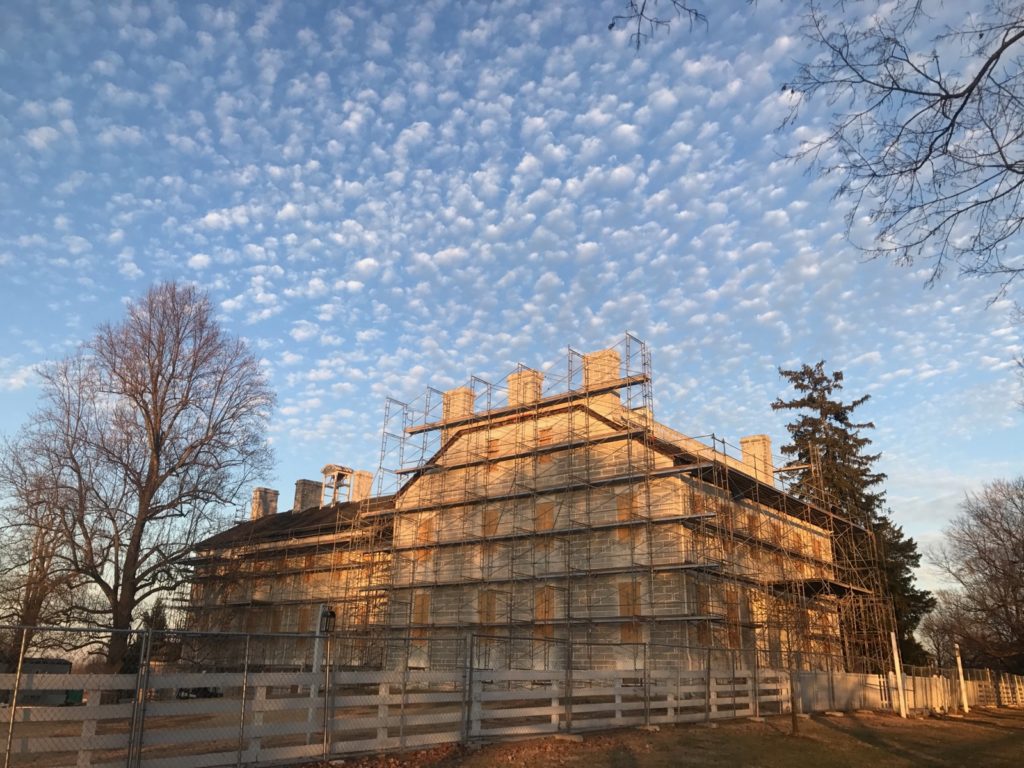
The Centre Family Dwelling underwent preservation work in 2018.

There are currently 95,000 properties listed on the National Register, with over 1.4 million individual historic resources identified on those properties. You can search the National Register Database here.

While Shaker Village of Pleasant Hill is listed on the National Register of Historic Places, when our organization was added in 1971 we were also made part of a much more exclusive club…

National Historic Landmarks

National Historic Landmarks (NHLs) are properties that have national historic significance. These properties have exceptional value, or quality, and represent a special category of designated historic structures.

There are currently just over 2,600 NHLs in the country (32 in Kentucky) representing less than 3% of National Register properties. Other NHLs include places like Mount Vernon, Alcatraz, Pearl Harbor and Graceland. Search for National Historic Landmarks here.

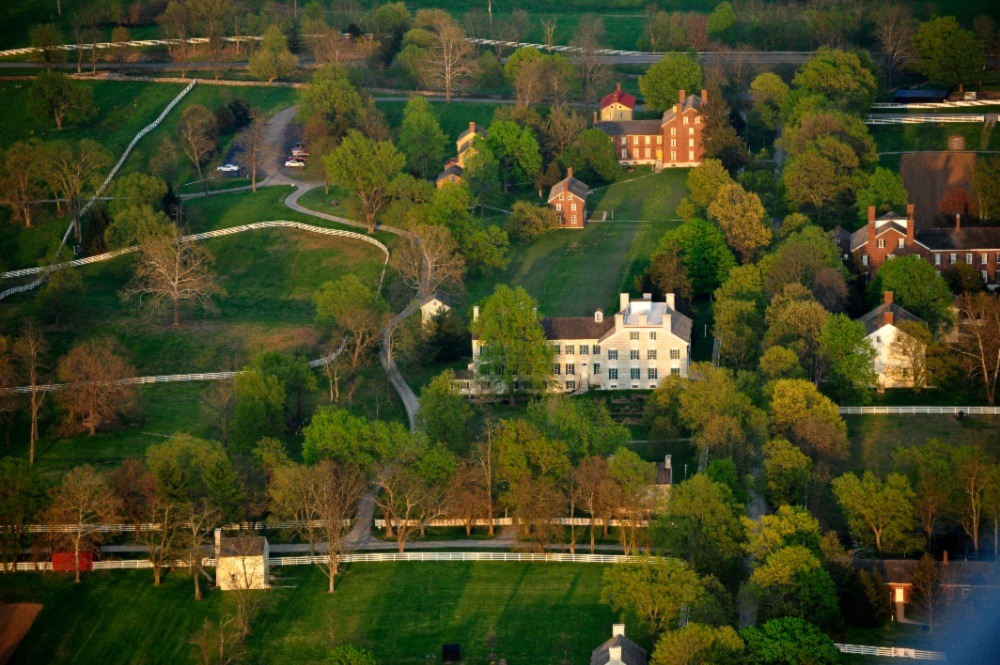
Aerial view of Shaker Village of Pleasant Hill.

While, similar to the National Register listing, being an NHL doesn’t necessarily protect a property from alterations, or even demolition, the listing does create a buffer against a number of state and federal intrusions. It also creates an increased awareness of the property’s value to our nation’s cultural history.

The nomination process for both the National Register and to become an NHL can be extensive. In 1971 Shaker Village’s full nomination totaled 360 pages! A few dozen of those pages were photos, but still, wow! Nominations are archived online, so if you have some time on your hands it’s interesting, and inspirational to read Shaker Village’s nomination form. So many people have given so much of their time and talent so that this incredible place can be passed on from generation to generation. It’s almost overwhelming to think about.

This Place Matters

At the beginning of this post, I mentioned the “juggling act” that can take place when trying to balance preservation and public access. There’s no doubt that visitor usage can add wear and tear to any property, particularly historic properties. But, we must always remember why we preserve this history. If we don’t share the story Pleasant Hill has to tell, we aren’t accomplishing our full mission. And if we don’t inspire future generations with this story, then who will care about Pleasant Hill when we are gone?

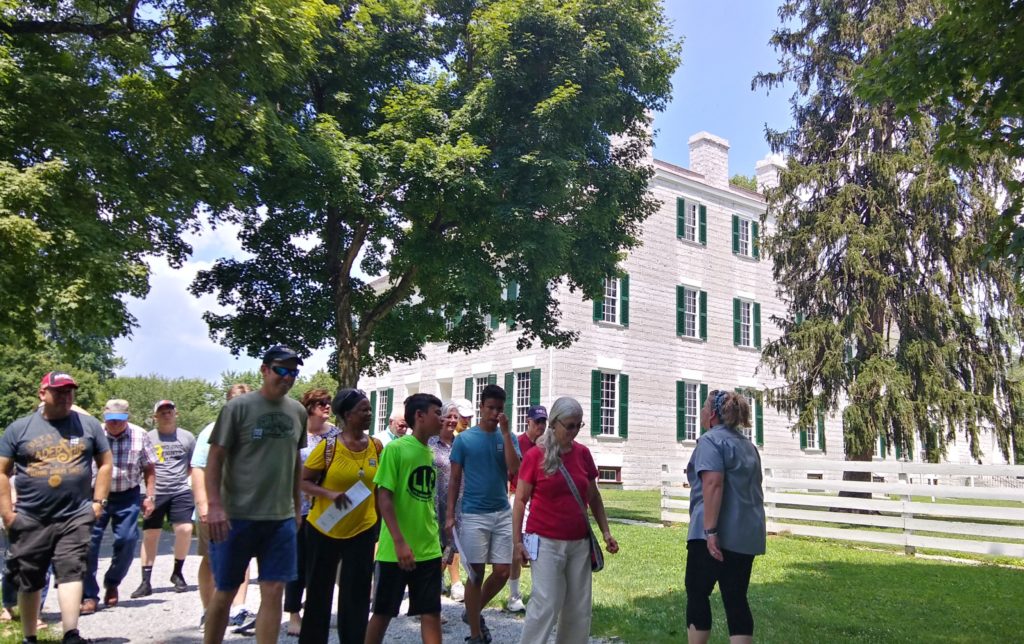
Visitors tour the historic turnpike at Pleasant Hill.

Ultimately, while national designations and legislation can provide layers of protection, the preservation of our historic places is an action undertaken by us every day. It must be undertaken relentlessly and with enthusiasm, because once a place like Pleasant Hill is lost, it can never be replaced.

So, as Preservation Month comes to a close, we thank all of our guests, hikers, diners, shoppers, donors, sponsors, vendors, staff and volunteers for helping to preserve Kentucky’s largest National Historic Landmark, each in your own way.

Learn more about how you can support Shaker Village of Pleasant Hill.

Bibliography

Tyler, Norman, Ted J. Ligibel, and Ilene R. Tyler. Historic Preservation, 2nd ed. New York: W.W. Norton & Company, 2009.